People often ask why I wanted to become a journalist. The answer has always been simple: I wanted to tell the stories that are overlooked, to bring voices into the media that are rarely heard and make people feel seen. Looking back, I realise that desire came from somewhere deeper.
Growing up in an abusive and controlling household, I didn't have much of a voice of my own. Decisions were made for me. My opinions could be dismissed. The person I wanted to become often seemed less important than the person I was expected to be. Perhaps that is partly why I became so determined to tell other people's stories. I knew what it felt like to feel unheard.
I grew up as a British Pakistani Muslim woman in a working-class family, where ideas about marriage, respectability and family honour shaped the future imagined for me. For a long time, I understood these expectations simply as our culture. It is only as I have grown older that I have started questioning what that phrase actually meant. What belonged to Pakistani culture? What came from religion? What came from patriarchy, migration or ideas about respectability? And what was simply particular to my family? Those distinctions were almost impossible for me to make growing up because family, religion and culture were often presented to me as though they were the same thing.
What I knew was that independence felt like something that required permission. And that made journalism feel almost impossible. At university, I wasn't allowed to study outside London. I couldn't stay in the library after dark, attend evening careers events or remain on campus building relationships with lecturers because I had to be home before my curfew. While some of my classmates stayed behind networking, developing contacts and making the most of university life, I was constantly watching the clock. At the time, I saw this primarily as another restriction imposed on me at home. Looking back, I can also see how class, gender and access intersected with it.
Journalism is an industry where young reporters are constantly told to network, make contacts, take placements and say yes to opportunities. But those informal routes into the profession assume a certain amount of freedom: the freedom to stay late, travel, work irregular hours, socialise after an event or take opportunities that don't immediately pay. I was trying to enter that world without many of those freedoms. So I adapted.
I applied for opportunities without telling anyone. I interviewed sources behind closed doors. I attended events under different pretences. At home, I became quieter, carefully editing what I said about my life. Outside it, I was slowly becoming a journalist.
Even the stories I wanted to tell could become a source of conflict. During my degree, I wanted to report on the experiences of transgender people in Pakistan. My family mocked the idea and questioned why anyone would write about such a subject. Eventually, it became easier to stop talking about my work than to keep defending why I thought those stories mattered.
My older brothers also held strict religious views about what they believed was appropriate for a Muslim woman. They wanted control over who I spoke to, what I wore and the career I pursued. Journalism, in their eyes, involved too much visibility: working alongside men, meeting strangers, travelling and existing publicly in ways they didn't believe a woman should.
For a long time, I struggled to separate their interpretation of religion from religion itself. But while my family imagined one future for me, I was quietly building another. When I was offered a placement at Channel 4 News, I couldn't believe it. I had been selected from more than 500 applicants. Coming from a working-class background and having spent years trying to build experience around the restrictions at home, being allowed inside a national newsroom felt almost impossible. Nobody at home knew. I told my family I was volunteering at a women's centre instead. What should have been one of the happiest moments of my life became another secret I celebrated alone.
By then, the contradiction between the person I was becoming outside my home and the person I was expected to remain inside it had become impossible to ignore.
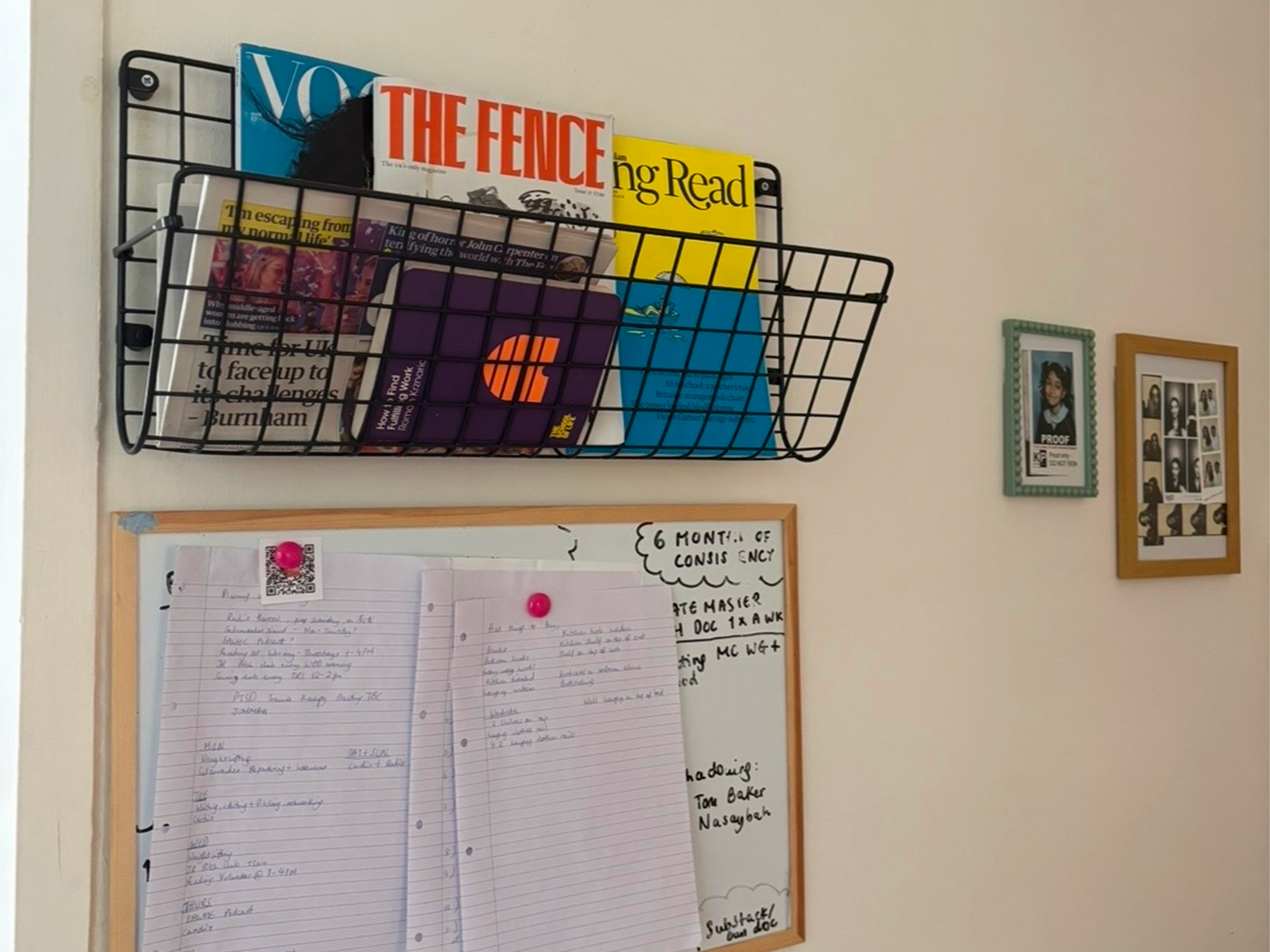
Eventually, I realised I had outgrown the environment I was living in. Leaving wasn't dramatic. It happened quietly over months. I slowly moved bags and boxes to a friend's house whenever I could. One journey at a time, I built the possibility of another life. I had spent years imagining freedom as the ability to leave. What I hadn't anticipated was that leaving would also force me to work out what I actually wanted to take with me.
There are things I miss now that I never expected to. I miss my mother's lamb karahi. I miss the biryani that used to appear almost every week and, something I never thought I would admit, I even miss her orange daal. Pakistani food was so ordinary in my childhood home that I barely thought of it as something I could lose. It was simply there. Now it isn't.
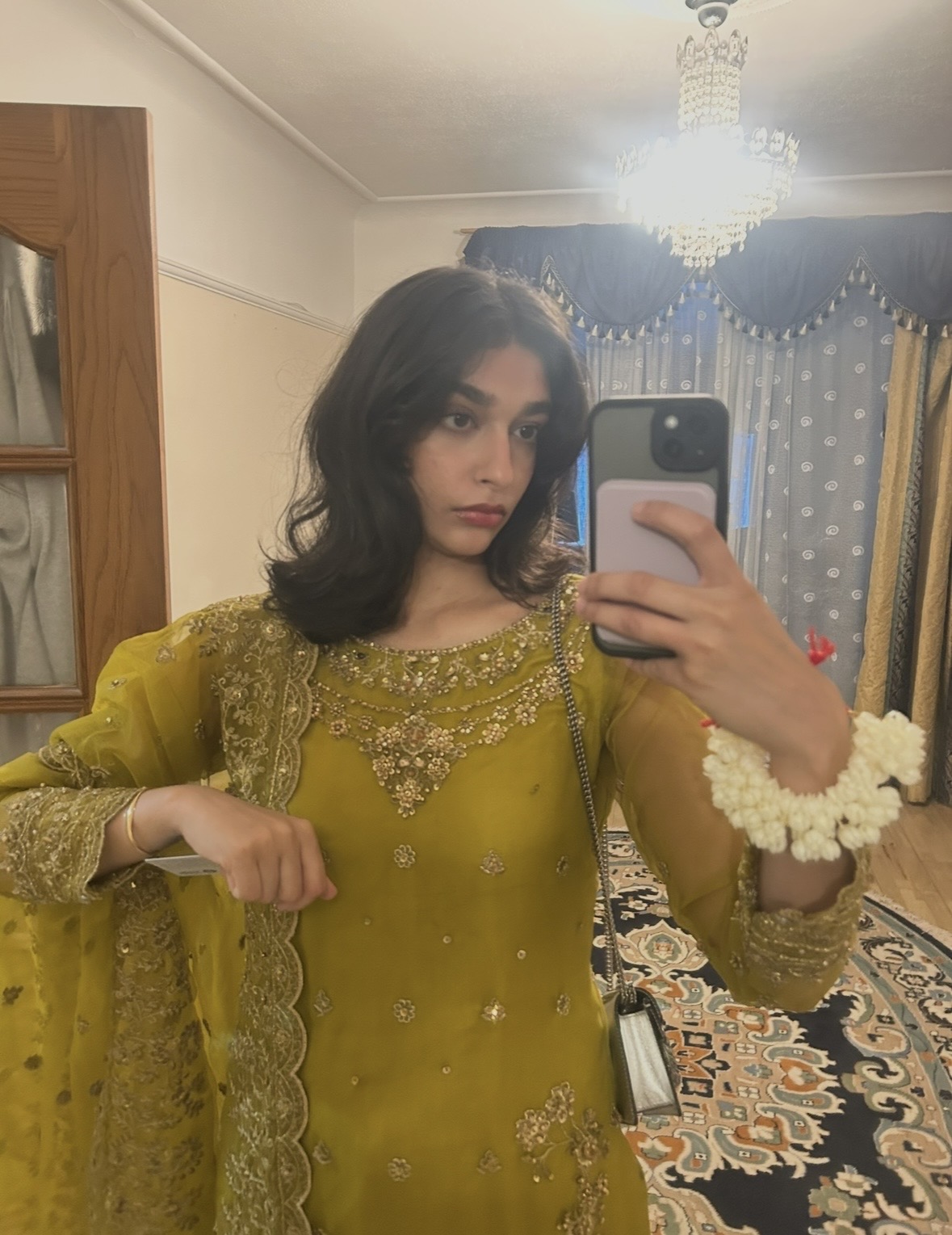
I haven't learnt to recreate my mother's cooking for myself. Sometimes I travel to Tooting just to get biryani from Dawat. I can go to Dishoom, but it doesn't taste like my mother's food. Restaurant versions can't recreate the familiarity of something that once appeared routinely on the kitchen table. The same is true of clothes. My Pakistani formal and casual clothes are now largely in storage: intricately embroidered outfits, costume jewellery, sandals and khussas, many of them barely worn. I don't know when I will next have a wedding or family celebration to wear them to. I don't know when I'll next put jasmine garlands around my wrists or in my hair. I don't know when I will next travel to Pakistan and see my younger cousins. Sometimes these things feel years away.
And yet, on the Tube, I listen to qawwali and Hassan Raheem. Pakistani music, cinema, fashion and history still excite me. They didn't stop belonging to me because I left my family home. That has forced me to understand something I couldn't see when I was younger: leaving a harmful family environment is not the same as leaving a culture. Neither, for me, has independence meant abandoning Islam.
I still practise my faith, but increasingly through a relationship with God that feels like my own. I still believe deeply in naseeb and in the idea that what is destined for us has already been written. At the same time, I live independently, make decisions about my own life and wear what I choose. I no longer believe those things have to be contradictions.
What I reject is religion being used as a cultural tool to control women. I reject the idea that a woman's goodness should be measured by how much of herself she is prepared to sacrifice. I reject the expectation that women should remain in the home at the expense of their ambitions, or that adulthood and independence should begin only when a husband arrives.
I also reject the idea that a woman's relationships, sexuality and future should belong to her family to negotiate on her behalf. Those beliefs were once presented to me as inseparable from being a respectable Pakistani Muslim woman. Leaving has given me the space to ask whether they actually have to be.
Journalism has complicated that process too. When I started reporting, I thought of journalism primarily as the thing that gave me a voice. It introduced me to people whose lives looked nothing like mine and allowed me into rooms and conversations that had once felt inaccessible. But becoming a journalist has also made me more conscious of the responsibility that comes with telling stories about communities, particularly communities I am connected to.
Wanting to report on transgender people in Pakistan, for example, was never about presenting Pakistan as uniquely intolerant or backward. I wanted to understand lives that were rarely given the complexity they deserved. That matters to me even more now.
British journalism has its own history of deciding which stories about Muslims, Pakistanis and other marginalised communities are worth telling and how those communities are framed. As someone who wants to tell stories about the world I come from, I have had to think about how to be critical without reducing an entire culture to its problems.
The same principle now shapes how I understand my own life. I can talk honestly about misogyny and patriarchal expectations within Pakistani communities without claiming that abuse, control and disrespect are inherently Pakistani. I can say that members of my family used religion to justify restrictions without making their interpretation of Islam the only possible one. I can recognise the harm done to me while still refusing to make that harm the entirety of my cultural inheritance.
Reporting on domestic violence has made those questions feel even more urgent. Learning about the lives of women whose choices are constrained by violence, poverty, family structures or political systems has made me more conscious of the freedoms I now exercise almost every day.
I have an education. I pursue a career. I live in my own home without a husband or male relative determining the shape of my day. I can decide where I go, what work I pursue and what kind of future I want. Those freedoms mean more to me because I know they have never been equally available to every woman.
Sometimes I think about the women who came before me in my own family. I wonder how many of them were given the opportunity to ask what they wanted their lives to look like. I don't want to look back at them with judgement for living within systems they may have had little power to change. Instead, I want my independence to honour them.
Perhaps breaking an intergenerational pattern doesn't require rejecting every person who came before you. Sometimes it means carrying forward what you loved while refusing to reproduce what harmed you. That is what I am still learning to do.
I carry my mother's cooking with me, even when I cannot recreate it. I carry Pakistani music through my headphones on the Tube. I carry the clothes waiting in storage for another occasion, my connection to Pakistan, my faith, my belief in naseeb, and the women who came before me.
What I don't want to carry is the belief that love requires self-erasure, that a woman's independence is dangerous, or that protecting a family's reputation should matter more than allowing her to become herself.
For most of my life, family, faith and culture felt impossible to separate. Now I am learning that I can question one without abandoning the others. Journalism taught me to be curious about other people's lives. Leaving home has forced me to turn that curiosity towards my own.
I built my journalism career in secret because I wasn't allowed to imagine my future openly. Today, I am still building that career, but I no longer have to hide it.
The freedom I wanted was never the freedom to become less Pakistani, less Muslim or less connected to where I came from. It was the freedom to decide for myself what being a Pakistani Muslim woman could mean, what I wanted to carry forward, and what would end with me.