
Architecture, as we’re taught to see it, is a discipline of objects - buildings, and the people who sign them. Shumi Bose has spent a career on the quieter side of that. Her materials are editorial and pedagogical rather than structural. Not the building but the room around it, not the object but the conversation, the platform, the public through which architecture gets argued over, taught and understood.
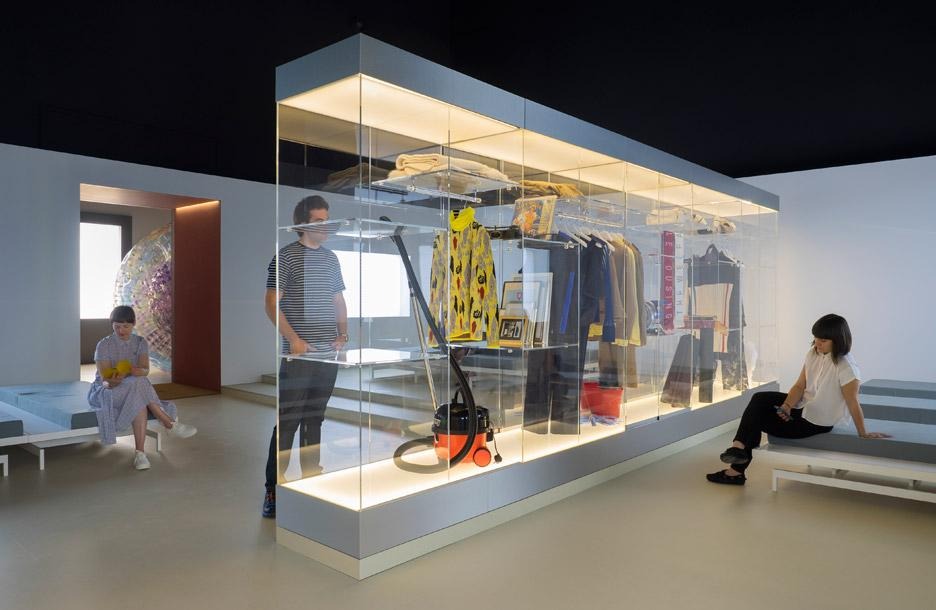
She is chief editor of KoozArch and a senior lecturer in architectural history at Central Saint Martins, where she has taught for over a decade. In 2016 she co-curated the British Pavilion at the Venice Architecture Biennale - Home Economics, which reimagined the home through the time we spend in it - and has curated at the V&A and the RIBA. She contributes regularly to books and periodicals including Log, PIN-UP and Wallpaper*, co-founded the Real Review, and in 2020 started Holdspace, a home for the conversations that, as she puts it, don’t fit in the academy. She is a founding member of Architects for Gaza.
Born in Calcutta and long based in London, Bose has always worked between worlds - academic and public, institutional and independent. I was drawn to her because her practice refuses the usual outline of an architect’s. She works on the structures around the buildings - the magazines, classrooms and exhibitions where architecture is argued into meaning. These are questions close to my own, and after following her across several of those spaces, I wrote to her. Some weeks later, we spoke about cultivating publics, the slow work of changing institutions from within, and the ingenuity it takes to get around a locked door.
Much of architecture is still understood through buildings and individual authorship. Your work has focused instead on conversations, platforms and publics. What first drew you to these forms of practice?
I studied architecture in a slightly unorthodox way, I came to it through art school. The course was working toward technical accreditation at the time, but didn’t get it before I graduated. It’s a validated architecture course now, and I’ve taught on it for twelve years, but back then it was called BA Arts, Design and Environment, and I was on its spatial pathway. So I was always aware there was a layer of professional and technical knowledge I wasn’t getting - that I didn’t have when I graduated. What I did have was a deep, committed interest in the built environment, and in the question of why it is the way it is. Sometimes that’s a material or ecological question, but more often, in my case, a social, political or economic one.
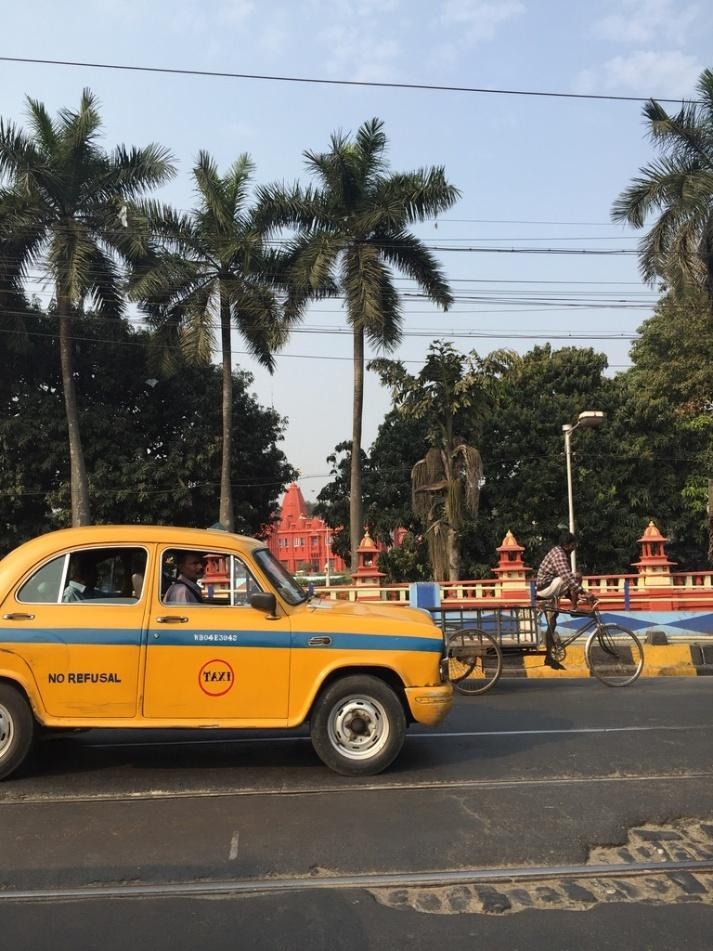
That comes partly from growing up in a postcolonial city. In Calcutta there were the relics of the British Empire, the influence of many other cultures, the pressures of late capitalism, all at once. It makes you ask: why does it look like this? Who made it look this way? A city with that history has so many layers. And moving to London to study the city provokes exactly the same questions - why is this the building we treat as our ‘centre’?
So between knowing there was a layer of architectural knowledge I didn’t have and being in places that provoked so many questions, it was an organic thing. I grew up around contrasts, in compressed urban spaces, and I was generally curious. Then at art school I was surrounded by extraordinarily talented people from all over the world, many of whom couldn’t quite articulate themselves within a Western university education, so I often found myself explaining the ‘why’ of other people’s projects. It was always that wanting to understand that led me to architectural history.
Across publishing, education and curation, you’ve worked in the spaces that shape how architecture is discussed. Do you see these as forms of design practice in their own right?
When I graduated and thought about what I wanted to do, I was frankly intimidated by design practice. I didn’t feel I had the impetus to make architecture, though I was exhilarated by it, and I was intimidated by the pressures of authorship. I was under the misconception that individual authorship mattered more than I now believe it does. Architecture is never produced alone. But that perception took me away from design practice and toward the joy of trying to understand, and of helping others understand, through teaching and curation.
At the start it was all inquiry. I graduated, looked at my bookshelf, made a list of the publishers whose names came up most often, and wrote to them: could I work for you in any capacity, so I can learn more? - and a note to anyone reading, do not work for free, as I did in the early 2000s - and that’s how I got into editing, journalism, curation, historical research. But it wasn’t until 2017, after I’d already worked as a curator at the Venice Biennale and on the British Pavilion, that someone asked me to give a lecture about my practice, and I realised I’d never given myself permission to think of what I do as a practice at all. I had to look back and think. I teach, I write, I think about architecture, I sometimes advise on competition briefs - about how architecture is produced, and what happens afterwards, how it’s read, how it’s perceived, how it feeds into culture. Someone in the audience asked how it is that I do what I do, and I couldn’t answer.
I’m interested in things, and I’m riled by certain things, and when I meet people who feel the same way, we start asking whether it should be a book, an article, a film or an exhibition. Pursuing questions through that kind of discourse is a practice. My whole career has sat inside architecture and architectural discourse; very little of it has been art history or pure journalism, and even the journalism was tied to the construction sector, mostly business to business, with a link to academia. I’m now at the point where I can say, definitely, that it’s a practice that sits within architecture, even if it doesn’t involve the building itself.
And architectural practice is porous - I’d argue it has been for a very long time. Even in the Renaissance, architects wrote books about law and studied sculpture. It’s unfortunate that from the late twentieth century onwards there’s been a strand that wants a very narrow, technocratic, materialised definition of what the profession is, and that’s increasingly entering schools. I don’t criticise that in isolation because students graduate with debt and want jobs that pay, and the shortest route to that is being loaded up with technocratic skills. It’s also the shortest route to becoming obsolete, given what we’re seeing in technology.
But I’m watching the practice expand, too. People come at it from anthropology, from sociology; architects graduate and go into policy, or research, especially since 2020, when there was more spotlight and funding for decolonising practice, and for welcoming voices and ways of thinking that don’t belong to the traditional profession. Things do need to be built. But this is an industry responsible for something like forty per cent of carbon output, so I understand why many students are reluctant to go and produce more of the built environment. What gives me hope is that even the traditional roles are widening - to think ecologically, socially, politically, contextually. In a way it takes us back to the broad ferocity architecture had in the Middle Ages, when we accepted a very wide base of knowledge. How we orient ourselves within that base is still an open question, and it’s made much harder when you have student loans and very high rent to pay.
There’s often an assumption that ‘the public’ already exists. In your experience, how are publics actually cultivated - and what responsibilities come with making spaces for participation?
It’s a question I looked at in my master’s thesis, which was about the explosion of digital criticism and publishing, and that assumption of very niche audiences. Around 2008 to 2010, the blog scene exploded: everyone had a blog, and the assumption that there were audiences for hyper-niche subjects simply bore out. Web 2.0 had put the tools and the speed of production into the hands of users, so discourse was suddenly being both produced and consumed everywhere. What that moment proved was that audiences existed for very small niches and partial ways of looking, and it reframed my idea of ‘the public’ into many publics.
Having worked across the academy, the gallery and trade publications, you become aware of different audiences talking about similar things who never actually meet - how each institution has a particular tone, and a particular audience, in mind. I remember interviewing for a curatorial job once and being asked who I thought their audience was. I said I’d assume they wanted to bring multiple audiences into architecture, and they said no: we’ve no problem bringing in a general audience, but we can’t bring in the professionals, because the profession doesn’t think a museum has anything to offer it. In trade publications, it’s money that governs a great deal. It’s only on the back of, say, a company manufacturing safety glass that you can afford to run a feature on an architectural collective somewhere in the world - and that placement tells you the real readership: contractors, developers, architects specifying products. Whether you lean into that audience or away from it becomes an editorial decision.
What I’ve come to believe is that there’s no need to patronise an audience, no need to hunt for a lowest common denominator. I don’t treat an audience as a blank canvas. The real question is how many handrails you provide - how dogmatic you want to be in telling people what to think. I like to assume my audience is at least informed, curious, and has the means to learn more; that probably comes from teaching. My intention is to lay out multiple viewpoints, and to ask people to take a step forward to negotiate, to argue, and maybe find their own position. That’s what I ask of students, and it’s what I’d ask of a readership or a gallery public. I’m genuinely optimistic about audiences, it’s only ever a question of how much framing to give them.
KoozArch, where I’m chief editor, is a case in point. We’re an independent platform for architectural discourse and speculation, and we’re not a peer-reviewed journal. We hold the same editorial rigour, but sitting outside that system lets us stay close to an academic audience while keeping our independence elsewhere. Over the last three years, it’s meant we’ve been able to publish work on the genocide in Palestine, on Gaza - which in a trade publication, or an accredited academic one, would have come under enormous scrutiny, because of the assumptions built into their audiences and, above all, their funders and backers. Because we’re small and independent, and don’t answer to a board or to advertisers, we have that liberty. And the content finds its audience.
Your work moves constantly between institutions and independent initiatives. What opportunities and tensions come with trying to create change from within established structures?
Given that we’re speaking within a South Asian, a global South platform, let me answer from that embodied perspective. Being in the arts and humanities, and coming at them from a critical and academic angle, brought certain anxieties from my family, because our culture tends to steer you toward the safety of established institutions. What I mean is the alphabet salad of acronyms: CSM, UAL, RIBA, RCA, AA. At a certain point you find yourself aiming for those, hoping a legitimate, respected institution will validate you and your practice. As diaspora people, that’s something we’re pushed to do - so both for my family and in my own inherited makeup, there was a perceived safety in working within them.
So I studied slums and oral history at CSM, and went on to work at various points for the Venice Biennale and the RIBA. And in each place you expect there to be a structure of power, or of ethical practice, as valid and legitimate as its reputation, and that’s rarely the case. Having worked in and out of institutions for twenty years, my experience is that they’re very often fossilised accretions of power structures and hierarchies that are deeply problematic - through colonialist or extractive overtones, or hierarchies that are simply patriarchal and impenetrable. You might assume that labour practices at an art college are transparent, but they’re not. You might assume that the way galleries deal with the artists making their work is ethical, it isn’t always. The same goes for publications and journalism, which are hardly immune to things like censorship.
On one hand, that at least gives you something worth doing - there’s arguably less purpose in working somewhere where everything is fine, not that I’ve ever encountered a fully ethical institution. It directs you toward the work. Decolonising the curriculum, for instance, is a no-brainer, though it sometimes takes a flashpoint like 2020 to get the institution to come along and actually support it, and how sustained that support is remains an open question. But on the other hand, I haven’t lost faith completely. There’s something to be said for the university because whatever its problems, it still gathers people who’ve dedicated their lives to scholarship. It has the resources to hold them in one place, and it draws the vital energy of thousands of young people coming to throw their light into the pot. You can’t discount that. So the task becomes redressing the iniquities where you find them and, wherever possible, moving resources out of those calcified structures and into more generative ones.
Catch me on an average day and I have plenty of problems within these institutions, especially as a brown woman, and yet I stay in the academy, because I can’t deny the sheer, beautiful opportunity of being somewhere that gathers great thinkers and real energy from people who want to orient themselves.
But I’ve also found it personally necessary to oxygenate that, by working with independent organisations that don’t sit inside these heavy, historically weighted structures. There are negatives, like constant mobility, and a degree of financial insecurity. The positive is that I don’t get jaded inside a system that reproduces so much violence through its enclosures of knowledge and resources. Operating across those lines, I can try to move some power, some visibility, some resource across borders - bringing people I meet through editorial and curatorial work into the academy, and pointing my students to things outside it. It causes turbulence, personally and financially, but working inside and outside the institution is, for me, a matter of survival. My field isn’t especially monetized, I teach history, and a frequent complaint from students is that it won’t help them get a better job. In some ways they’re right; I can’t, and wouldn’t want to, draw a straight line from my class to a job. Unlike an architect with a practice, nobody needs me five days a week, so there’s a certain composition of work I have to assemble simply to get by.
You’ve built several of those independent pockets yourself - KoozArch, but also Holdspace and Architects for Gaza. How did Holdspace come about?
KoozArch, the editorial platform I work for, is one such small outlet; it was founded by my colleague Federica Zambeletti, and I joined a couple of years ago. But if we’re talking about survival, there are two more I should mention. Holdspace came out of a period - 2020 - when I felt the need to form my own platform. It wasn’t necessarily to put forward things I had to say; it was partly a response to so much I’d found frustrating in the institutions I worked for, the barriers to access in all sorts of directions. It came out of lockdown, and more specifically the weeks after the murder of George Floyd, when I felt, in a very embodied way, able to facilitate conversations that simply weren’t possible within the institutional framework. Some were too painful to have in a publicly, institutionally validated setting; others just didn’t follow the rules. I wanted to talk with people who aren’t necessarily seen as valid in those arenas. Talking about a comic book artist in architectural terms isn’t unheard of - it’s possible - but it would mean taking a proposal to a group of directors, getting approval, finding funding, scheduling it.
Holdspace also came out of a frustration with labour unions. Just before the pandemic there was a very large-scale strike across university workers, certainly those of us in the UCU, and after a sustained period of bullying at one of my workplaces I’d joined the union in 2019 - which was transformative, realising I wasn’t crazy, that things were systemically wrong. So Holdspace erupted out of me, because it was all of it at once: frustration with the institution, with the conditions you face as a worker, with the values the union holds, but also with racism, institutionalised racism, decolonisation. It felt like I needed somewhere to put all of that. I didn’t even know the phrase had psychological overtones - I literally needed somewhere to hold all of it, everything I had nowhere else to put. I was also thinking of a holding page, the placeholder you make before you’ve decided on the name of a website. So it was just grabbing somewhere I could give myself permission to be angry and feel things, and have conversations with my students over lockdown.
Many students felt very isolated. I was spending a lot of time with them - reading things together, watching a film, talking about why they hadn’t been for a walk that day. I wanted a space for all of those conversations, which felt somehow urban and spatial and diasporic in nature. The public tagline for Holdspace is stuff that doesn’t fit in the academy. The private tagline, for me, is work that doesn’t make me sick - I just needed a place where it was okay to talk about the things we wanted to talk about, however that ‘we’ gets configured and reconfigured over time. Since then I’ve used it for protected discussions about gender, about the genocide in Gaza, about all sorts of things. It’s a little pocket where I can coordinate a conversation - usually not me talking, but students and someone I’ve met through other work. These are things that could and should be talked about in institutions too, but that takes another level of energy. It hasn’t been such an active platform for me, mentally, but it’s useful to know I’ve made a place where things can go - because sometimes the world doesn’t make a place for you. I have no ambitions for it to propagate, or have huge impact, or change the world. It’s just a place.
And Architects for Gaza is a different kind of space?
Architects for Gaza is a small core with a large membership, founded by two architects who already run a practice called PART - the Palestinian Architectural Regeneration Team - Nasser and Yara. It came together in the wake of the atrocities after the seventh of October 2023. There are a lot of very engaged groups talking about Palestinian justice and solidarity, but what’s distinctive about Architects for Gaza is that it is about action on the ground. Because they’ve worked in the region for a long time, and are linked with the mayor and municipality of Gaza and with the UN on the ground, they can actually make projects there - schools, medical camps. There are certain situations where you want visibility, and certain ones where you want impact. Architects for Gaza is a group of architects and associated people either helping with work on the ground or, better, giving power to people there to rebuild the built environment themselves, and providing architectural education to those who couldn’t complete it because of the genocide. It started with a rebuild programme and an education programme, and now most of the activity is about the people of Gaza and how they want to reclaim agency in that space. So it’s a small, independent way of doing real material work.
More and more practitioners want to build their own platforms rather than contribute to existing ones. What have you learned about sustaining communities and conversations over time?
Over the years, I’ve watched an undeniable turn toward individualisation. As we were saying, when you were once the consumer you now have the means to be the producer - so there’s this huge drive to present yourself, your own curation of things, to position yourself as the host or holder of material. That’s skyrocketed. When I was studying there wasn’t the same drive to establish yourself and your perspective; as the technological means to do so multiplied, so did the drive - and rightly so, because there were hierarchies of power that left so many voices and perspectives unheard.
At the same time, I wonder about the reluctance to synthesise that visibility into action, to build coalition. Visibility matters more than I once thought. When I was studying I didn’t feel the need to be represented, or to represent others; I grew up in India, so I wasn’t anxious about it, and I didn’t come to England expecting to see lots of brown people in positions of power. It’s only more recently that I’ve learned what it feels like to want that representation, and realised that I’m actually representative of something to other people, which is a strange thing to discover, when a colleague mentioned that some students appreciate being taught by a brown woman. So I do recognise how acute the need for visibility and representation is, and I welcome that it’s now socially acceptable to present yourself in your identity.
But there’s impact, on the other hand, and I think the proliferation of platforms and individual perspectives has the effect of diffusing it. As I watch successive generations take up the same questions, in commendable attempts, I wonder about the opportunities to build enough faith and common cause that we can actually have impact. I was recently at an independent architecture film festival that had partnered with a large, well-resourced academic institution, and you could see how much more the institution was able to do in the research and fieldwork it supported - the kind of thing a small collective simply can’t marshal. That’s not to say the small platforms and niches should throw themselves against the big wheel. It’s just that, amid this flood of images and content, and all the energy going into self-presentation and curated spaces - which is joyful, and worth celebrating, people forming solidarities and enclosures for work that needs to happen at that scale - there must also be a back-swing of the pendulum. We must start finding ways to come together, to operate for impact, to address those asymmetrical institutions and power banks, so that we can do things.
There’s a transformative text by the ecologist Donella Meadows that gives me chills. It’s about systems thinking, which isn’t new, and which I’ll admit sounds like a very technocratic way of looking at things, against my nature. But the essay is about the points at which you can intervene in a system. There’s the long, slow work of changing an institution from the inside, which is often invisible: decolonising the curriculum will probably take more than one lifetime - it took more than one lifetime to build the canon. Reorienting patriarchy is long, ongoing work too. In my mid-twenties I thought all of that was already done - I assumed my parents’ generation had dealt with that kind of bullying and it didn’t happen anymore. To my great sorrow, it happens all the time. Those are quieter struggles, less visible, and they’re the ones that have inflamed me over my career, particularly in 2020 - which is why I keep coming back to it: I learned the value of optics that year. The day everyone posted the black square, I remember thinking, what’s the point of posting a black square? But volume, optics, feeling solidarity on a mass level - those are gestures anyone can take part in, without having to be inside the machine to change it from within. Optics matter, gestures matter, visibility matters. I just worry about visibility being king now, in a screen-based, social-media culture, visibility and likes and hits and counts are on the algorithm, quantifiable and monetisable, and they win out over every other metric. There are slower, quieter metrics of impact that don’t require that authorial drive. And I say this as someone notorious for avoiding making statements or being visible, I’m pathologically drawn to support roles. I’m not saying everyone should be like me; that’s my psychology, and not always a comfortable one. But that individual kind of visibility isn’t the only way up the mountain. To follow Meadows, there are different points at which to intervene in a system. Some are easier to leverage and some much harder, and both have value.
At a time of overlapping crises - social, political, environmental - what role should cultural practitioners, educators and institutions play in shaping collective futures?
Our role is no longer to be the providers of information - if it ever was. The data is out there, too much of it. We’re saturated with information and stimulation. Technological change is almost impossible to speak about, because the moment you do it’s obsolete, and yet artificial intelligence now gives us ways of processing and synthesising all of this too. So if the content is out there, and increasingly the means of synthesising it as well, then the space of cultural and educational work must be to privilege critical thinking, and embodied, exchanged ways of knowing. It sounds woolly, but guiding imagination and critical thinking is harder than you’d think, precisely because of the sheer amount of stimulus out there.
The process of teaching is changing enormously, and honestly that question - what are we even doing anymore, and how do we do it best - is most of what I think about in that part of my job. There’s the technocratic mode, where you teach skills that let people produce work that gets paid for; there’s a view that universities should produce workers, and I may sound cynical about it, but I can’t be entirely, because students graduate with debt, and that’s the reality of a world that runs on capital. But what can’t be technologically synthesised is critical perspective, debate, positionality, orientation - history becomes very important - and imagination. If you think about political or social or scientific progress, all of it has required a real freedom for imagination - making resources available for people to experiment with thought, with making, with different ways of interacting, proposing and testing things, socially and intellectually as much as materially.
So spaces of education have to keep interrogating our ways of knowing. Because we’re not providing information anymore. There are now technologies automatically synthesising all of that, so we must keep asking what things actually mean. How are we going to live together - not just with each other, but with the planet? How are we going to redress forms of justice? There’s so much work to do, and I think it’s really about privileging what is human: a critical perspective on all these capacities and all this content, and holding on to our capacity to imagine, rather than surrendering to these very rapid, self-sustaining processes like technology.
What’s your favourite South Asian sweet - and is there a story attached?
As a Bengali, I’m risking my life here, because we have this enormous tradition of mishti. But it’s July - late in the season, though still just in time for mangoes. And when I say mangoes, I mean mangoes from the subcontinent. I grew up in Calcutta with so many kinds of mango that just receiving cut mango from a supermarket doesn’t quite hit. Ours in Calcutta were the most local ones; they came from Bangladesh.
The story is really about domestic politics. When I was a kid, the kitchen in my uncle’s house would be locked - no access to knives - but the mangoes would be stored under the bed, where the adults slept in the afternoon. So the afternoons involved creeping into the room where the grown-ups were sleeping and taking as many mangoes as we could from the basket underneath. And then, without knives, you’d roll them in your hands until you could feel the stone and everything else had turned to pulp, bite through the back end, and suck it out - inevitably turning the whole thing inside out. Just ways of circumventing domestic politics. That’s what I’m talking about.