


Growing up in Mehrauli, I had only ever heard the stories about places like the Jahaz Mahal or the Zafar Mahal. The script handed to us as young women was simple: you do not go there alone. They were occupied by "disturbing elements." Men smoking in the corners. The looming, ever-present threat of eve-teasing.
I started going to these monuments all on my own when I had hit my absolute rock bottom.
I had no friends. My entire existence was reduced to preparing for civil services. Studying day in and day out in a quiet room is as isolating as it can get.
I needed a place where I didn't have to perform.
And that is the beautiful thing about a 12th-century ruin. You cannot "fail" a ruin. It doesn't ask you to hit a KPI or be a better version of yourself. It is just sitting there, existing entirely in its brokenness.
On my solitary expeditions, sitting by the Qutub Minar, I discovered more about myself than I ever did anywhere else. I cried, laughed, slept, and studied there. That place became more home to me than my actual home.
Because the ruins saved me, I realized I couldn't just keep them to myself. I wanted to share them.
But I didn't want to do it the way the dry, PhD-level textbooks did. History for me is heavily reliant on oral storytelling. It is community heritage.
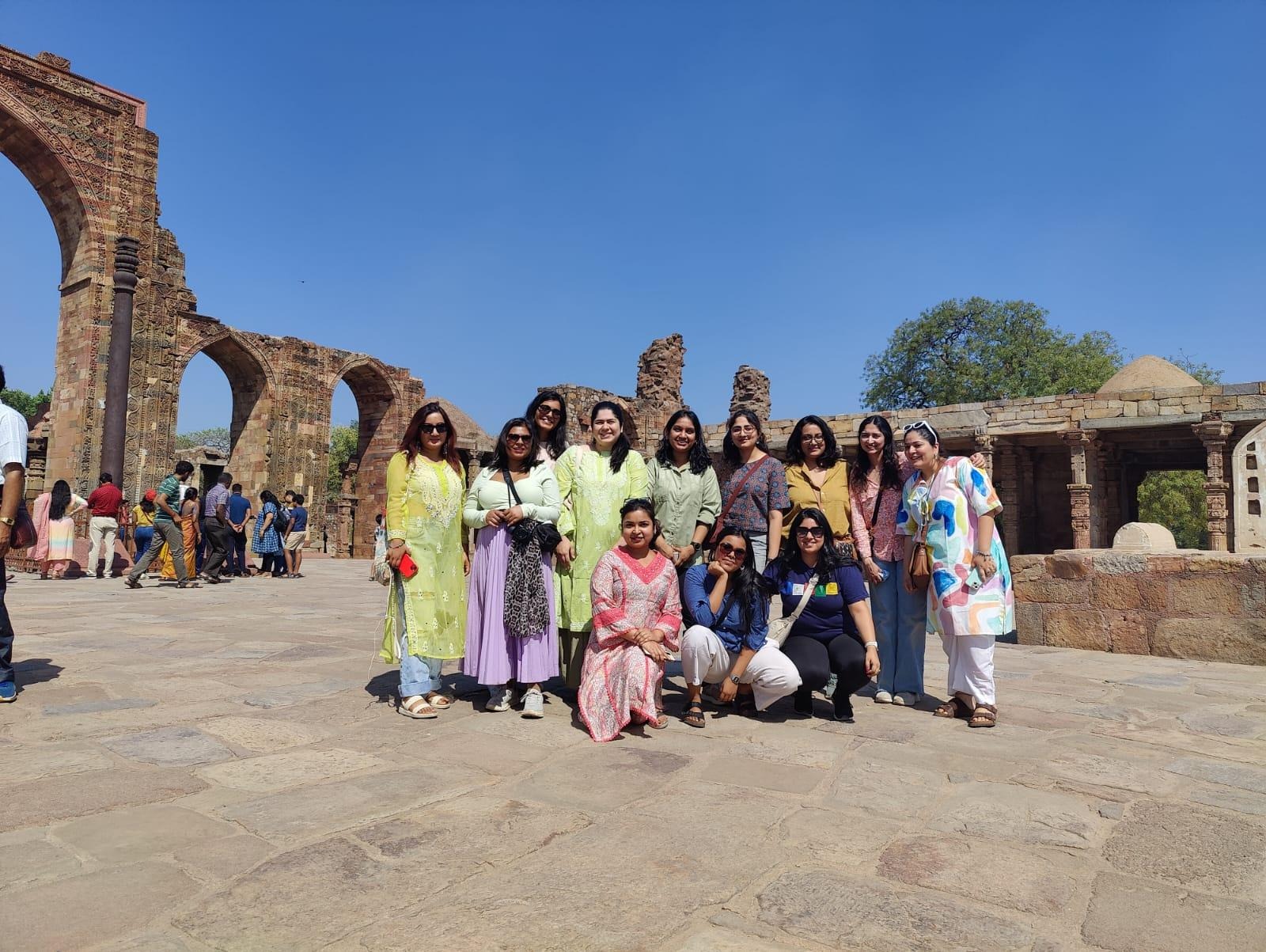
Unknowingly, I had kickstarted my passion project - Sheher Mein Hoon Mai Tere. The core idea was simple: accessible, interactive heritage walks. I wanted it to feel like a friend explaining things to you over coffee. I wanted to take the history of our neighborhoods and hand it back to the people who have always been on the excluding end.
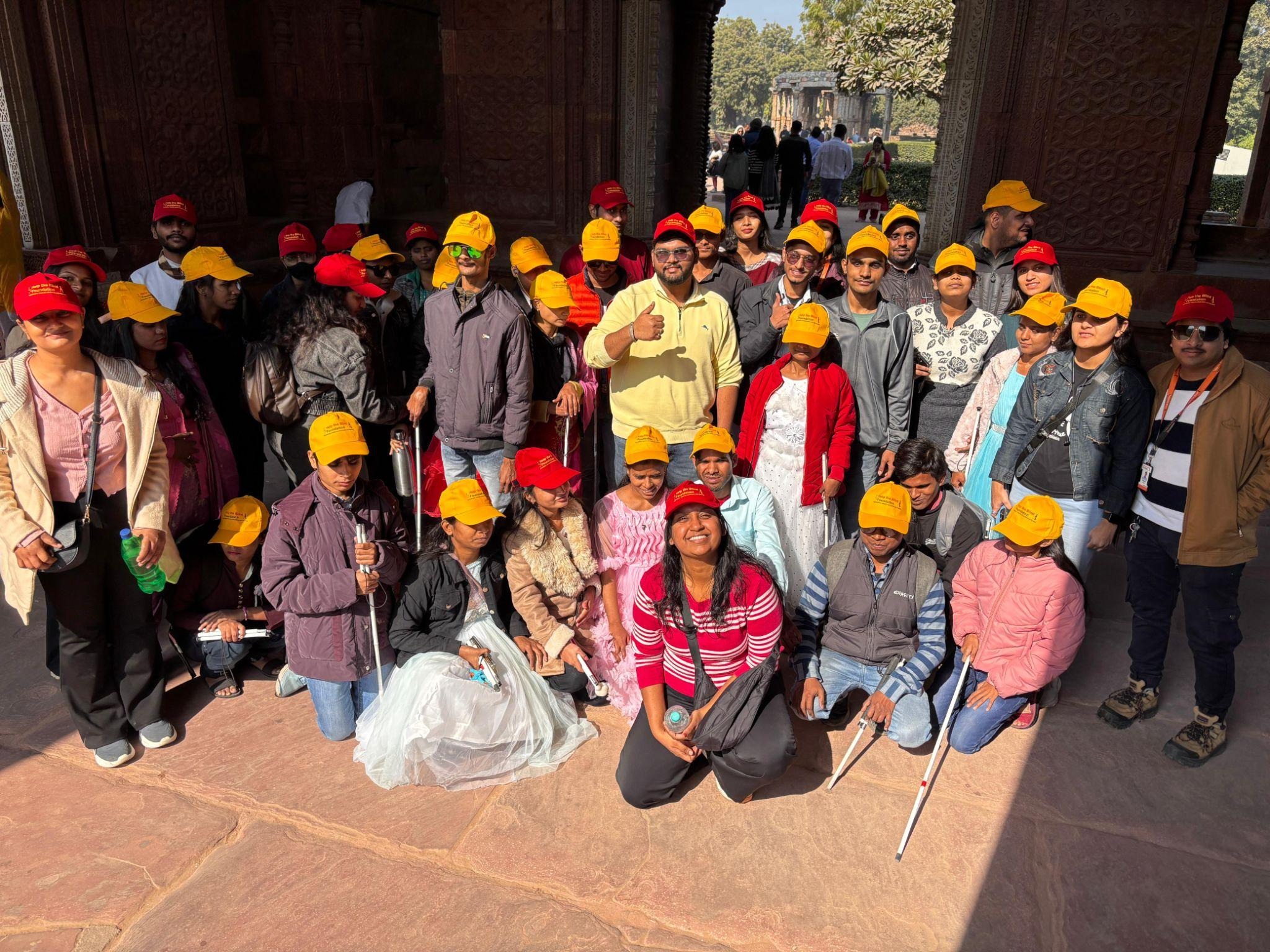
I started bringing groups of visually impaired children. For them,heritage is so much more than just a visual aesthetic you snap a photo of. It is feeling the temperature of the sandstone change in the shade. It is running their hands over the deep, intricate floral carvings of a tomb, experiencing the city's past entirely through touch. Watching them map out the medieval architecture with their hands completely rewired how I understood these monuments.
We also hold space for queer stories on these walks. I, like many other women, grew up with the fantasy of being "chosen." We wait for systems, or institutions, or partners to validate us, to pick us, and to keep us safe. But bringing queer folks into Mehrauli—a space traditionally also inhabited by trans people but the stories were deliberately erased—is an act of radical reclamation.
But recently, I have hit a wall.
For years people have been charging Rs. 800 or Rs. 1000 for these very same heritage walks and it boils my blood.
Obsessed with history but don’t give two hoots about heritage: that is our attitude in a nutshell.
Solitude in a massive, crowded Indian city used to be free. You could just go and sit. But capitalism has this terrifying, relentless ability to look at something free, package it, and sell it back to us at a premium. The elite are hoarding the quiet as well now.
Instagram democratized the image of these spaces, but it completely gentrified the physical ground. Today, the authorities have actually started renting these age-old places out so the wealthy can host weddings, corporate events, and birthday parties.
I think about this bubble a lot. I have watched people walk through Mehrauli in crisp linen handlooms, take an aesthetic photo in front of an archway, and leave. To them, history is a museum diorama. It is a cute backdrop for a sangeet. But they don't see the local kid playing cricket in the empty courtyard. They don't see the auto driver resting in the shade of a tomb after a 12-hour shift.
For the locals, history is the living room.
When the authorities rent these spaces out for private parties, they are essentially scrubbing the "messy" locals out of the frame to make room for a champagne bar. When you charge a thousand rupees to tell people the history of their own neighborhood, you are sending a very clear, very cruel message: This doesn't belong to you. You are an eyesore in our aesthetic.
We need to protect these spaces, not just from physical vandalism, but from rampant privatization. History is our collective memory.
The highest extension of privilege should not be the ability to ignore this inequality. It must be the moral courage to confront it. India's roots are deep, plural, and aching. They belong to all of us—not just the ones who can afford the fee.