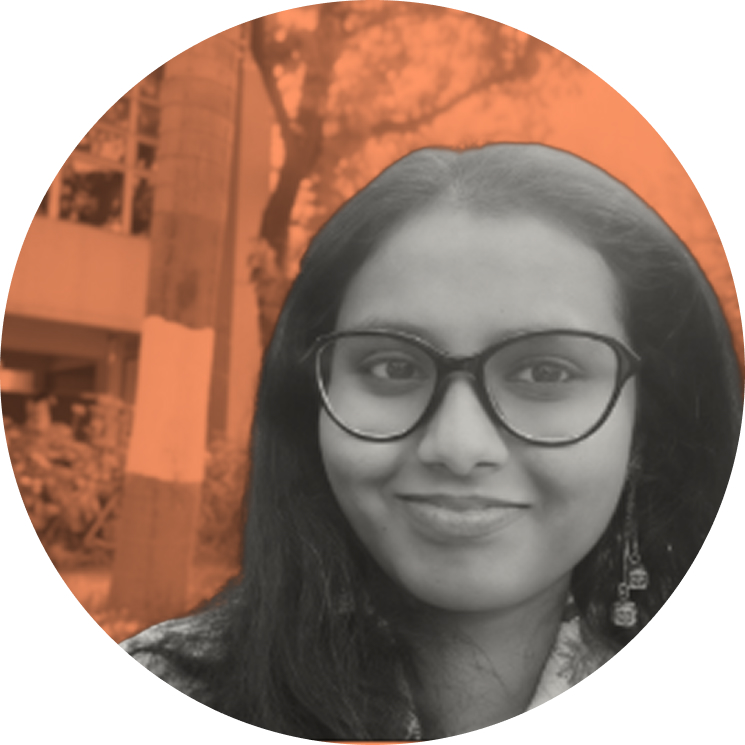
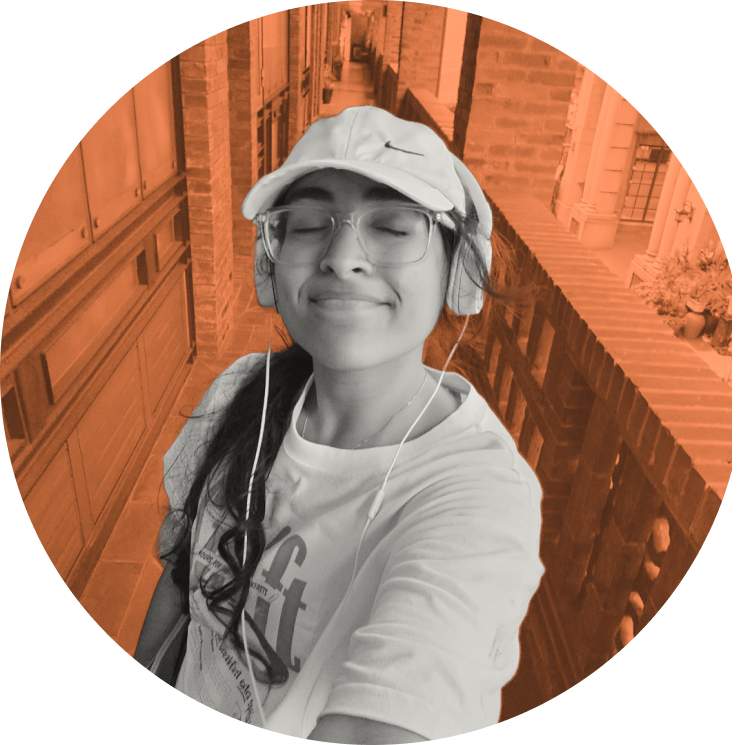

This does not happen often amongst South Asian immigrants in the tight knit city of Hong Kong. People choose to stick to what they know within the parameters of their family/community. There’s nothing wrong with that. Suski’s story is unique and inspired me to consider what that personal journey of return to the motherland and that inquiry into a forgotten language, gender dynamics, classism and colonial systems can feel and sound like through music.
1. South Asian immigrants in Hong Kong face systematic exclusion and discrimination that’s rife in the public education system. You became a teacher and an anti-racist advocate from there. What is it about hip-hop as an art form that drew you in and away from the education sector?
I was introduced to hip-hop at the ripe age of around six to seven, it was a very commercial style of hip-hop. I loved how catchy it was. But I was also a bit shocked by how sexualized the music videos and lyrics were. And I didn't understand half of what I was listening to or rapping with my friends back then.
For me, especially coming back to Nepal, I feel like music can be so elitist because it's about having access to all these instruments, lessons, a wealthy family that lets you invest in learning musical knowledge.
But hip-hop is raw, bare bones, like you got a beat, you got something to say, you got rhythm, you got attitude.
When I was finishing primary school and about to enter secondary school in Hong Kong that's when my exposure to raw bars began. Being a kid of the internet generation, the prime internet culture, I was there when the Nepali rap battle scenes started on YouTube.
At school when teachers would be absent, or some of my classmates wouldn't let the teacher teach, we would just rage-watch raw bars. Everyone would watch these rap battles even though they didn't understand Nepali at all.
One of the moments our class united over was when there would be cyphers at recess, and lunchtime. It does not matter if you begin with all of this fancy equipment, so long as you have something to say, so long as you can spit.
I first became a teacher because growing up, I found very few teachers actually cared about educating us. I wanted to be that teacher that I never had. Of course, I did have one or two good teachers, credits to them. But you’re relying on a couple to literally uphold the education system for six years of your life. I wanted to change that, but I also realized it's a systematic issue.
When I couldn't fix a problem, though, I would blame it so heavily on myself.
For the years I was teaching I was severely depressed, I was severely burned out. I wouldn't even go out on the weekends, because I would just replay all of the situations that I had no power to fix and it made me feel really hopeless.
The other thing was, I always wanted to be a musician. I wanted to be a creative since I was a kid. Not being allowed to do that or pursue that made me really unhappy. By the time I started teaching I was just 20 years old. I was like, you know what, forget music, I'm just going to make my parents proud. I'm just going to earn as much money as I can. I’m going to become financially independent. I don't have to ever feel inferior to anyone.
I stopped listening to music for quite a while. I didn't even write lyrics.
Until, I got back to writing during the pandemic. It was through writing I got myself out of this severe depression. We were still trying to figure out how to run classes. There was a period of time when nothing was going on and my ex-partner was very encouraging. He told me: you've always wanted to do music, why don't you just start? Then I wrote a few songs that became my first EP.
When the pandemic died down, I started performing them at live shows. I would just reach out to these Nepali event groups. They had no idea who I was. I would send them my sample videos and I would go perform.
I thought I would never plan to record them, ever. Then it hit me: because I was severely burnt out from the education sector, I slowly was getting back into what I really wanted to do, which was music. It swayed me away from the education sector. That is when I fully immersed myself into music.
2. For South Asians in the diaspora like myself, our relationship to home/land is bittersweet and returning to it to create art is almost a spiritual choice. What factored into your permanent decision to move back to Nepal and pursue hip-hop production in Kathmandu, and how did that return to the ancestral land affect you as an artist?
The story of how I actually moved back to Nepal is really weird. I was saving up money from the last two years before I quit my stable teaching job. Having always financially struggled, I knew it was important to have savings. One thing my childhood has taught me is when you have financial independence, you can pursue your dreams. I really wouldn't recommend anyone to chase their dreams without having some kind of a part-time job or savings.
When I was about to quit my job, I was thinking whether I should move to another city or another country for other opportunities. Perhaps, being educated somewhere else would mean a better quality of life. In the back of my mind, I always thought about moving back to Nepal. It didn't seem feasible at first. People leave Nepal, they don't come back. I didn’t know anyone in Nepal since I moved to Hong Kong at the age of seven.
There was this trip for overseas Nepalese to participate in a tour around Nepal doing volunteer work. I took the trip. It was around two weeks long, and while I was there, I thought, I'm not ready to go back to Hong Kong. My friend invited me to stay at their place for a few months. Then I just kept delaying coming back to Hong Kong, especially because I didn't have a job anymore. I didn't have an obligation to return.
Right before I travelled to Nepal, I launched my debut EP. I didn't expect anything out of it. Then it got super viral. I didn't really receive the benefits because it just went viral on TikTok. The views didn't come to YouTube or in the following.
The best part was that I was found by different venues to perform. Next you know, I was performing every month and meeting other musicians. I was stunned at the talent level in Nepal. It was crazy. I feel like Nepal is one of the most musically talented places in South Asia or Asia in general.
My parents were angry for the longest time.The fact I quit my job and pursued music caused a lot of further issues within my family. I stood my ground and said this is me reclaiming my voice, this is me reclaiming my authority. I'm not doing anything bad. I've been a good kid. I've always done my best to stay out of falling into the bad crowd. I am the first person, first woman in my family to earn diplomas and degrees from high school and university.
Growing up, I was surrounded by so much gangsterism and drug addiction. I had this chip on my shoulder. I'm not going to be the stereotypical Nepali in Hong Kong. I’m going to break these barriers. Over the last three years, my parents have slowly come to a little bit of understanding. They are slowly coming around to it because they see that through this I have been able to have other opportunities than they never thought that music would provide. They're also seeing another world, where life is not just about only struggling and survival.
I am an indigenous person in Nepal. It’s said that I didn't grow up learning my indigenous culture or my language. My mother's indigenous heritage is from the hills of Kaski, which is around Pokhara. Going back to Nepal, it's even more evident because you can see diverse castes. Certain castes have been able to preserve their culture so well. A lot of their younger generation can still speak the language fluently. They can still play their traditional instruments.
Then you have people like me who have been affected by colonization. Our grandfathers and families are scattered all around the world. I never got the chance to be engaged in learning my own indigenous language. It comes from this survival mentality. My grandparents and my parents have this mindset.
For them, whichever culture you go to, you assimilate. If you go to Kathmandu, you assimilate to the culture that's in Kathmandu, You go to Hong Kong, you assimilate to the culture in Hong Kong. It made me more aware that this is what happens when survival is the main priority in your family lineage for so many years.
I am the first person in my family to have this privilege of fully dwelling back into it, which is something the elders don't understand yet. This is me reclaiming my history. If I hadn't come back to Kathmandu, I don't think I would really have had this realization at all. I'm very glad all the events kind of led me back to Nepal.
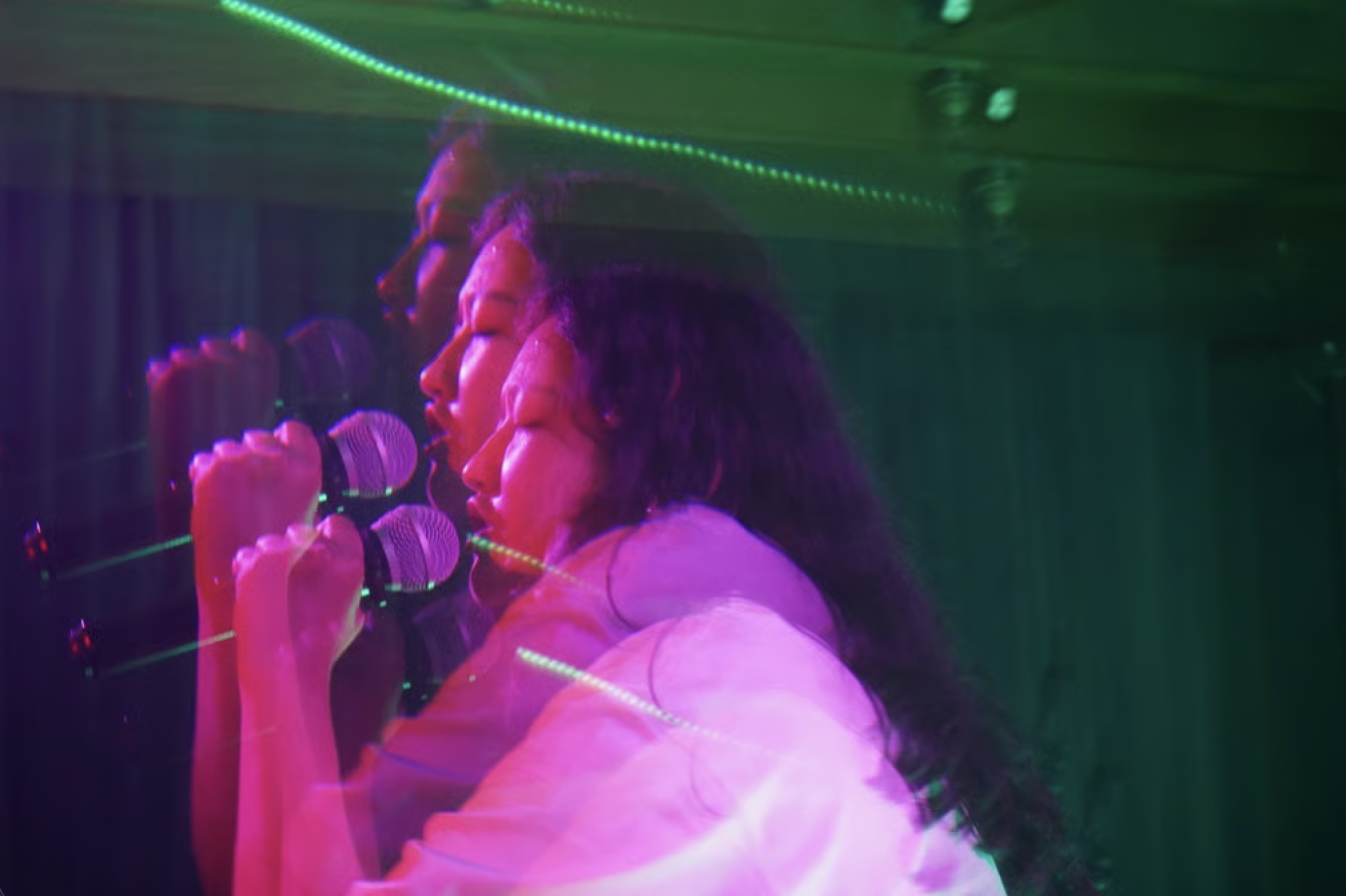
3. Language holds friction for immigrants who straddle split realities of understanding the world around them. How do you create and carry such varied languages of Nepalese with Cantonese and English in your lyrics, and how do the words translate for your audiences in Nepal and Hong Kong differently?
The language I'm most confident in the literary sense is English. I can write quite poetically in English. Because the main language easiest for all of us to communicate in Hong Kong was English, I had more practice in it than other languages. I would be like, 50-50 in Nepali. In Cantonese, oh, l’m versed in street, rough Cantonese.
When I began to write lyrics, sometimes they were weaved with Nepali words that came to me. Through this process of writing, I realized it's a separate practice of learning to decentralize English.
I used to think that I could never write poetically or write a full song in Nepali. Now, there are songs that just arrived in Nepali. It was about switching that part off and being intentional with my writing.
When I look back as a kid moving to Hong Kong, I didn't know English at all. I used to doubt how I couldn't speak English at the level others can. And the thing with Cantonese is I feel quite ashamed of how bad my Cantonese has been.
It might be very basic Cantonese, but I wanted to preserve the language in that way and people who speak Cantonese at such a level also exist.
I originally thought when I released my debut EP that it wouldn't translate to Nepali people at all, because I had so many Cantonese and English slangs and acronyms that I used about my experience in Hong Kong. But for the younger generation, only the chorus needs to stick. That's what people make TikTok dances off of, and before you know it, the song has blown up.
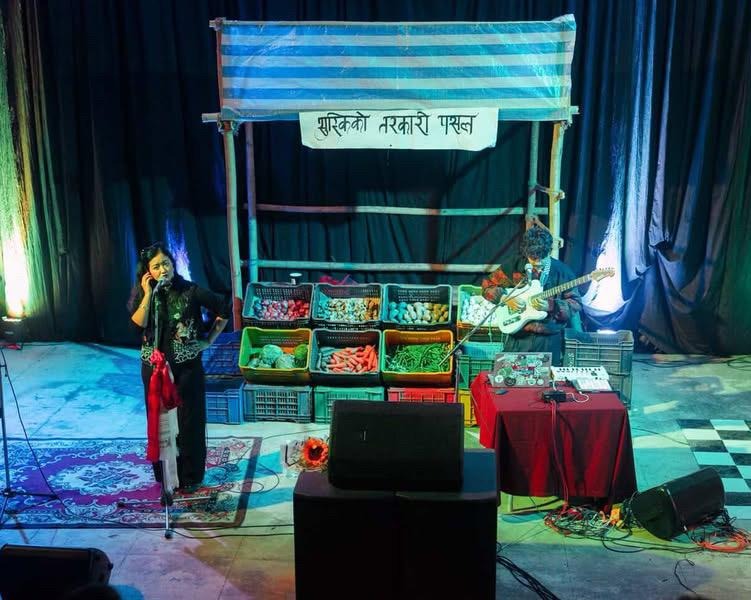
4. Speaking of language, I remember when the song from your EP album, Big Didi Energy went viral. What is the significance of this piece and how does it relate to the vulnerability of responsibility and pain for you and those of others from the diaspora in Hong Kong?
I wanted to make an anthem celebrating women of all ages. Big Didi Energy was one of the first songs I wrote for my debut EP. I wrote it during the pandemic because that time we had these viral memes of mocking a man with big dick energy.
At such a claustrophobic time like the pandemic, I thought to myself: I do not need any dick energy. I need my big Didis, my big sisters, to tell me everything's going to be okay and the world is not about to end.
South Asian culture is very ageist, especially against women. In Nepal, I have noticed that so many people care about their age. People feel like once you're 25, you're ‘expired’, especially as a woman. I was stumped because you would certainly not age out at 25 in Hong Kong. That is your peak, career time period. This ageism actually came from my fellow female friends even more pronounced.
I wanted to highlight older women in the song. Although I'm younger, I wanted to emulate the energy of an older woman. That’s what I aspire to be. These women are the ones holding it down. There is this beauty of getting older, a beauty that decenters what other people think and say about you.
The second verse of the song talks about how a lot of people will join these non-governmental organizations to help ethnic minority groups from South and Southeast Asia. When in reality they are seizing opportunistic ways to exploit women and girls in our communities.
In the third verse, it points to how men are treated like kings at home. But then when it’s time to speak up and uphold the truth, they go into hiding or lie through their teeth.
That’s how we enable gross conversations and actions to carry on as usual. It's the same with how women’s body parts are used as adjectives to define cowardly behaviour, and how loosely the N-word is tossed around. Misogynistic language is enabled so much in our communities and the whole song talks about that in detail.
But mostly, it is my social commentary of how South Asian girls are expected to mature way faster than their age. I wanted to pay homage to that, because ever since I was a kid, people always thought I was older than I am because of the way I carried myself and the things that I was doing. I would be mistaken as being the older person by a person who was older than me.
5. You also collaborate with artists from Nepal and even South Korea for some projects. How did mixing the styles, production and cultures connect to larger themes of multi-spatial and linguistic music that defies the mainstream music industry?
Collaboration is one of the things that I love. Sometimes, when you're working by yourself, you get in your head about how terrible something sounds. But when you're working with another person, they bring their own beats, their new sounds.
It makes the work easier in the sense that I only have to do half the work. And I can't overthink it. When I'm working by myself, I'm thinking about how to make the beat, what topic to talk about, the kind of flow it must feel like. When somebody has a beat and they already know the subject they want to speak about, I write about that topic with them.
I also love mixing different genres and styles, even though I'm a hip hop artist. I don't want to just make hip hop music. I want to develop a lot of different music.
I’m also learning how to produce because I feel like being in Nepal, I was searching for a female producer for the longest time. I couldn't find one. I think there's only one or two, but they don't really do it professionally. They do it for personal production.
I want to learn how to produce and fully be in charge of the music I make. Historically for a lot of female artists, someone will write the lyrics for them, someone will tell them how to sing it, someone will make the beat. You simply go on stage and perform. But I want to be fully involved in my process. Not saying there's anything wrong with that process, but I want to fully be involved in my own process.
With that, I have more authority on how I want to be represented. I think musical collaborations show us that music is a universal language. Look at the rise of K-pop, the rise of South American music, like Bad Bunny. Good music knows no bounds. When we collaborate, both artists have a chance to grow and be exposed to opportunities that we previously didn't have.
I freaking love it.
Now, I'm in India and I'm working in a music fellowship in South India with these musicians and artists from different tribes in Kerala.
I'm even more excited to see what we would create together. It's a big middle finger to the mainstream industry. A lot of us are taking back ownership: we're publishing the songs ourselves. We're distributing the songs ourselves. We don't really have to be signed to a label anymore. Although it would be great to be signed to an amazing label, I don't have to wait to be discovered.
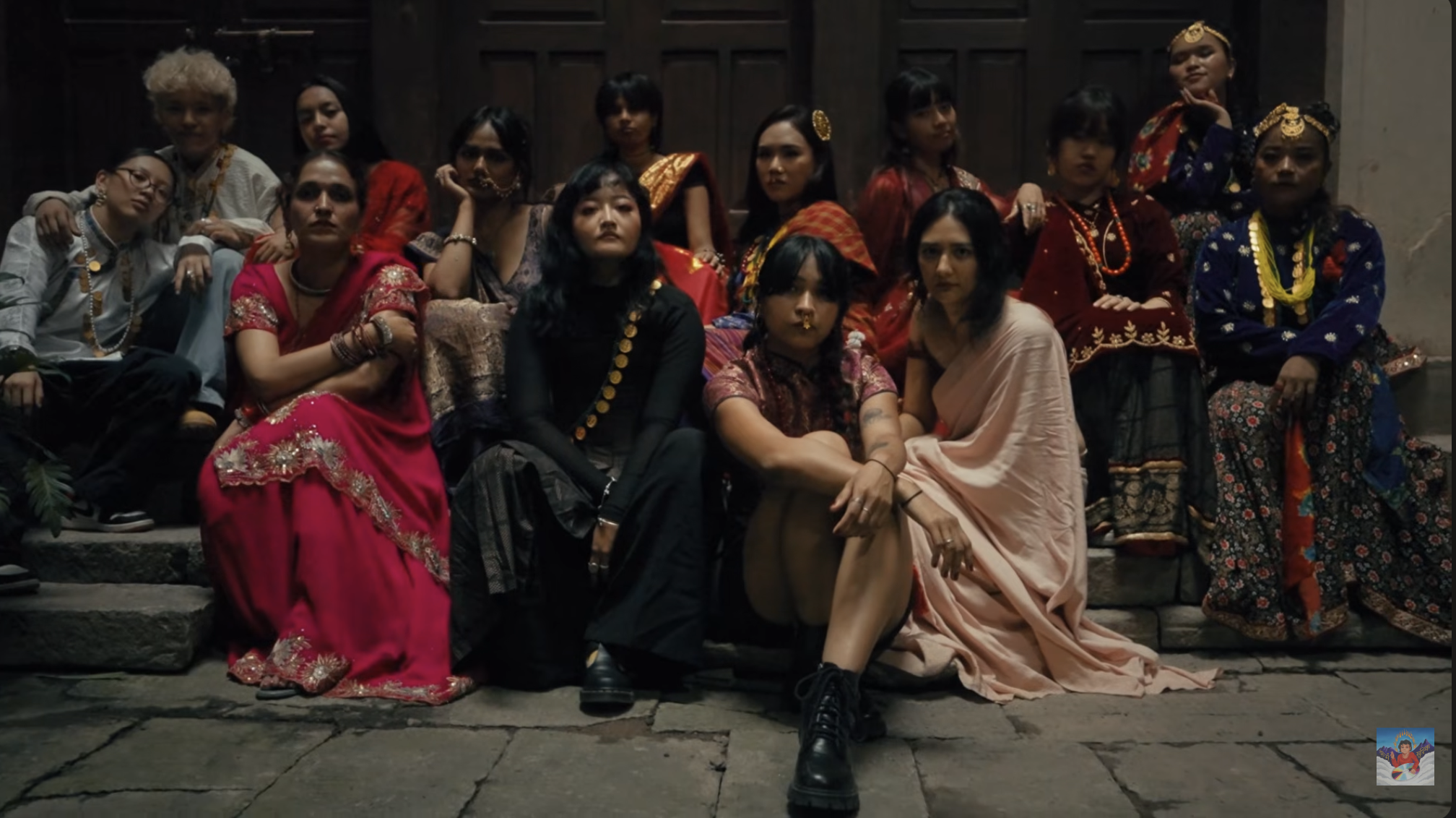
6. Your upcoming debut album, imposter syndrome is a deeper critique of society, with one of the songs, BHAGDAICHU MA (I KEEP ON RUNNING AWAY FROM MYSELF), released during sexual abuse awareness month to bring to light the pain and shame that comes with talking about gender-based violence. What is it about bodily autonomy, movement and migration that you are unraveling here as a whole?
Baal De Suma, this song that I wrote, was an interesting one. This was one of the first songs that ever came to me completely in Nepali.
It was in the middle of the night. I was asking my longtime producer, collaborator, Abhishek if he has any other beats. He was like, ‘do you want to try something like Jersey Club?’ I heard the beat and the lyrics just came to me. The funniest thing was that it mainly came in Nepali.
I was done writing in a day. This song was also recorded in one day. While I was recording, my voice was shaking the whole time in the studio.
‘I really wish I won’t have to rerecord this song,’ I said to myself. This album is heavy. It is talking about the many vulnerabilities I face. I think sometimes in hip-hop, there's this need to be, like, ‘I'm better than everyone. Nothing affects me.’ But the truth is, for me at least, I'm a very sensitive person. A lot of things affect me.
Through these experiences, I have become much stronger. I wanted to name it Imposter Syndrome. Even though it was my debut album, no matter how many compliments, no matter how many articles are written about me, I always feel like I'm an imposter.
Like, just waiting to be found out. I just feel like people are pretending to like my music. That's a feeling a lot of people, not just artists, deal with. I really wanted to really tackle this.
My experiences of growing up. Critiques of hip-hop society right now. Certain things like the [Hong Kong public school] DSC examination and Chris Wong (Hong Kong musician).
The first song of the album is quite sad. Then you go through a range of emotions. The last song is Hami Sabay Kothra, which means that we are all amazing.
It’s all leading up to this rollercoaster journey. In the end, we're all amazing. Even though that last song is critiquing how everyone just wants to become a rapper. Because it seems cool without really wanting to delve into the music.
The other song, Bhagavad Gita, was very important for me to write. A lot of us females and quite a few men have faced violence in our lives, one way or another. It’s violence that we never talk about.
In South Asian society, you don't air out dirty laundry. Then the dirty laundry literally marinates, ferments, and grows molds. Then the person it affects is the person wearing those clothes. It forever remains there.
The process was quite uncomfortable because I directed this music. It made me uncomfortable thinking of how to display it in ways that are not stereotypical. Everything is kind of implied in the music video. There's something tasteful when it's implied.
I’m hoping for South Asian hip-hop or hip-hop in general to have a movement of honesty, community healing, self-expression and a little bit of individualism.
A lot of songs nowadays, whether it be the beat or the lyricism, are so similar or focus on one specific topic, which is: I am the best. Seeing a variety of alternative hip-hop styles that can exist is what I'm hoping for.
Don't get me wrong, I love my braggadocios hip-hop. I love making them as well. But I've been not doing it for a while, because I feel like it'll come when it comes, just like how Big Didi Energy did.
Diaspora voices are not usually heard. There's a few diasporic hip-hop artists coming out, but I haven't really heard any Nepali diaspora artists. I feel like a lot of people don't really talk about the diaspora experience itself. But now, I see it from other South Asian countries, and it's time for Nepal to stand out.
7. Finally, what’s your favourite South Asian sweet?
The first that came to mind is sel roti. It's like this ring-shaped Nepali bread that's made out of flour, sugar, and ghee. In our family home, we always have this one allocated area just to make sel roti because we'll have it for every cultural occasion. It's always about who's auntie can make the best sel roti.
The other one is juju dao, which is a Newari sweet. It's like this sweet, creamy curd from the city of Bhaktapur. I love it because it tastes amazing. They put very high-quality buffalo milk on a wood fire. Then, they add some brown sugar. You eat it out of a clay pot after it's chilled.