

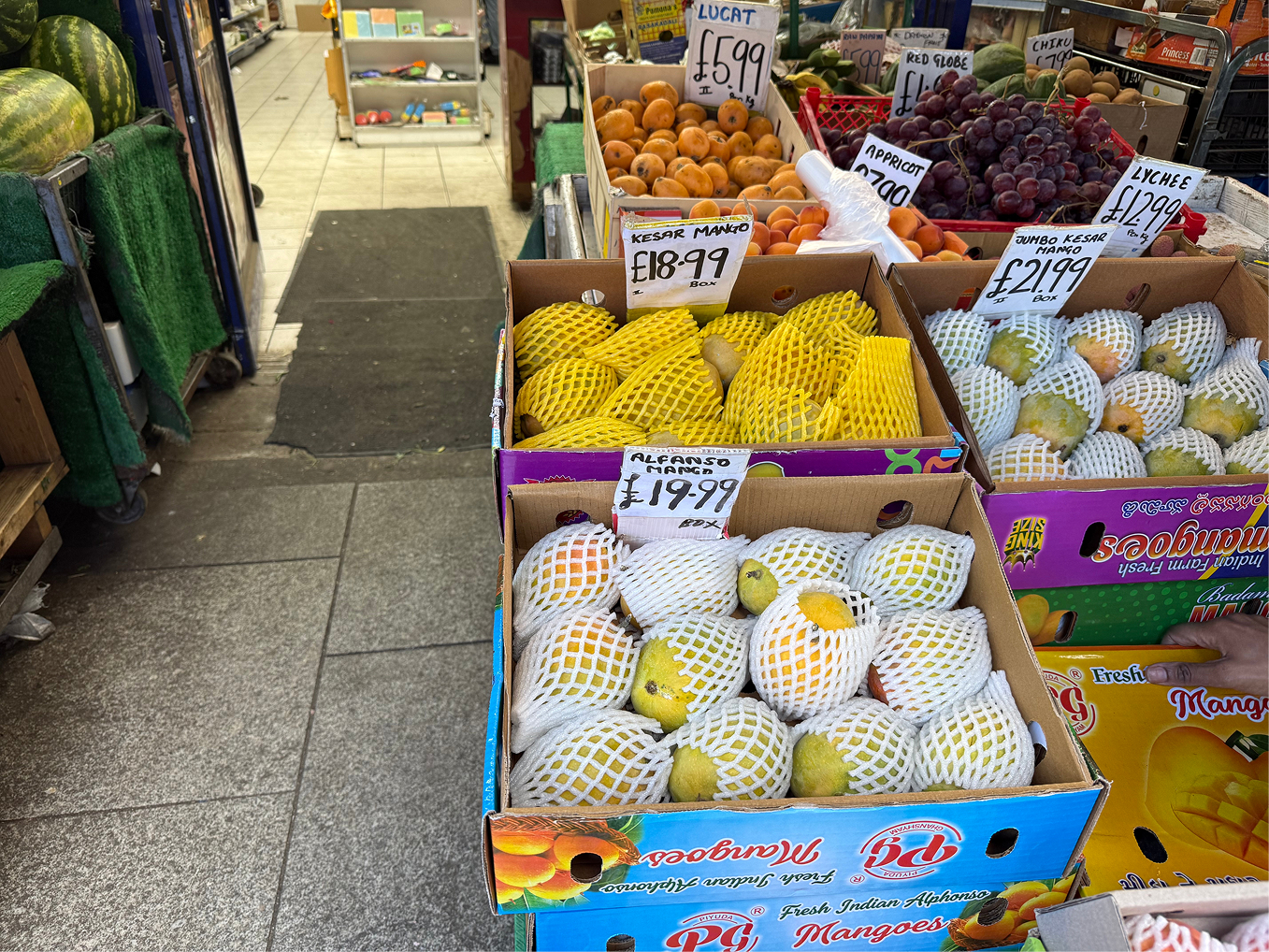
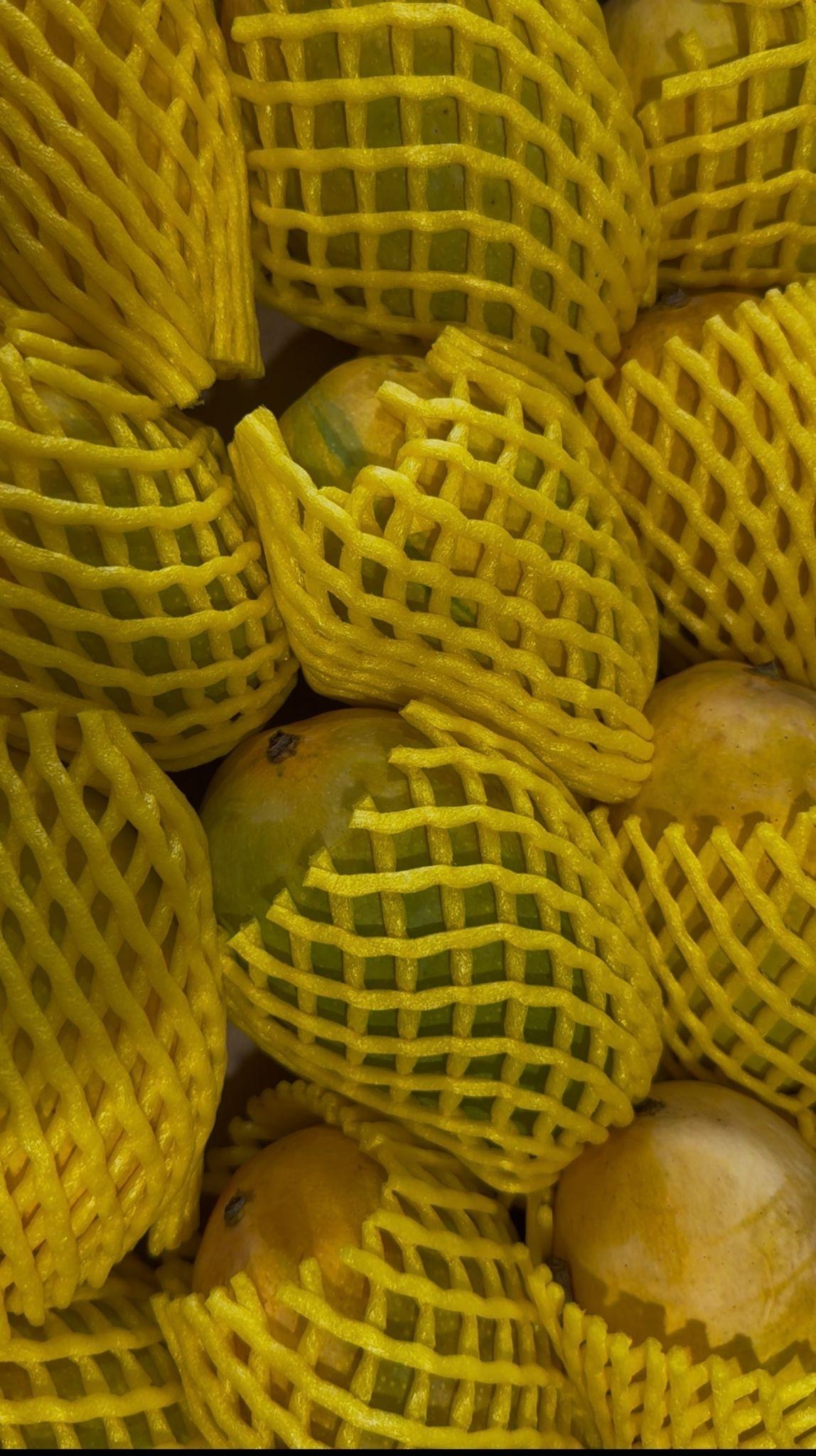
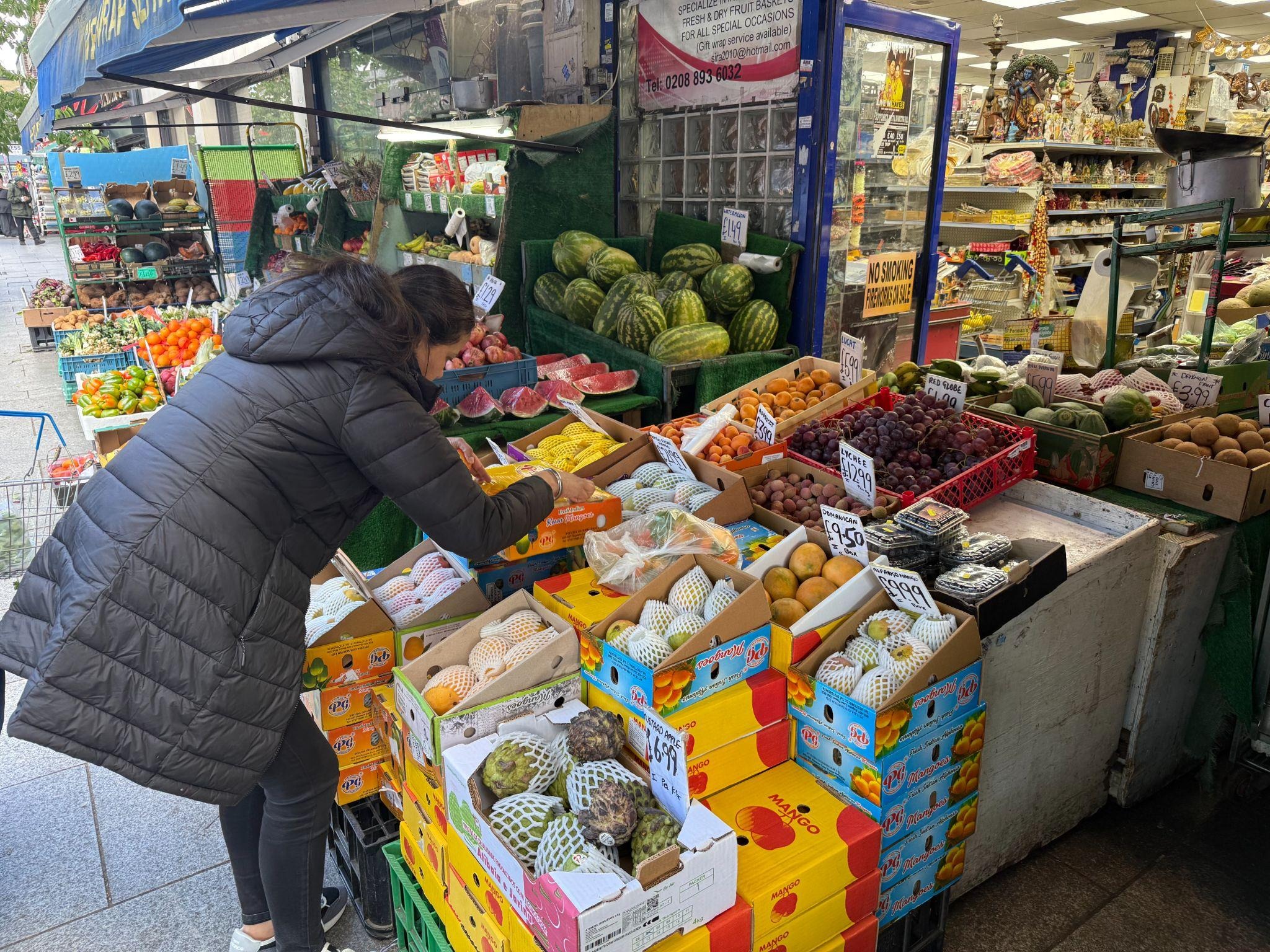
The queues have died down, maybe a few customers gawking at the ripe, bright-orange mangoes in their netted white-and-yellow casing. They take the mangoes out of the box and take a meticulous look at their quality, how soft they are, and how much spotting they have. Then, when they look at the price sat on the box, they abruptly set the mangoes back in their box, unscathed and unwanted.
"Price-wise, it's higher than we usually sell. Hardly can you save anything anymore, with low margins," Sehra said. The war in Iran has only made the situation more precarious, David Tjong, an Indian mango importer in the UK, said.
"We have to maintain those margins because we still have to deal with our own operational costs, and on the postage side, that could go up as well due to increases in fuel," he said.
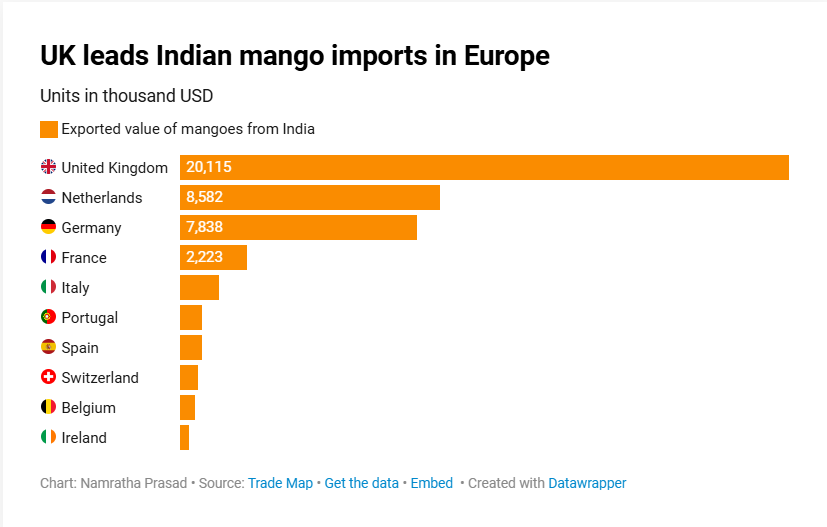
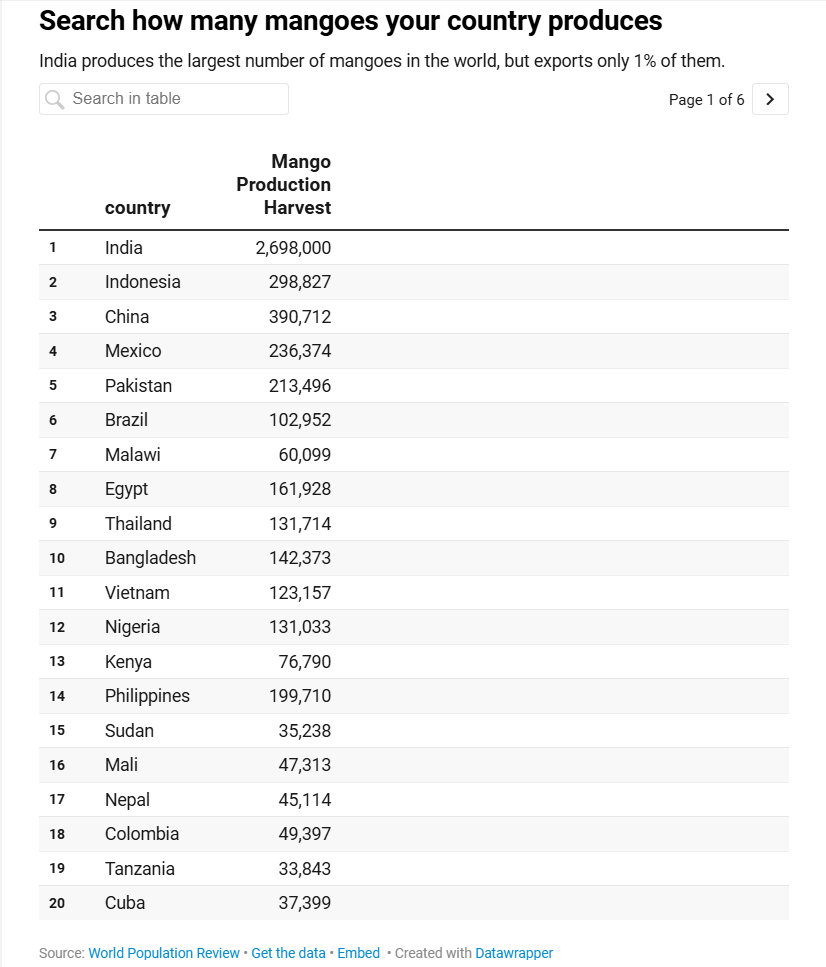
India produces nearly half the world’s mangoes, but exports only 1% of its crop. From that limited supply, the UK has become one of the key destinations, leading Europe as import values continue to rise. But the scarcity of Indian mangoes is now pushing up prices at the height of the mango season and starting to affect demand. One London retailer said sales have slowed this season as costs increase due to the war in Iran. Air freight routes and fuel costs have risen amid instability linked to the conflict involving Iran, increasing import costs during peak mango season.
“Not that many orders are coming because of the price,” a shopkeeper at Variety Foods in London said. “We've been waiting for the mangoes for more than a month.”
The fruit’s short, unpredictable season and fragile supply chain are driving higher prices, according to Tjong. Specific growing conditions in India make the existing supply a rarity in the global market. “I think people have attempted to grow them in different parts of the world and not really succeeded,” Tjong said. “It's not just the seed, it's the soil, the conditions, the humidity, it's just everything.” And climate change has only made harvesting an uphill battle. Erratic rain and soaring temperatures have disrupted flowering and setting, disrupting crop yields up to 90% in some regions.
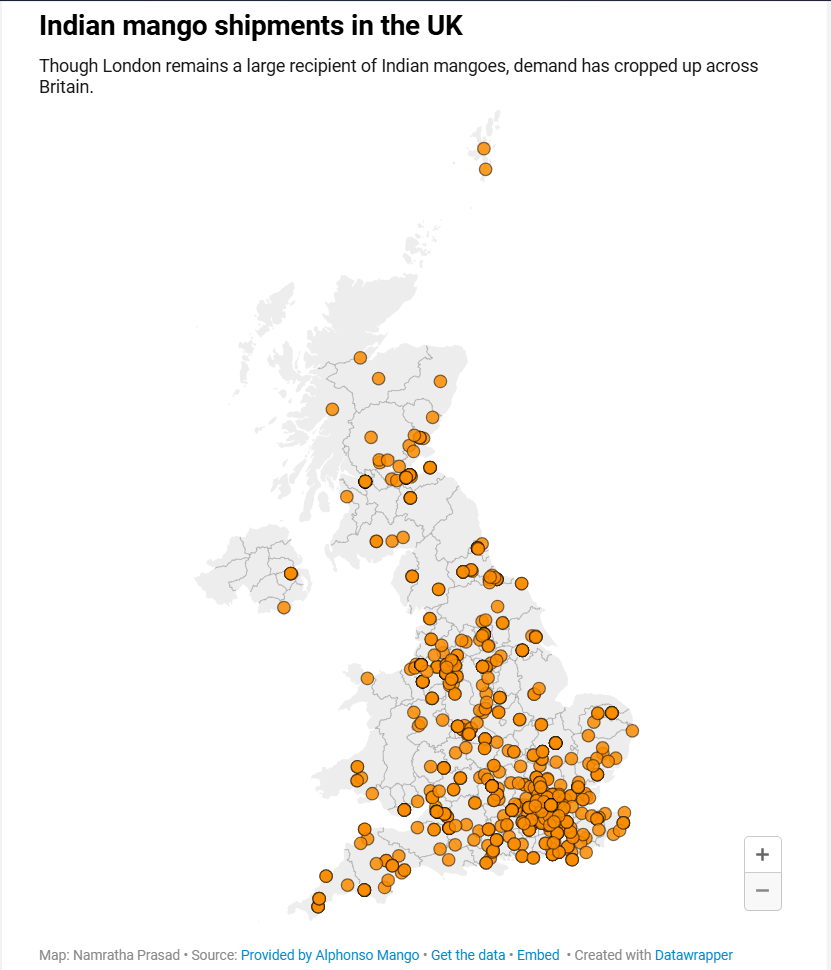
But even as barriers to harvest remain, demand is spreading beyond the South Asian diaspora here in the UK. Order data shows purchases across the UK, from Scotland to the south-west of England, and Tjong said he expects sales to triple this year, with more than half of customers now outside the South Asian diaspora.
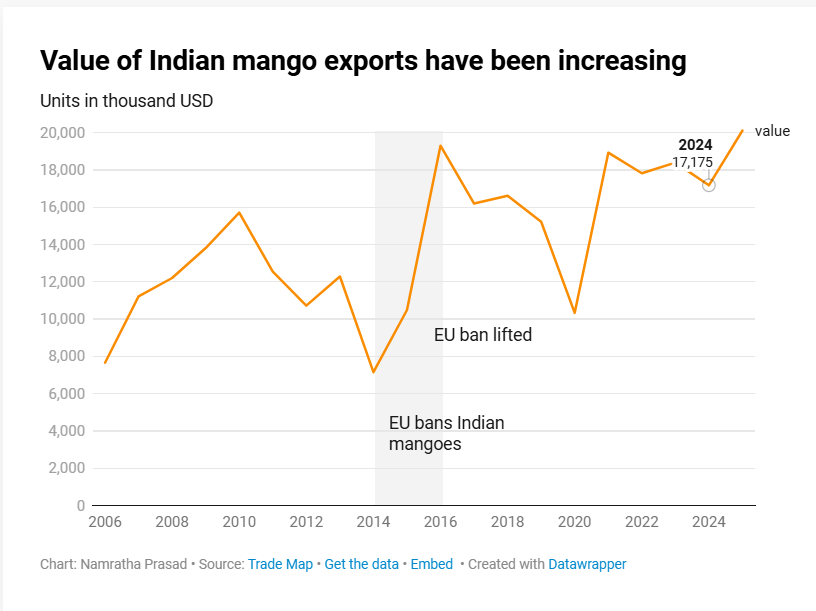
Data analysis shows that most of India’s small share of exports goes to a handful of markets, including the UK, the US, and the UAE, while the UK dominates European imports. Yet Britain does not rely on India for supply, importing mangoes year-round from multiple countries.
Diaspora demand continues despite pricing
But demand from the South Asian diaspora makes Indian mangoes a contributor to the British economy, especially in April, May, and June. Even at £30 per box, the shopkeeper at Variety said there will be lines out the door and empty boxes during the peak season in May.
“They're waiting for the mango season, especially for the Indian Kesar and Alfonso mango, because they've been eating these mangoes back home,” he said. “Indian people, they love this mango.”
The history of mangoes in Indian culture spans about 4000 years. The earliest mention of mangoes appeared in ancient texts and scriptures called the Vedas. The fruit is often used as an offering to the Gods. In Buddhism, it is believed the Buddha sat under the shade of a mango tree where he performed his miracles.
Throughout the Mughal Empire and colonisation by the Portuguese, Indians developed advanced grafting techniques, which bred special types such as the Alfonso and Dasheri mangoes.
The fruit’s cultural significance makes it customary within the diaspora to gift the mangoes, Tjong said. One customer even ordered mangoes from London to gift to a relative in Manchester. “They also have this symbolic thing of like, not just something you eat, but something that you give as a present,” he said. Some stores even stash their mangoes in the back to prevent the yield from going bad, making it a sort of treasure hunt for customers.
Mangoes have even made it to negotiation tables as a form of diplomacy, dating back to the Nehru era. The crop is used to help settle bilateral relations and unlock trade. In fact, in 2006, Dr Manmohan Singh gifted George Bush Indian mangoes during his visit to New Delhi. Those mangoes, along with an irradiation technique that satisfied USDA standards, are credited with having pushed a deal to allow imports of Indian mangoes in the U.S.
Today, people in the U.S. pay upwards of $60 for a single box of the mangoes. Despite the price, Sehra said the diaspora keeps the culture of mango season alive every year, and she can not put a price on that. "Mango is everyone's favourite," she said. "People look forward to the summertime for mango season."