

How did my ancestors get around Australia’s immigration restrictions? I asked myself, brow furrowed. As my fellow students continued unpacking the racial and eugenicist themes underpinning restrictions on the entry of non-Europeans, particularly “Asiatics,” I began pondering the journey of the mysterious Indian hawker in my family tree again, and how I had long resigned myself to ignorance about him.
It had never crossed my mind that this ignorance could be the legacy of secrecy or shame in the older generations of my family, let alone government policy. This realisation shifted into frustration, then boiled over into anger after poring over countless journal articles and scholarly works on immigration restrictions and other forms of anti-Asian exclusion between Australia’s invasion in 1788 and the mid-20th century.
Absence, Longing, and… Genealogy
Absence and longing have shaped my relationship with my South Asian heritage. Growing up as a pale-skinned, freckled kid in an Australian country town, I’ve always carried an overwhelming desire to connect with my mysterious Indian ancestry.

I loved the poetry and rebel music of my maternal Irish side, but Catholic Sunday school never appealed; the sacraments and scary stories all blurring into a single haze of boredom and guilt. Instead, I was drawn to my paternal Indian ancestry, a place where I could build an internal world outside the church, yet neither my father nor countless older relatives could tell me how our South Asian ancestors arrived in Australia, let alone what it meant to be Indian.
That absence eventually led me to genealogy as a tool of reclamation, a way of tracing what had been lost or unspoken in the spaces between memory and silence lingering in my family.
Genealogy as Turning Point: Reculturing through Research
Anger soon gave way to a fierce determination to reconnect with this obscured part of my identity, but how? Months of academic research had brought no new discoveries to light, prompting a shift from strictly academic research to genealogy, which gave me the practical tools to reclaim an identity nearly erased by the racial politics of Australia’s birth.
Genealogy is a research method that involves analysing primary and secondary sources to reconstruct familial relationships across generations. It works by collecting, cross-referencing, and synthesising records such as birth, death, and marriage certificates, immigration files, census data, oral histories, and more. The floodgates had opened, and I soon found myself obsessively researching into the early hours until, step by step, brick wall by brick wall, I began piecing together the family mysteries I had been longing to understand since childhood.
I have since built an extensive archive of meticulously catalogued documents and sources, teaching myself to extract vital details (“vitals”) and create genealogical charts and bespoke written reports. These skills have proven decisive in piecing together my family’s trajectory, allowing me to confirm who was alive at particular points in time and map familial relationships across generations.
Between the Margins: The Power of Primary Sources
Reconstructing my family’s journey through primary sources back to our village in Mahru, Patiala District, Punjab (or could it have been Maheru in Jalandhar?), has been a painstaking but thrilling experience, with the ability to confirm all that my Nan spent her life hiding, both bittersweet and rewarding.
Extracting vitals from primary sources is not the most exciting task at first glance, but it is an art that genealogists enjoy. Registries of births, deaths, and marriages are often the best starting point, but newspaper articles, school records, and electoral rolls have also uncovered glimpses into the vital details and daily lives of ancestors once lost to me.
To conceal her heritage, Mason was the surname Nan used on official documentation, from her children’s birth certificates to her 1974 marriage to my grandfather Dan, nearly 40 years after they met and started a family. Mason was also the surname on her death certificate, with Emily Bellingham listed as mother and father unknown. A later search of the Victorian birth registry for Florence Singh matched a child born in 1909, with 24-year-old Emily Edith Bellingham as mother and 39-year-old Punjabi labourer Natha Singh as father. Bingo!
This discovery led me to painstaking registry searches across Australian states and territories, culminating in the most important find in my research thus far: the 1909 Queensland marriage certificate of Natha Singh and Emily Edith Bellingham. It confirmed their marriage and revealed Natha’s birthplace in Punjab, as well as his parents’ names and occupations. Double bingo. Zameen (a piece of earth), finally!
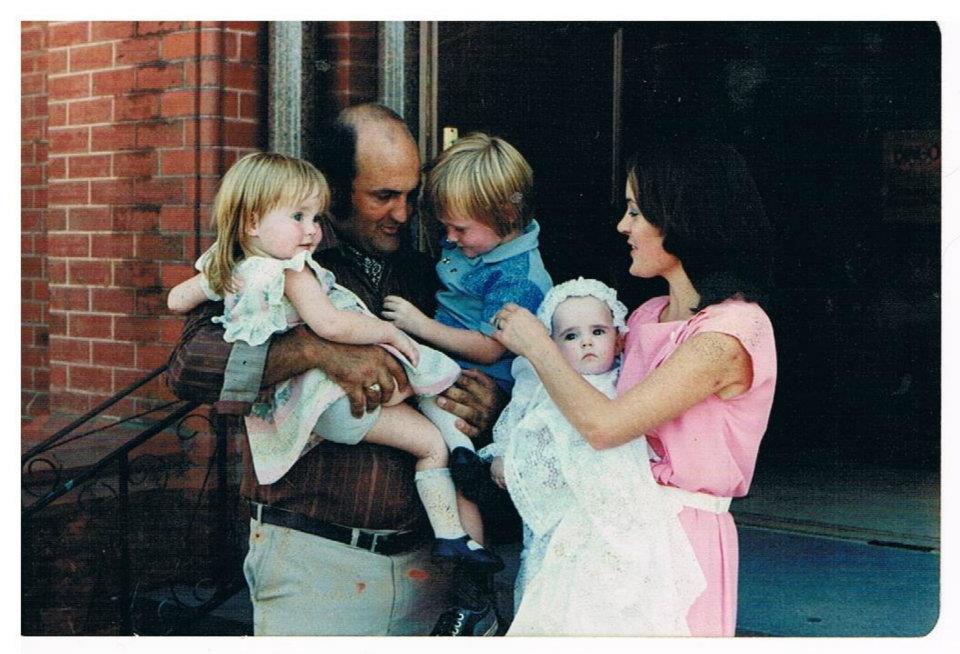
Later birth certificates for Emily Edith’s younger children show that she began a relationship with Natha’s (supposed) cousin brother, Inder, shortly after Natha left the marriage without warning. Inder and Emily Edith never formalised their relationship despite sharing four children, with Inder treating Natha’s two children as his own, albeit not always favourably. “You never knew if it was rain, hail, or shine with that Inder,” one direct descendant told me.
Newspaper articles indicate alcohol and family violence featured prominently in daily life under Inder as patriarch, though he could also be charismatic and humorous. A complicated character, Inder’s presence on the electoral roll also tells the story of the fight of Indians in the Empire for the right to vote.
.JPG)
Oral History and the Limits of the Archive
An absence of written records is not an absence of evidence. Oral history can sometimes unlock insights that raw data cannot. It is therefore often one of the first steps in researching South Asian ancestry in colonial and early to mid-twentieth-century Australia, particularly because official records for non-Europeans from that era are scarce.
I started my oral history journey by reviewing my charts and research notes, identifying who was related to whom, what happened when, and noting who was alive when the first and second generations of Indians were still around. Then I picked up the phone and started writing letters. In 2009, I got my father to call someone in the phone book with the same name as his aunt Delma. Having just moved into a nursing home, Delma’s daughter answered only moments before she was about to close the door to her mother’s house for the last time. A meeting was arranged, family stories exchanged, and I was gifted a photo of Natha and Inder. Delma passed away only five months later.
I am privileged that oral histories from my father and his cousin Anna are deposited with the National Library of Australia (NLA) Indian Diaspora Collecting Project. Anna charismatically recounted irreplaceable memories of my Nan’s turbaned Sikh stepdad and the wider Indian (or “Hindu”) community in my hometown of Bairnsdale in the region of East Gippsland, Victoria. In contrast, my father’s interview captures fragmented memories and the culture of concealment of non-European heritage in early to mid-20th century Australia.
Counter-Memory and Community
Embracing counter-memory allows me to challenge dominant settler colonial narratives embedded in mainstream Australian understandings of our past. It demands that we revise existing accounts by bringing in new perspectives, and that we pay attention to localised experiences of oppression to reframe stories that claim to represent universal experience.
Genealogy provides a gathering place of counter-memory for individuals with South Asian heritage across the diaspora, helping to fill in the missing fragments of our identity. To contribute to the community of discourse, I have published on everything from public history projects to my own family’s experience during the White Australia Policy, researching displaced communities, and the emotional impact of tracing one’s ancestry.
From this work, my greatest achievement was founding the Indian and South Asian Research Interest Group at the Society of Australian Genealogists, launched during Family History Month in 2025. Many descendants of early South Asian immigrants to Australia share a sense of nostalgia for a subcontinent we have never set foot on, and this group reflects my commitment to building pathways that connect the diverse community of descendants, researchers, and organisations whose shared purpose is to celebrate South Asian heritage.
After the Archives
Genealogy has been a powerful tool in reclaiming the missing parts of my South Asian identity that Australia’s colonial-era policies sought to erase. But where do archival discoveries leave the researcher once the novelty wears off?
The research process has brought me from not really knowing what “Indian” meant – whether a people, religion, culture, or race – to now connecting with Sikhs, Hindus, Muslims, Zoroastrians, Catholics, Buddhists, and atheists across the diaspora, sharing which corner of the patchwork-quilt subcontinent our ancestors came from, whose chai recipe is superior, and a shared amusement at my family’s continued penchant for a Patiala peg despite my ancestors leaving the princely state just over a century ago.
Genealogy has given me a language for rebuilding connection, and the communities I have found through it have created a sense of belonging, or “coming home,” that I once never thought possible. But it does not restore what was never recorded, and it cannot return the people I now know only through documents and fragments.
Still, Sikhs are not known for giving in easily. So the journey continues.




.jpg)