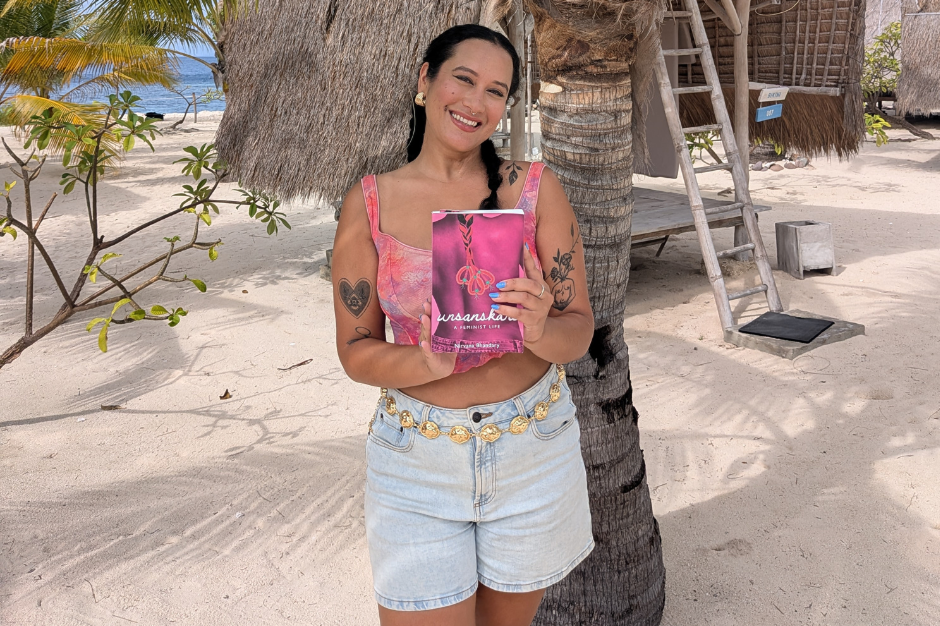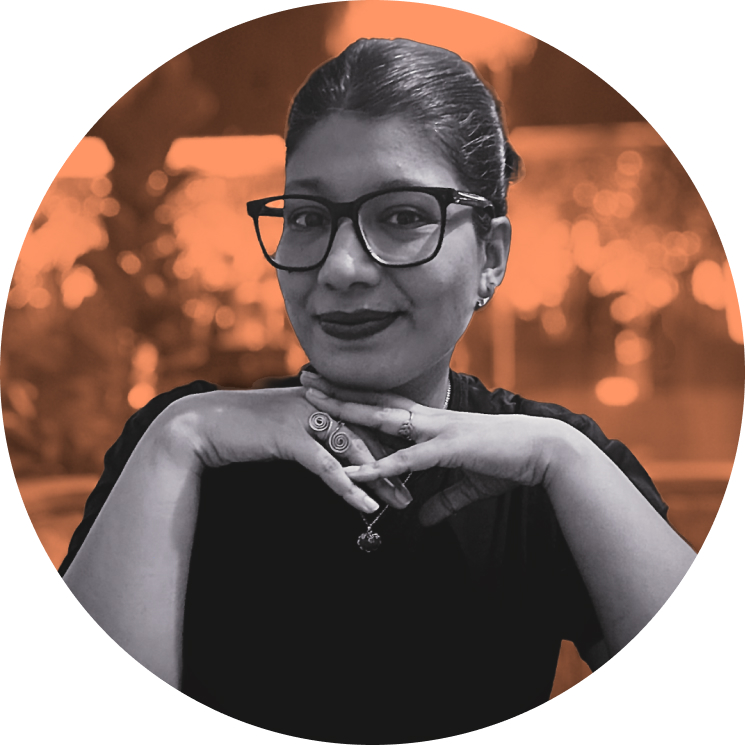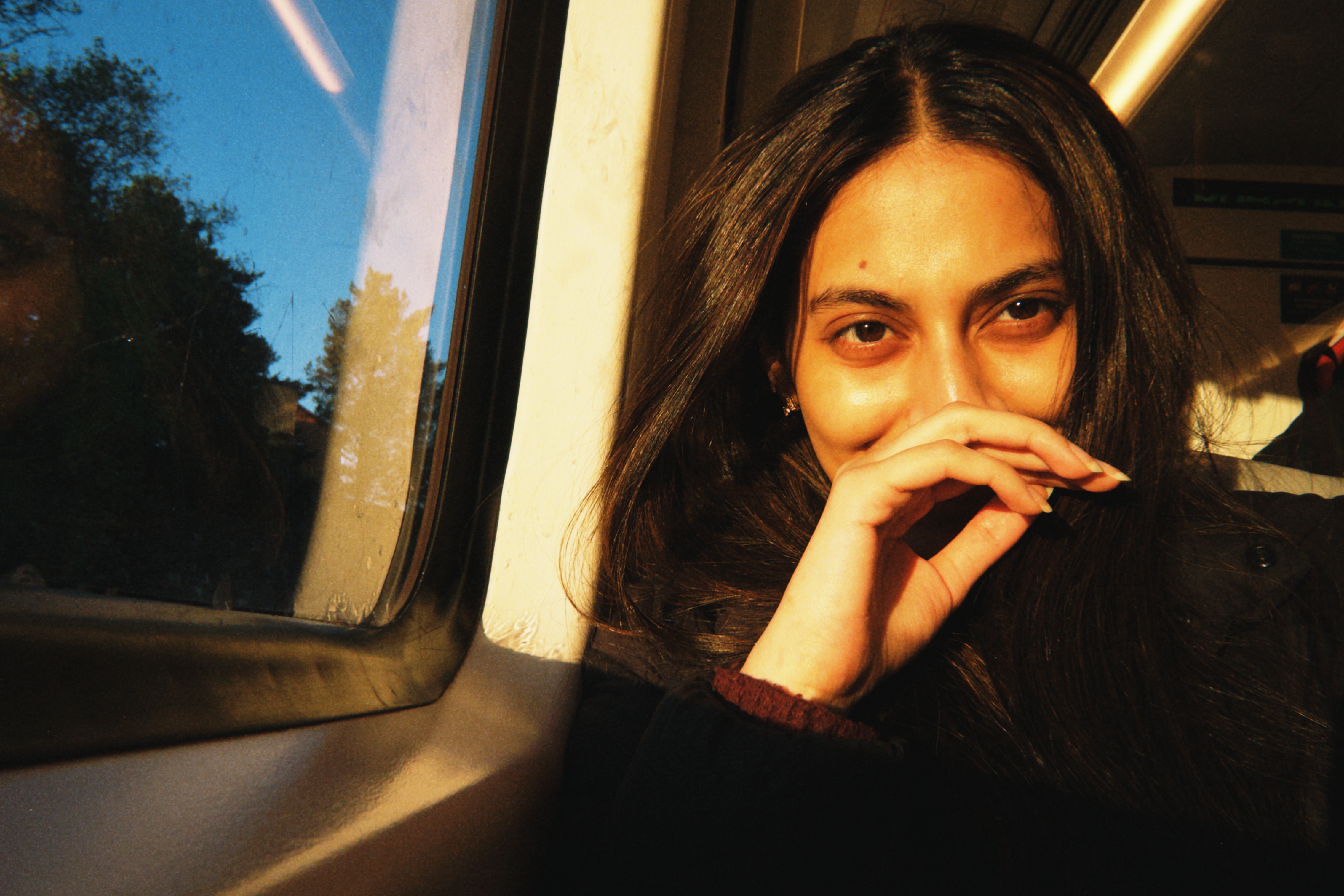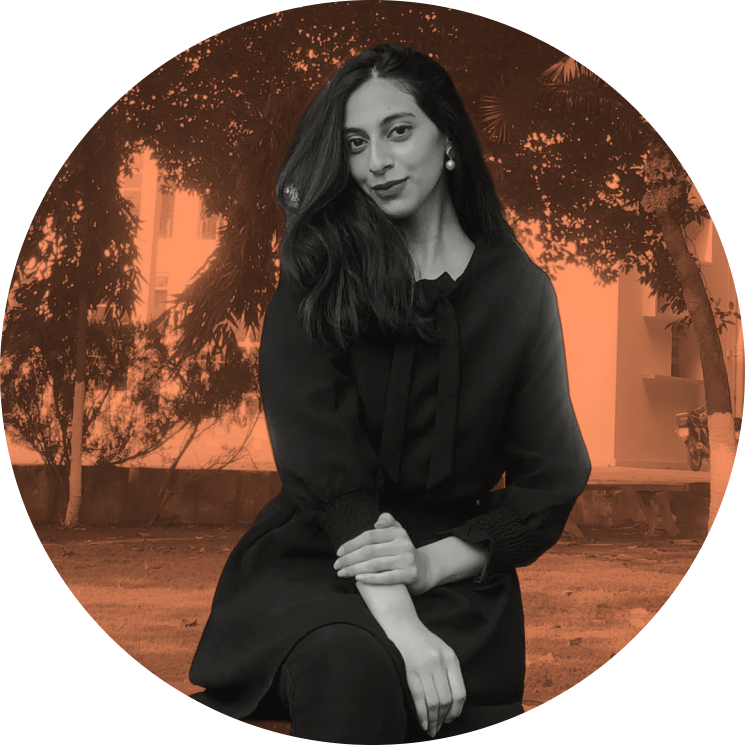

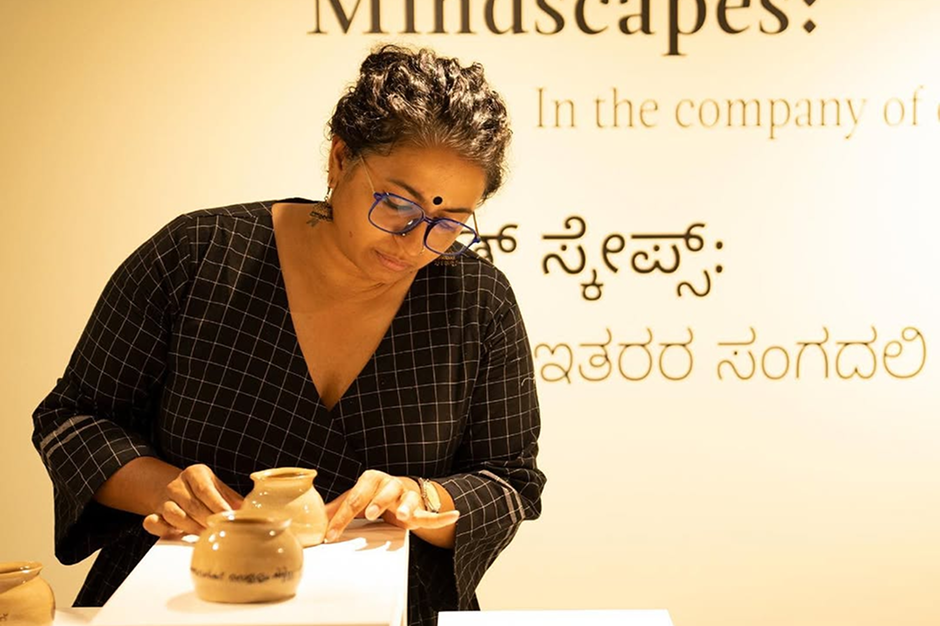
Antony’s multidisciplinary practice explores gendered bodies in public spaces and how women and queer folk occupy them. She intertwines personal narratives of her subjects with larger socio-political conversations, particularly concerning feminism and queer activism.
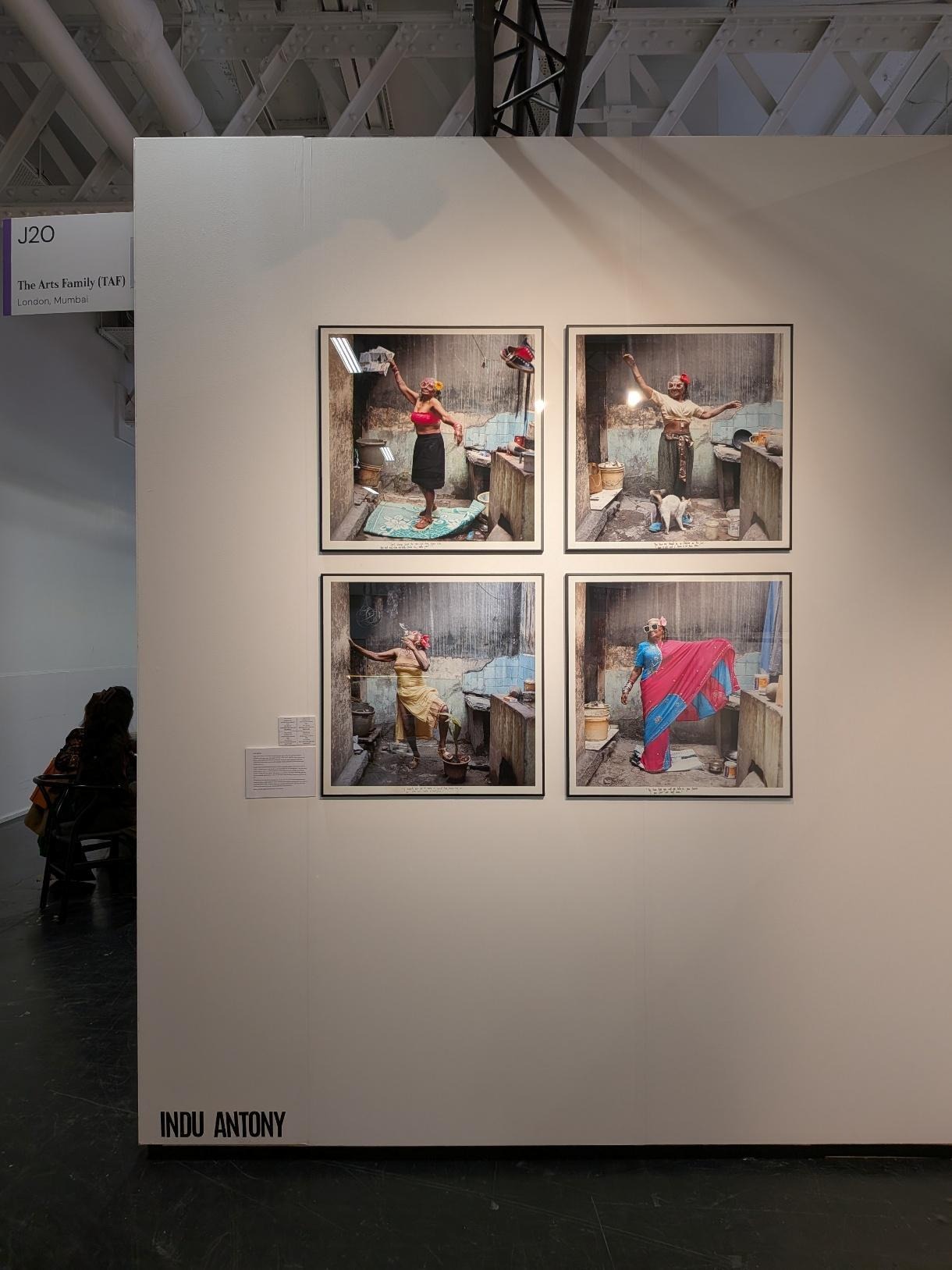
Four photographs from her long-standing project Cecilia’ed were exhibited in The Arts Family London’s (TAF) debut stall at Photo London earlier in May. Cecilia’ed features Cecilia as a local figure of emancipation and aims to disrupt existing notions of gender in neighbourhood spaces deemed unsafe for women. During my visit to Photo London, after a brief discussion of Antony’s visual narratives, the TAF representative excitedly showed me a book, India: Contemporary Photography And New Media Art, which they found at another stall, listing Antony as an emerging artist to watch from the subcontinent. The Bangalore-based artist’s impact was being echoed thousands of miles away in the National Hall of Olympia in London.
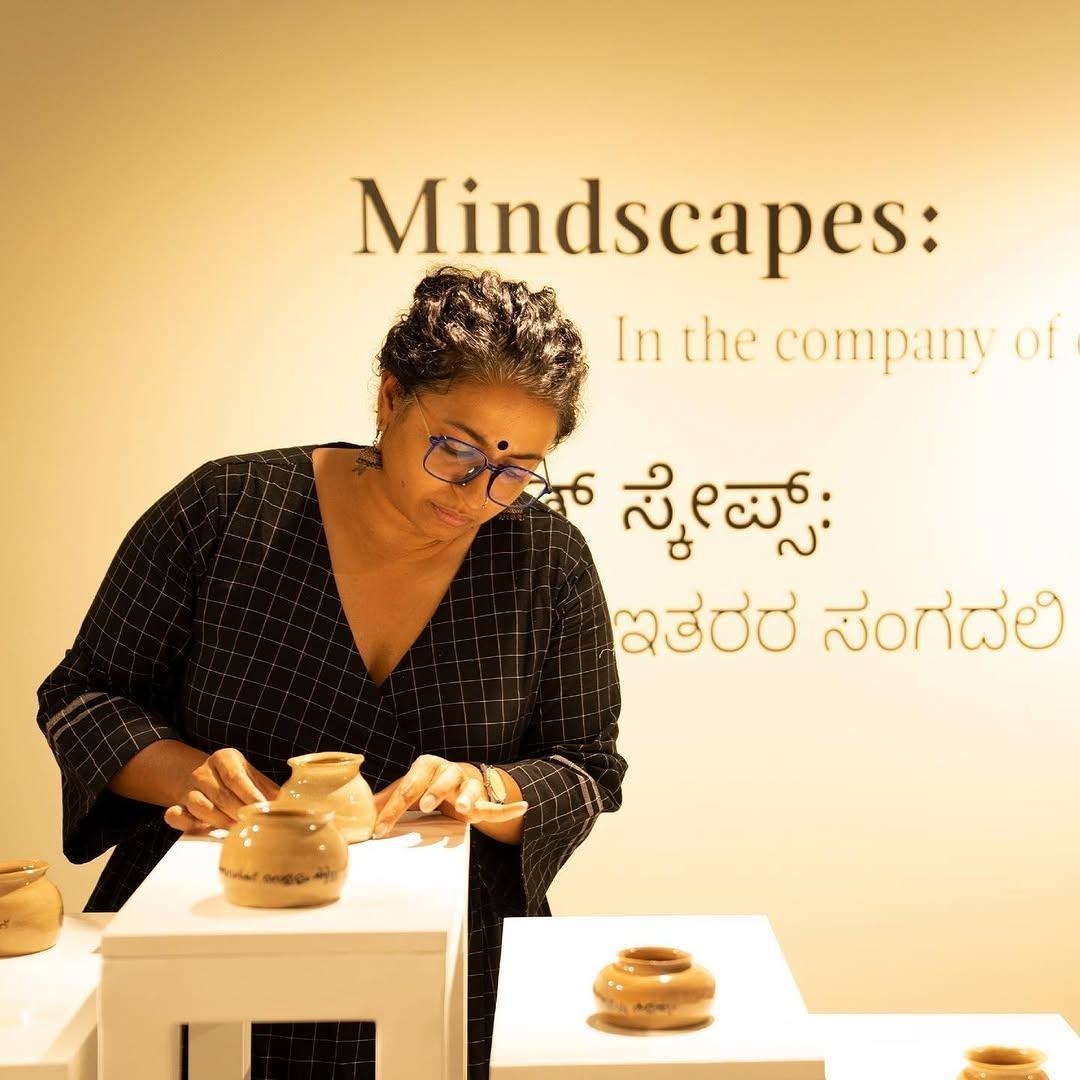
I first came across Antony’s work via Instagram. Being a native of Bangalore myself, her projects ManiFest (featuring drag kings) and Cecilia’ed swiftly and wholly expanded my perspectives and the unconscious notions I carried about how gender and public spaces interact in the city I grew up in. To learn more about Antony’s practice and her as an artist, I requested a video conversation.
How did you embrace being an artist? What was your first medium?
Like most Asian children, while growing up, I felt like I had to be a doctor or engineer. I kept trying to understand how that’s feasible and what other options one may have. Back then, there wasn't enough internet presence. So, I didn't know my options. I was good at studies, so I wrote my entrance exam for medicine and came to Bangalore. I always wanted to get into the arts, but didn't know how to start. There was an intuition and a strong gut feeling that art is something I want to do. At one point, I was like, I should just shift. This was back in 2007, when I felt now was the time to completely move away.
I was born and brought up in Dubai. [My family and I] were immigrants there. From a young age, we would constantly take photographs to document our lives for people back home in Kerala, India. The Camera was an easily available medium, and became a natural medium for me, initially. From then onwards, I explored different mediums.
Your project Manifest is a photo series of drag kings in South India. It's beautiful to see Indian queer women use drag to dismantle gender norms in a society where those norms are so strict. What drew you to this particular form of resistance, and particularly the thirteen people featured in your series?
All friends, we're all hanging out. We were thinking of how we can have different forms of awareness. Drag queens have a lot of exposure, but drag kings, not so much. That’s also a form of patriarchy, coming interestingly into this space.
Our idea began with making a calendar. So, just 12+1 photos. We decided to slip the calendar into houses and other places to show that there are people like us who exist. It was activism. We were all messing up at home, putting coffee powder as moustaches.
It has also been very receptive. While a lot of people find the fun element of the project easy to engage with, people were also not sure what it is. They would see the image, and they'd be like, ‘Oh, fancy dress’. Then we would say, ‘No, let's talk a little bit about queer activism and who they are and what is going on’. So there was a constant need for conversation, and of course that was the intent of the project.
How did the drag characters come about?
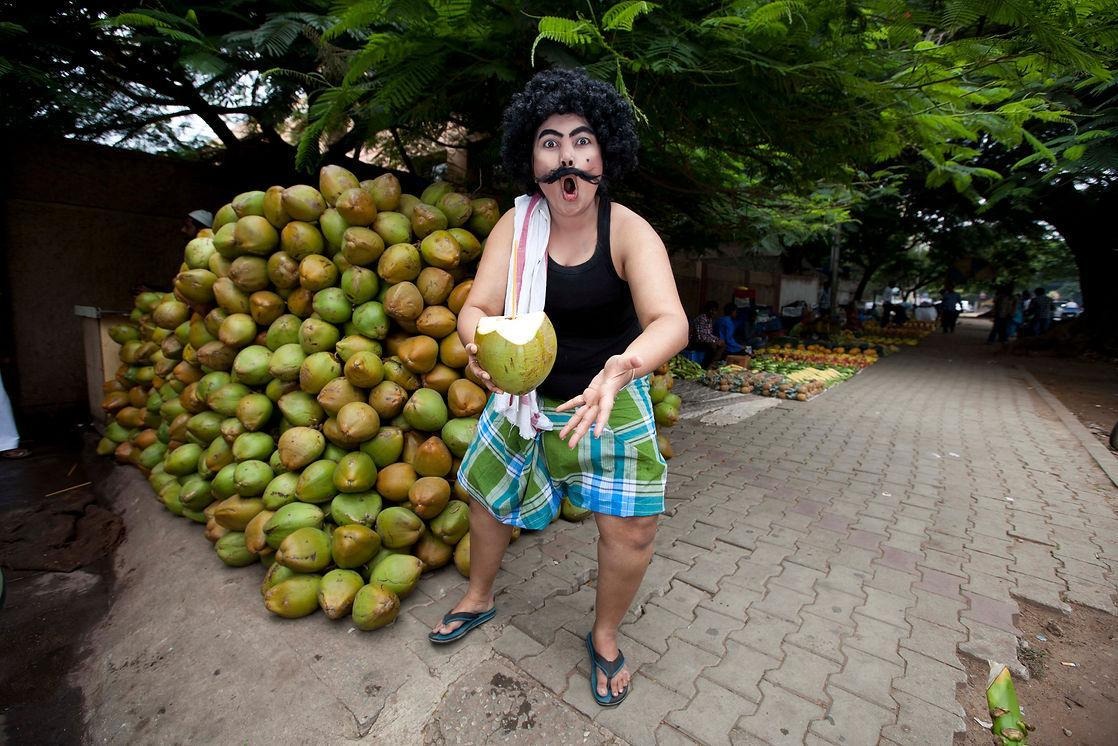
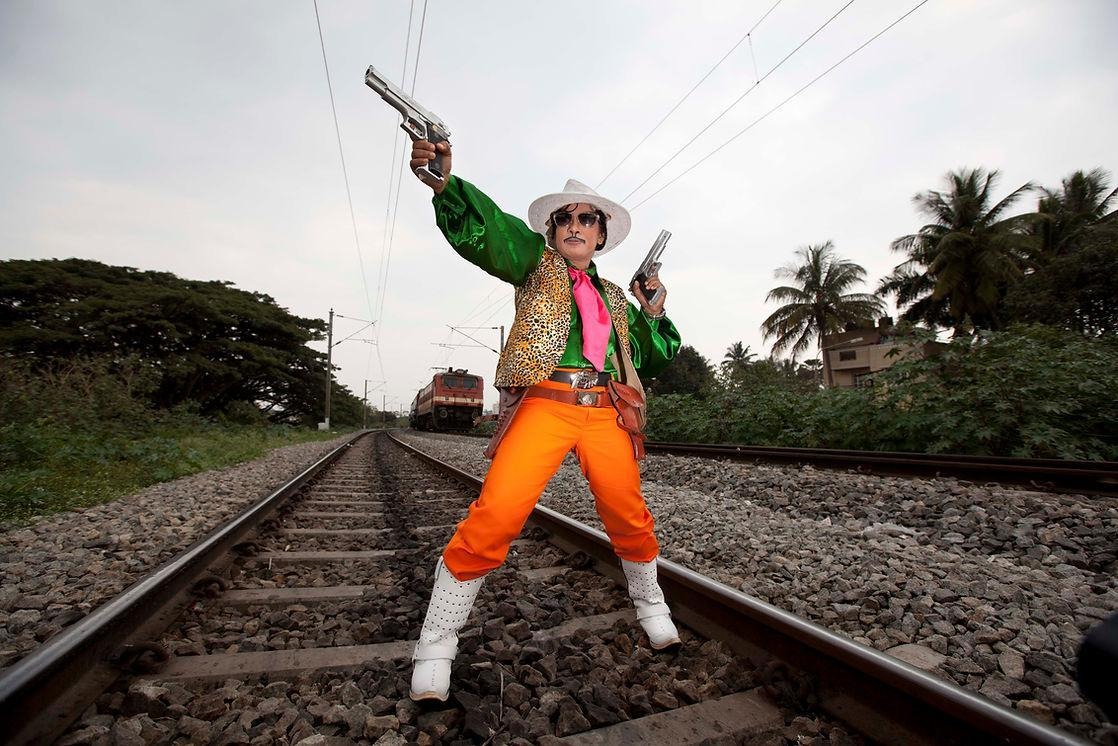
A lot of them came from [the drag kings]. We wanted them to be rooted locally. Because in drag scenes, a lot of it is international. Some of the 13 are international characters, but we were mostly thinking about the street corner where a coconut seller sells coconuts every morning. We were keen on doing Quick Gun Murugan. We wanted to do it near the train tracks and reflect old Malayalam films in which larger-than-life stuff happens – like seeing if Quick Gun Murugan can stop a train.
It was a collaborative process. All of us got together, understood, then jumped on the scooter and went to the location. There was no light; there was nothing. It was genuinely one of the most fun projects to work on.
Earlier this year, the Indian parliament passed the Transgender Persons Amendment Bill, which mandates medical verification for gender identification – effectively removing the right to self-identify. What does this mean, in your view, for the transgender community and the broader queer movement in India?
I think it's absolute nonsense. It means not having autonomy over your own body and sexuality. Why does the state determine your gender rights? It's degrading and disrespectful to the community. We've been doing a lot of petitions. Whatever way I can support the community, I've been trying. It's just an ugly power play and authoritarian. Every which way, you see a very far-right government coming into the picture. We feel we’re progressing at one point, but then we are going 10-20 steps back. Whatever one can do to kind of abolish this bill would be great.
Your practice undoubtedly engages with the politics of Indian society, and you mentioned earlier that you consider your projects to be activism. How have you managed your activism given the current authoritarian climate?
For me personally, I sometimes get overwhelmed with a lot of things happening, like the Transgender Bill. I need to exhale because we are constantly fighting. For five years, I have been running a centre called Namma Katte (meaning, our space in Kannada), which is a space for women to rest and do nothing. Women need a space outside of their home or work where they can just come and sit and do nothing, and find that place safe to sit. There are so many difficult situations that are shared by women there; constantly fighting and going to the police station [had become routine]. Sometimes my address becomes public, and I’ve got threats on Instagram and email. So, I consciously had to take a step back to get my core centred because I don't have any kind of support system. I live alone. Just me and my two cats. It's not easy for me alone to do this all the time. So there's really so much I can do while consciously protecting myself.
You've spoken about the moment you saw Cecilia cycling through Bangalore in a cape about ten years ago, which inspired you to create your long-standing photo series called Cecilia’ed. How has your thinking and your art centred on gendered and public space evolved since then?
Just seeing her in a public space like that, I was just so fascinated by her as a human being. That started a friendship, and I regularly met her. I'm a woman who lives alone in the city, and she's also living alone, but we’re maybe three decades apart in age. I saw the kind of struggles that she was going through as a single woman, and I was going through enough and more on my own as well. People would stop and stare at her, and she'd say give me money, then you can stare. I was like – I need to learn that; you're the future that I want to be!
After 2-3 years of meeting her, I was thinking about safety for women in public spaces as a project. I was also studying celebrity culture, especially in South India – if you're a celebrity, people listen to you, and to change that will take many generations. So I thought, right now, people understand celebrity culture, so let's make Cecilia a celebrity. Maybe people will listen more about women’s safety in public spaces.
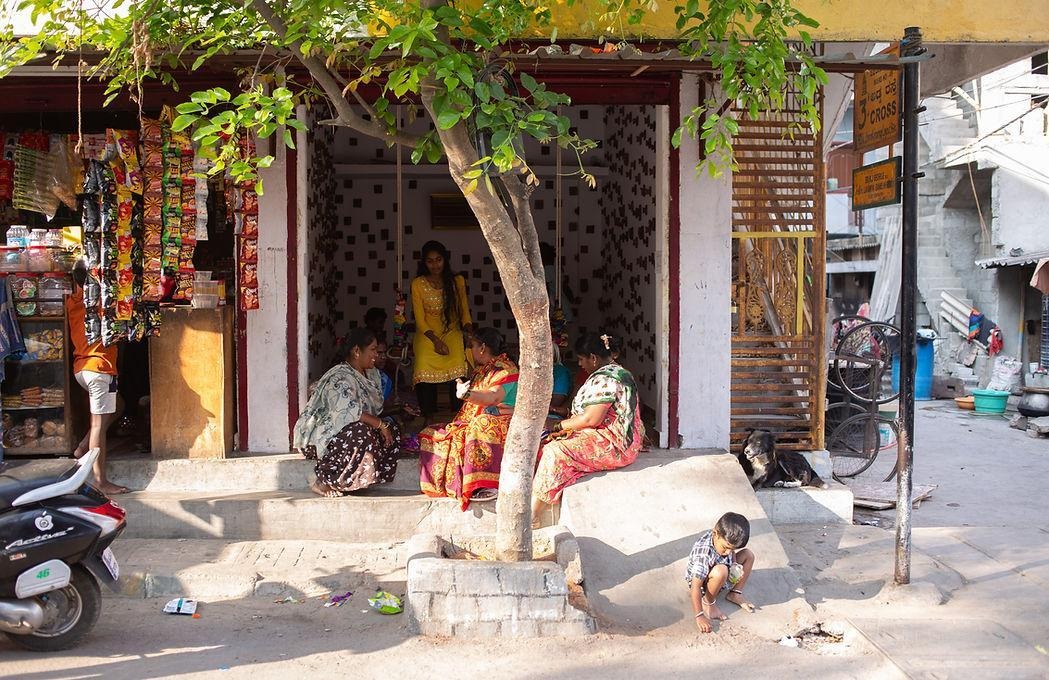
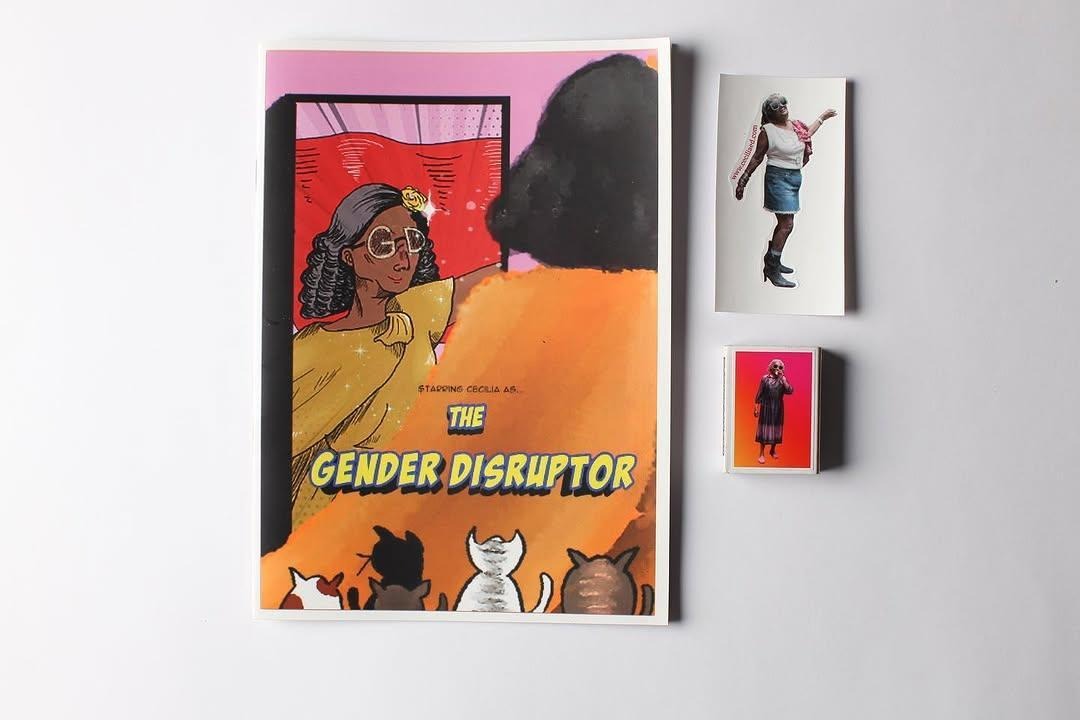
Apart from the photo series, we started making different items that Cecilia would use, like matchboxes and stickers. She eventually became a celebrity in the area. Next, we looked at how to activate spaces that were deemed unsafe for women. We would say we're doing this big street reopening, and she'd cut the ribbon. We would bring her as a performer. Everybody is stopping to see what is going on; people want to take selfies with her without knowing who she is! We were giving out pamphlets saying that we're doing this, and if any women they know are finding streets unsafe, they can contact us. After COVID, for some women, even homes became unsafe because of domestic violence; that’s when we started Namma Katte.
What do you think has changed for women growing up in Bangalore or in South India now, compared to a generation ago? And what would your dream be for girls growing up in Bangalore 20-30 years from now?
Definitely a lot has changed. With the arrival of phone cameras, you can take a video of something that's going wrong, and that has made the streets safer. Crimes against women are reducing, from what I know in my work and stories I hear from the women at Namma Katte. It's not eradicated, definitely not.
I had a residency in Toronto. The first thing that I felt I could do there was to openly sleep in a park alone. I can't think of doing that here [in India]. Women’s bodies here are constantly vigilant in a public space. You are never relaxed. I was observing a lot of girls, and they have a little bit of a hunch to minimise their boobs, and muscles are always tight, because the men are always looking at them. So much trauma of the public landscape is on our bodies, making it hard to just be. In Toronto, when I was lying on the grass, I was constantly wondering, 'Can I really sleep? Is it okay?’ I drifted off for maybe 15-20 minutes. Still, I have written a lot about that nap because walking into a park alone and sleeping was something that I've never done in India. That was so liberating for me.
That’s a beautiful dream – girls being able to nap alone in Lal Bagh in the 2040s.
Yeah, I hope so.
Across all your works, there seems to be an underlying belief that art can shift thinking. Do you think engaging with art can genuinely move the needle on issues like gender equality or queer rights in India, especially when right-wing politics is on the rise?
Definitely, provided it's not one artist taking the entire load. A lot of artists need to come into spaces where they can actually make a change. Many artists are comfortable sitting in their studios and making paintings, but can you be on the street and actually do it? Running a space like Namma Katte is not easy. I would want more artists to take up some spaces because I do believe art can bring about change. It has to be multiple voices that join forces to talk and bring awareness, because art also has to be accessible. Not everybody can walk into a White Cube, look at art, and have their lives transformed. That has a certain kind of privilege. How can art reach across all borders without being in a White Cube space? These are questions we need to talk about. I don't think one can force everybody to think a certain way, but with socially engaged art practices, we can figure out a way in which people can actively contribute to the communities around them.
What is your favourite South Asian dessert?
Recently, I've been a huge fan of Ragi Laddoo with jaggery and dry fruits. It’s a very Bangalore thing. I like to pop one every day. It's quite a summer thing, as Ragi (finger millet) is very light on the stomach. Ragi is a good millet to include in your diet; it's a farmer's food.



.jpg)