


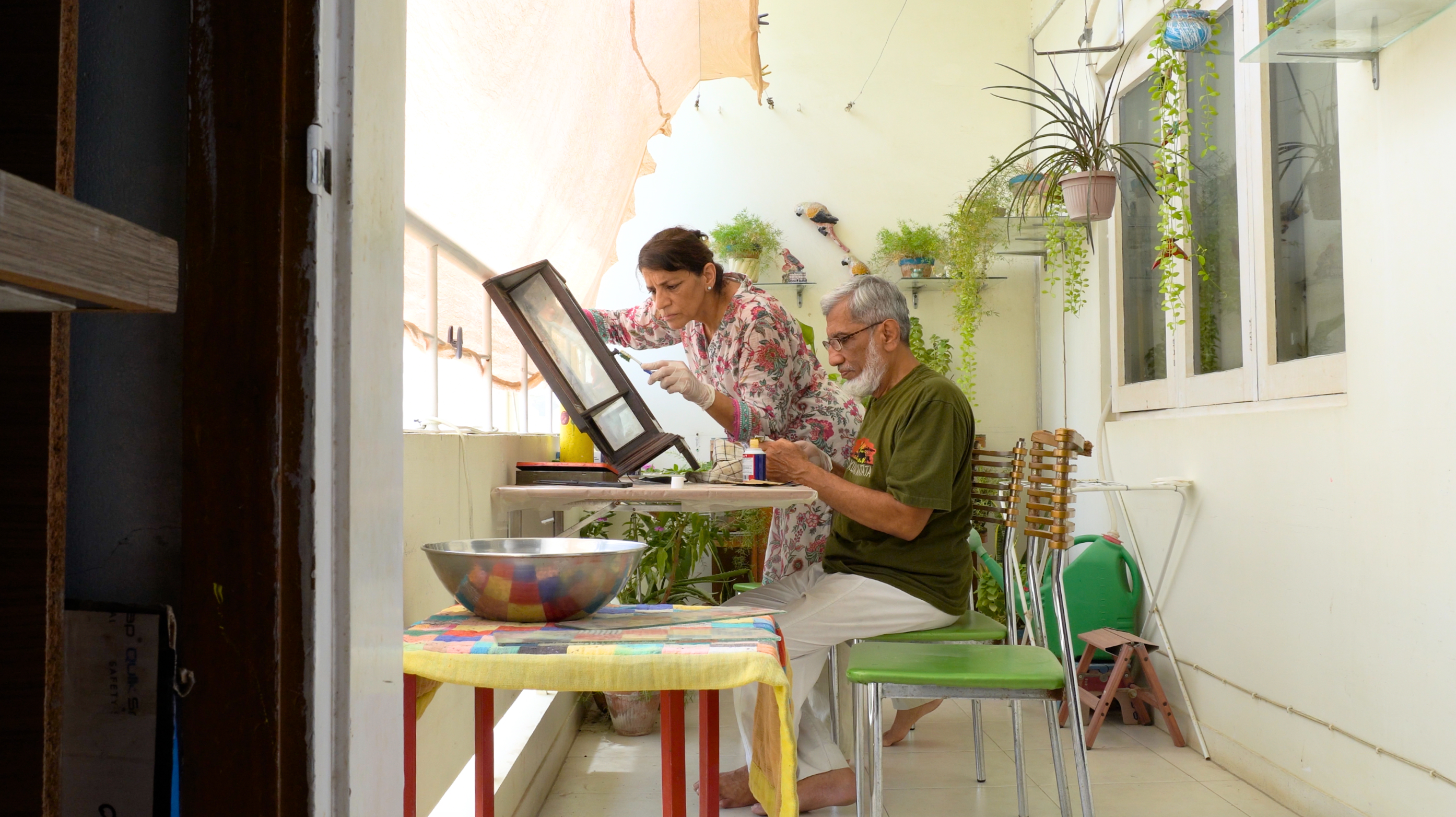
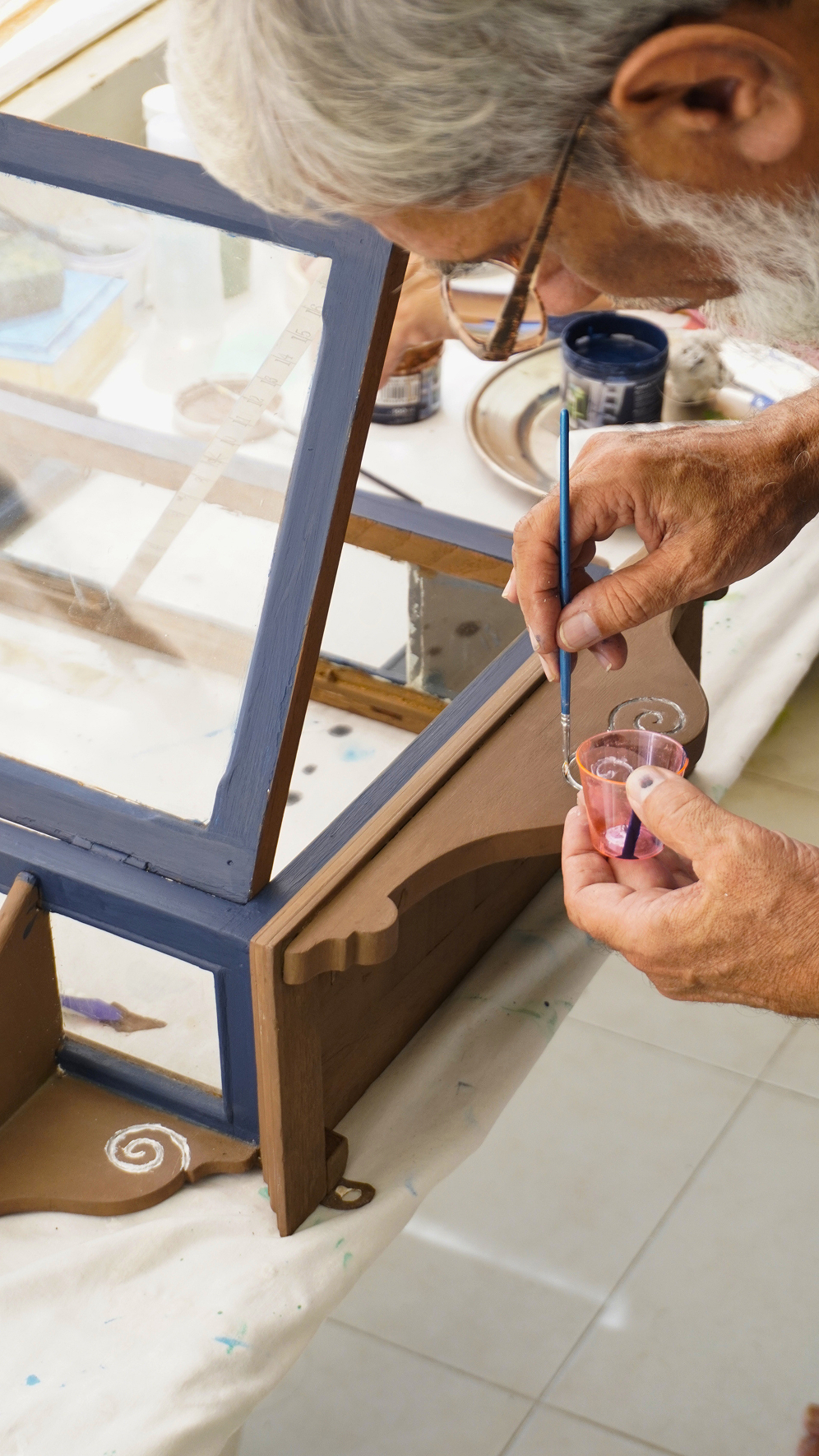
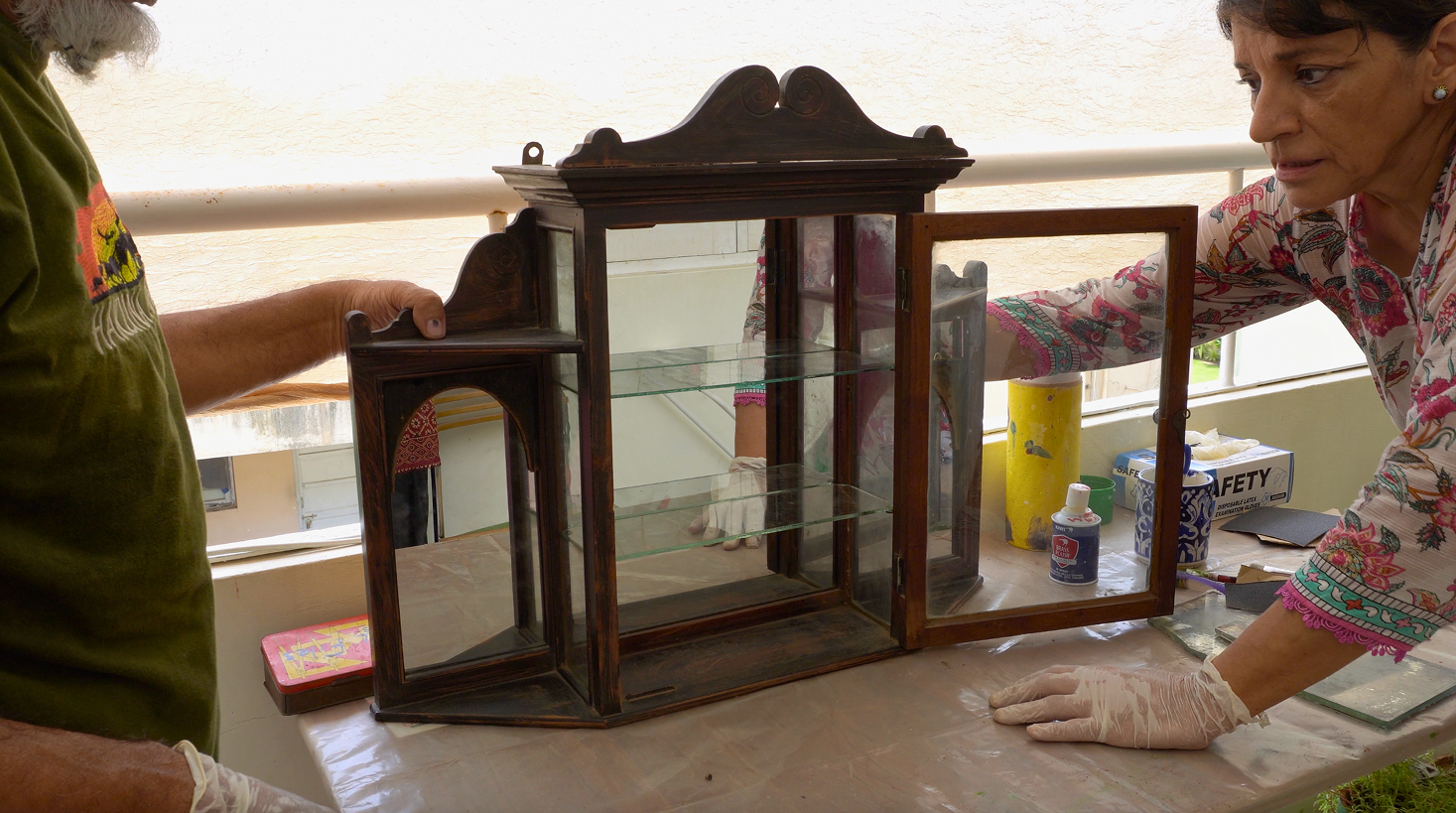
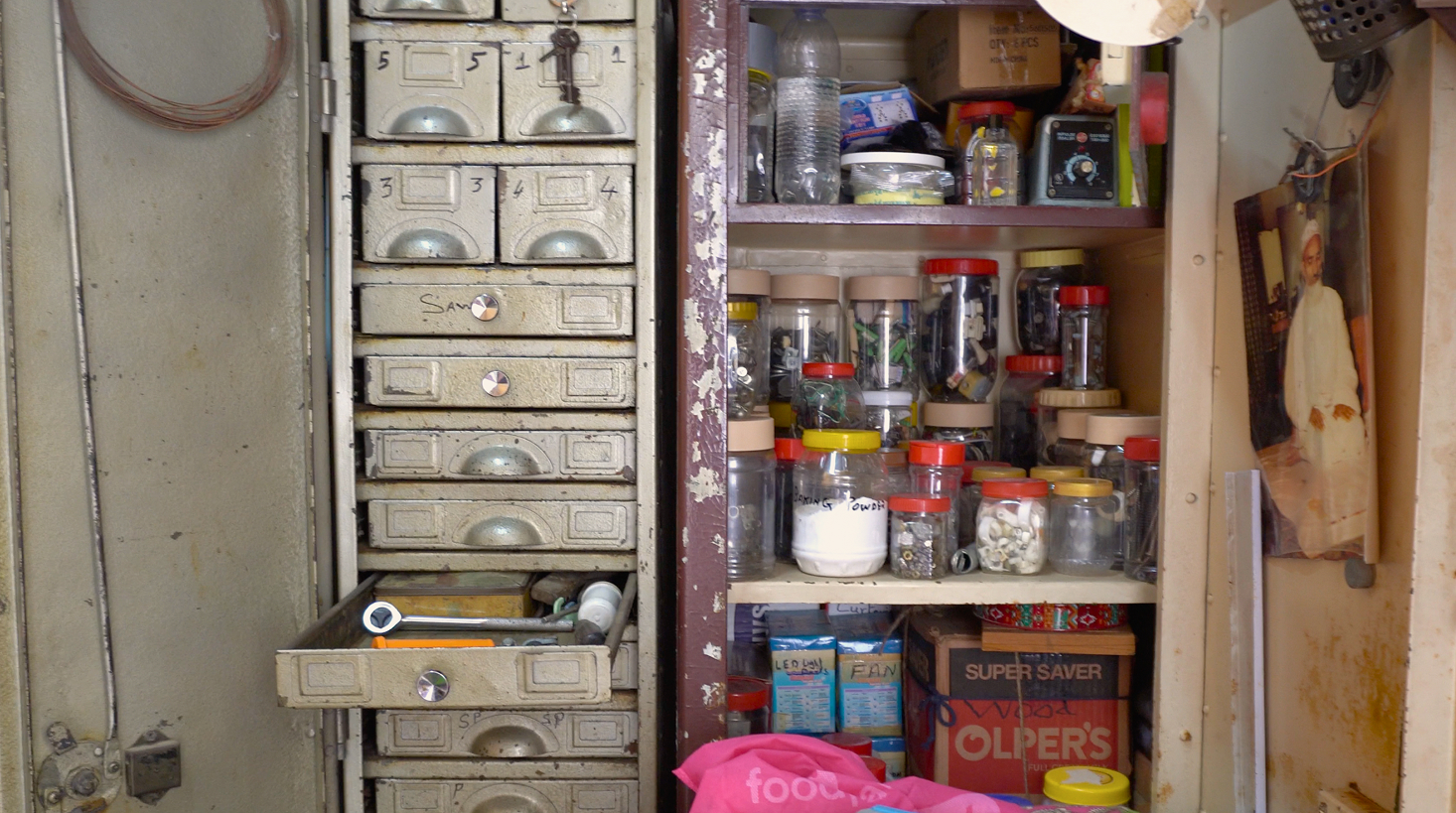
Salim Quettawala, 71, is bent over an 85-year-old mirror cabinet, his hands working a strip of sandpaper over the cracked wood. Just behind him, his wife, 63-year-old Nafisa, moves with a cloth, softly wiping away the sawdust. Just off the balcony is a door that opens into a room barely large enough for one person to stand in. This is where much of their material breathes. Jars of salvaged brass nails, all sorts of tools, mismatched hinges, ropes, paints, screws, watches, paintbrushes worn down to stubs, scraps of wood, knobs, pieces of metal and possibly everything else that one can imagine. You name it, and it’s there. Salim disappears into the room for a minute and returns with exactly what he was looking for—a single half-inch iron washer, oxidised to a deep crimson—navigating a clutter that, to anyone else, would look quite impossible to sift through.
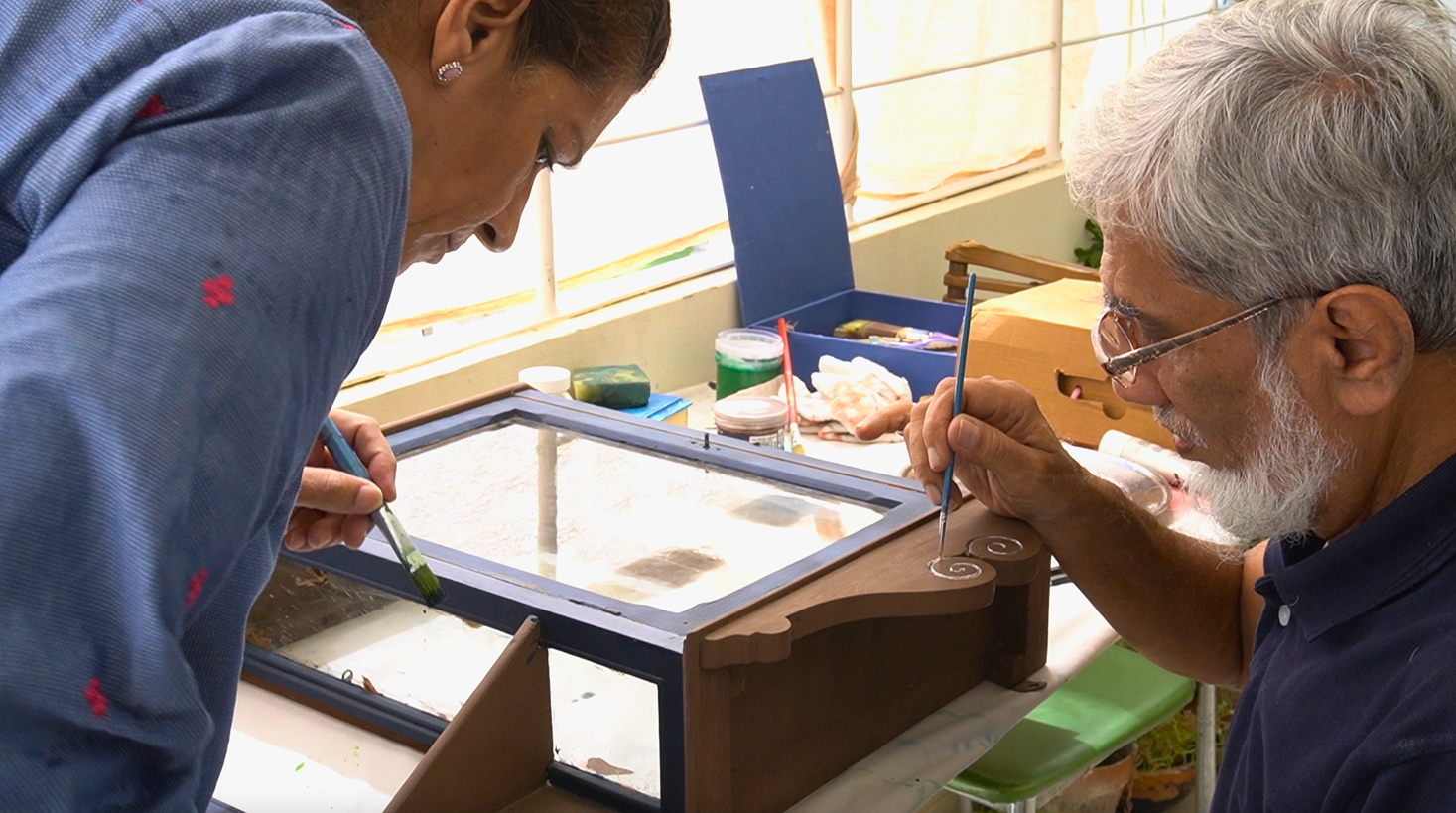
Salim Quettawala is a retired TV technician, though he insists, with a gentle laugh, that this isn't quite true. "I haven't retired. I will never retire." As a child living in a cramped house, his instinct to collect tiny nuts, bolts, and scrap metal was stifled by a lack of space. "We were lots of people living together," he says, remembering the tight rooms of his childhood. "It was small, with very little space. I didn’t have my own room or anything." Salim learned to hold onto things anyway and found himself drawn to the things others threw out. "I was just always attracted to things; tiny things, big things, that other people didn't consider useful or wanted to discard," he explains. He would slip a stray nut or a shiny piece of metal or a broken watch into his pocket. Later, when he got married and moved into a larger home, he felt wonder. More space meant more room for things that might someday “come in handy.” A 60-year-old briefcase that belonged to his mother has travelled with him through every move since. So have the jars of nails, watch parts, and scraps of wood whose purpose he hasn't decided on yet.
Sitting at the edge of the sofa in the drawing room, with a mischievous grin cutting through his beard, Salim exclaims, "I don’t do stuff that I don't like. If I don't enjoy it, I don't even touch it.” He claims that he has no other pastimes; however, his 18-year-old granddaughter Rabab, who is sitting right there and eavesdropping on the whole conversation, instantly jumps in and blurts out “Watches!!!”. Leaning forward with an affectionate roll of her eyes, she expresses, "Nana, you literally repair everyone’s watch in the entire family!" Salim lets out a silent rumbling laugh, nodding his head in agreement. “I feel fulfilled and satisfied that I have put in so much effort on something valuable,” he says with a sparkle in his eyes.
Nafisa Quettawala, a school principal having spent 35 years in education, fits perfectly in Salim’s life as someone who enjoys making her home beautiful. Her love for homemaking and upcycling comes from her mother Zubaida, who believed that Ghar bhalay chota ho, lekin acha ho (a home, however small, should still feel complete and intentional). In their Dawoodi Bohra community, this is a spiritual mandate. The community places a profound emphasis on safai (cleanliness) not merely as the absence of dirt, but as nisf iman (half of faith). Over the years, Nafisa has refurbished pieces around her own house, like a console table here, a coffee table there, changing colours and upholstering whenever the mood struck.
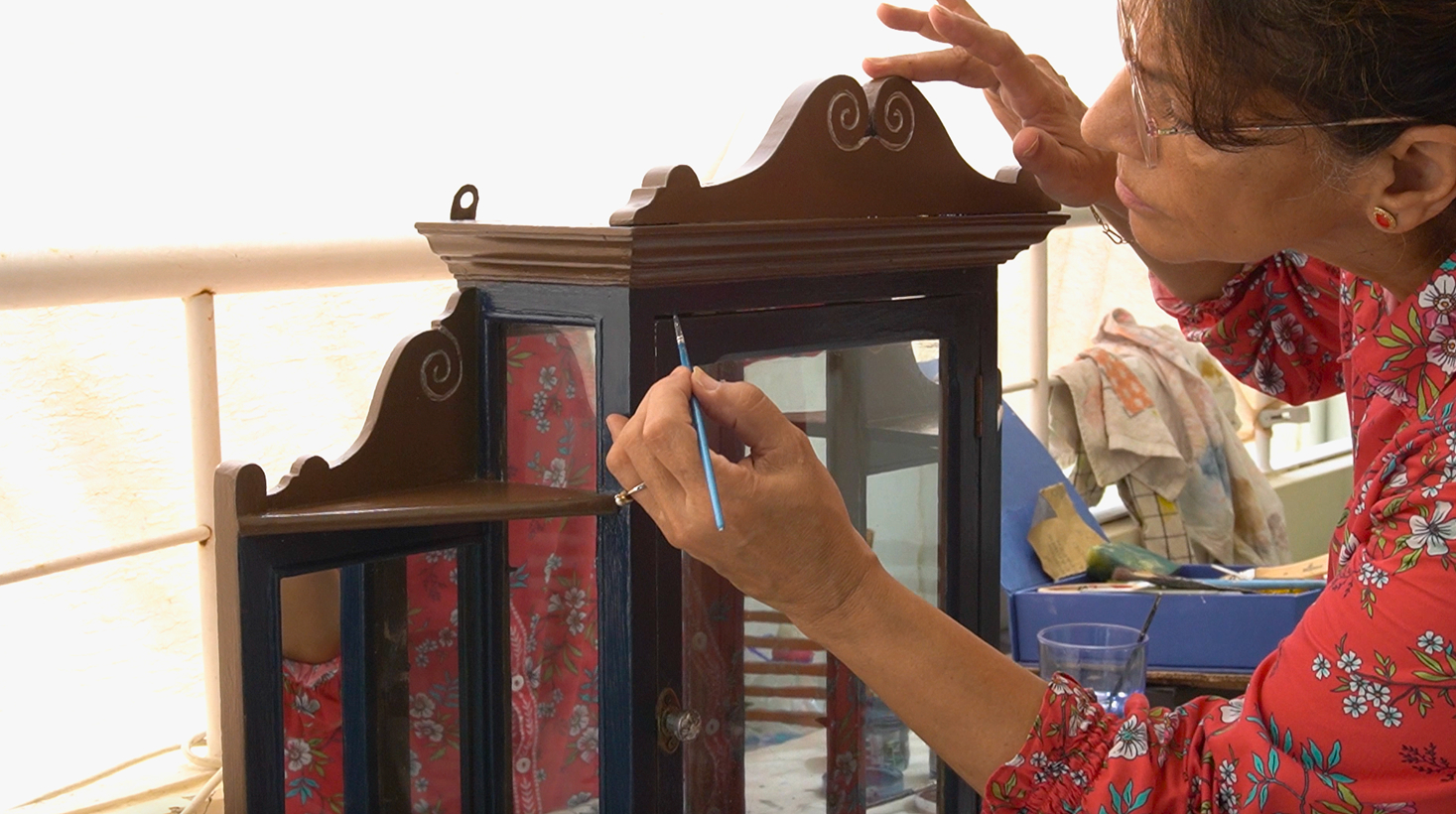
43 years of marriage have taught Salim and Nafisa to fit together the way two halves of a dovetail joint do. Each notch is worn down over time until there is no gap left between the notches. “You can’t force this kind of work; you can only do it with someone who understands what it means”, he says. Nafisa puts it more practically; she has learned to read his mess as its own kind of order, tidying as they go so that by the time they are done working on a piece, all evidence of the mess has been put back in its jar. “We understand each other's strengths and weaknesses”, she expresses. Salim handles the heavy lifting; the cutting, fitting, carpentry, and the gruelling trips to the Karachi markets. Because Nafisa spends her mornings managing a school, she avoids the outdoor hustle. Instead, Salim video-calls her from the crowded market lanes during the afternoon, holding up brass handles and paint swatches so they can choose together.
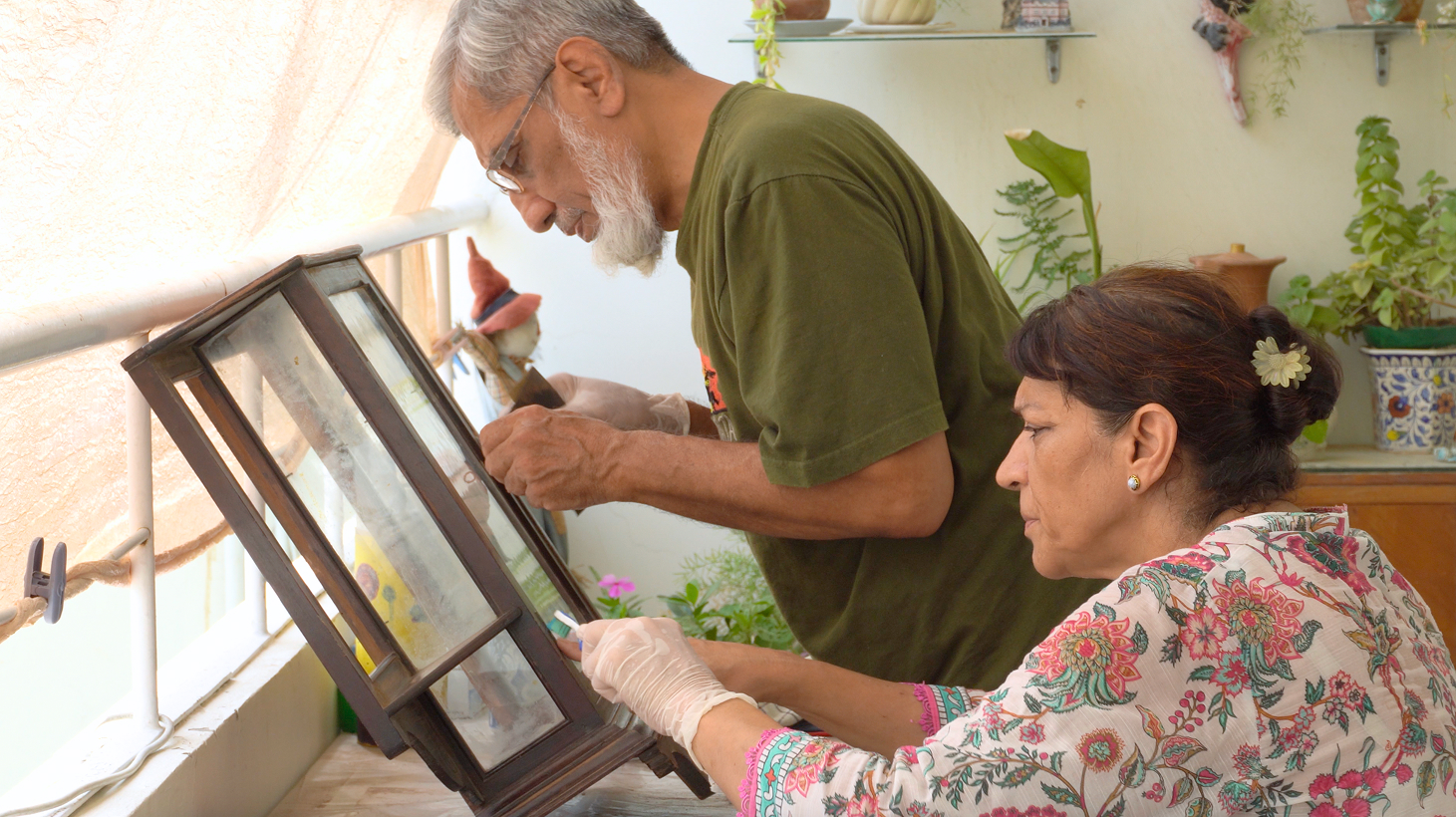
Their granddaughter Rabab films most of what happens on the balcony for the family's Instagram page called “The Mom and Pop Shop”. Though, as she points out with a wink, she describes how not everything makes the final cut. "Oh, they fight a lot!" Rabab laughs, recalling her first day shooting. She narrates how on one of her first days working with her grandparents, both Salim and Nafisa spent half an hour bickering. She said that they were working on some piece and both of them had a vision of their own. “We wanted to take pictures of the piece, and Nani was like, “Set it up here, and wanted to place it somewhere else, and Nana was like NO! Place it there and wanted to place it somewhere else.” Rabab emphasised how neither would budge. She and her uncle Mustafa (Salim and Nafisa’s son) sat at the edge of the balcony, laughing quietly, waiting for the argument to run its course before anyone dared pick up a camera and resume shooting.
It is, Rabab says, a fairly typical afternoon. Nafisa straightens things mid-conversation; Salim leaves tools wherever he last used them, with no plans to move them. They bicker about almost everything — where a piece should sit, what colour paint to use, whether something is finished or not. None of it, she says, is ever really serious. By the end of the day, the two of them are back at their workbench together, as if the argument never happened.
The blueprint of this entire business idea came from their 37-year-old son, Mustafa. Running a marketing company himself, Mustafa noticed a comely energy brewing between his father’s hoarding and his mother’s artistry. “We are a mazdoor family. Everyone loves keeping themselves involved in some work or the other.” He gave them the initial push, telling them to just create two or three pieces and see where it went. And that is how The Mom & Pop Shop came about.
In the beginning, Mustafa micromanaged the logistics, ads, and operations, but then gradually made his parents take control of everything. He explains how, according to him, the true investment of The Mom & Pop Shop is time and effort. “But our parents' generation doesn’t consider these 2 things as a big deal of an investment”, he says with a soft chuckle. He expounds on the fact that the real investment is all the material, like paints, varnishes, lacquer, brushes, etc. Mustafa thinks that their pieces are underpriced and that the more pieces they create, the more they are willing to expand and build their inventory. He envisions a future of heavy statement pieces, and an openness to custom heirloom restorations. "If someone brings an object they hold dear and says, 'turn this into a masterpiece,' we want to do that," he says.
Meanwhile, Rabab balances her college studies by acting as the digital storyteller of the shop. For her, the workshop isn't a job. "I need breaks from studying, and this is my break," she says. The homemaking philosophy has travelled from her Great-Grandmother Zubaida, to Nani Nafisa, down to Rabab’s own mother (who studied interior design), and now to Rabab herself, who translates it for a digital world. "It’s like revisiting my childhood," Rabab says softly. "Spending hours here, watching them work meticulously. It’s a beautiful memory for me."
Things are rarely discarded in the Quettawala household; in fact, they are hoarded, repurposed, handed down and then used again. In this home, this cultural trait has been elevated to an art form. Repair is not a chore in this household. For instance, the 60-year-old briefcase that belonged to Salim’s mother spent decades tucked away in Salim’s stash of memories until they decided to restore it into a gorgeous coffee table.
Then, there is also an old, rusted medicine cabinet that they have worked on called “Phoolon Ki Rani", which most would have thrown in the junk alleyways of Karachi. The frame has been painted, its brass knobs shine with a soft, warm luster and the glass reflects the bright sunlight. Both Salim and Nafisa have turned it into an exquisite decorative statement piece. What makes The Mom and Pop Shop unique within this landscape is that Salim and Nafisa are doing something uncommon for a retired Desi couple: they are turning this cultural habit of hoarding into a deliberate, outward-facing art form.
By the fifth afternoon, the eighty-five-year-old mirror cabinet stands completely transformed on the narrow veranda. The cracks in its ancient frame have been filled by Salim's carpentry, its wood shines with the warm colour palette curated by Nafisa, its process has been documented by Rabab, and its value has been fiercely protected by Mustafa’s business structure. This family dynamic is what has breathed new life into an item that would otherwise be forgotten.
As the sun sets over Karachi, Salim and Nafisa look at the finished cabinet with a profound sense of fulfilment. There is no rush to sell it. For this mazdoor family, the joy is in the labour itself. The cabinet will eventually find a home where it will be loved by a stranger, but for now, it sits in their workshop; a testament to what happens when you refuse to throw old things away.






.jpg)