
My existence is feminine. In my homeland, that means a social constraint, a burdensome responsibility and someone who will consistently need safeguarding. Imagine being chaperoned by men everywhere you go so they can save you from their own gender. I was the weaker gender, someone malleable, someone born guilty, someone who absolutely had to be domestic, a guest until I leave for my “other” home. Someone without permanence. You best believe I vowed to spend the rest of my life dismantling everything I was “supposed” to be.
Womanhood took another shape, another orientation and another life outside of the confines of my motherland. Once I stepped out, to my surprise, I became a third-world woman (Mohanty et al, 1991). Suddenly, I was someone who was sexually constrained, poor, uneducated, ignorant, tradition-bound, and family-oriented. Someone who had to be a housewife. Someone who had to nurse. Someone who is probably dependent on the man, because how else would she come here?
Someone who could be given scholarship stipends and then would be sent back home because surely, she wants to go back home,e right? Surely, she would want to give back to her community? To the white folk, it was just so black and white. So simple.
What’s with all the confusion? What’s with all the drama? Why do I keep searching for jobs? Why do I not want to leave a place that won’t give me a job?
Let me paint another picture, because my homeland and my home were two separate entities. I had my freedom to stay out till late with friends. I went for ice-cream runs with my male friends at 2 am after informing my mother, not asking her permission, but telling her. My parents were able to provide me with a better and more expensive education than my brothers received (financial constraints flooded our home when it was their time). I haven’t really found a way to properly thank them for allowing me to be who I am without apologising for my existence.
(TRIGGER WARNING)
You see, at 14 years old, I was groped several times in the market 5 minutes away from home, by the same man who smiled at me all the time he did it, all the while I wore my mother’s extra-large shawl that covered my entire body. My mother told me to go home. And before I knew it, I was instructed to wear a dupatta at all times, before I even knew what I had to cover. I could not walk 10 metres outside my house gate to buy chocolates from the aunty ki dukaan (aunty’s market); otherwise, my father would get angry. But the truth is, he would get angry at my brothers for not going instead of me. Not angry because I would have to go outside, but because there are men outside lurking on the streets, glued to the corners, smoking, staring at every crevice of your skin if you are in their sight.
You see, a lower-middle-class background does not allow for much, but I was allowed all I wanted — until I came across a daunting, magical and profound word that shook my life. Feminism. My mother never understood it. In fact, she did not want to understand it. I had to break my heart a thousand times, battling with going for a walk on Aurat Marches, refusing myself the liberty to revolt. I felt chained. It only took 3 internationally recognised awards and a free education ticket to Europe. Only. After my mother saw me win, in front of the world, appreciated and applauded by multiple Morning Live shows on Pakistani television, about how I co-founded my own feminist NGO at 17, she took a step back and let me have my word. She showed up with me, watching me proudly as I spoke.
Feminist, Mother, I am a feminist. Maa jee, it’s my body; therefore, it’s my choice. Mera jism, meri marzi. (My body, my choice). It's not something I should be shamed for saying out loud. Mother, I don’t know if you still understand. Mummi, I am unlike you. Mama jaani, I love you. Mother, I am not repeating your life. Ammi, I am nothing without you. Maa, I am from you. But mom, I am not you. I cannot be you. I must not be you.
I see feminism not as ‘equality’ but as choice, as something that serves me. It serves me peace so I don’t end up practising invisible labour (Adams, 2022), so I don’t end up as a baby-making machine, a sexual object or a property dispute. I carry the burden, still, of harmony, of emotional monitoring and self-adjustment in my relationships, because I am a woman. I must not have to carry it. But I should be nurturing, no? I should want to marry. I should want to have children. I should want to be a housewife. I should want to nurse everyone back to health except me. I should want to…I should want to. What do I want? Tell me again, mother(land), what should I want?
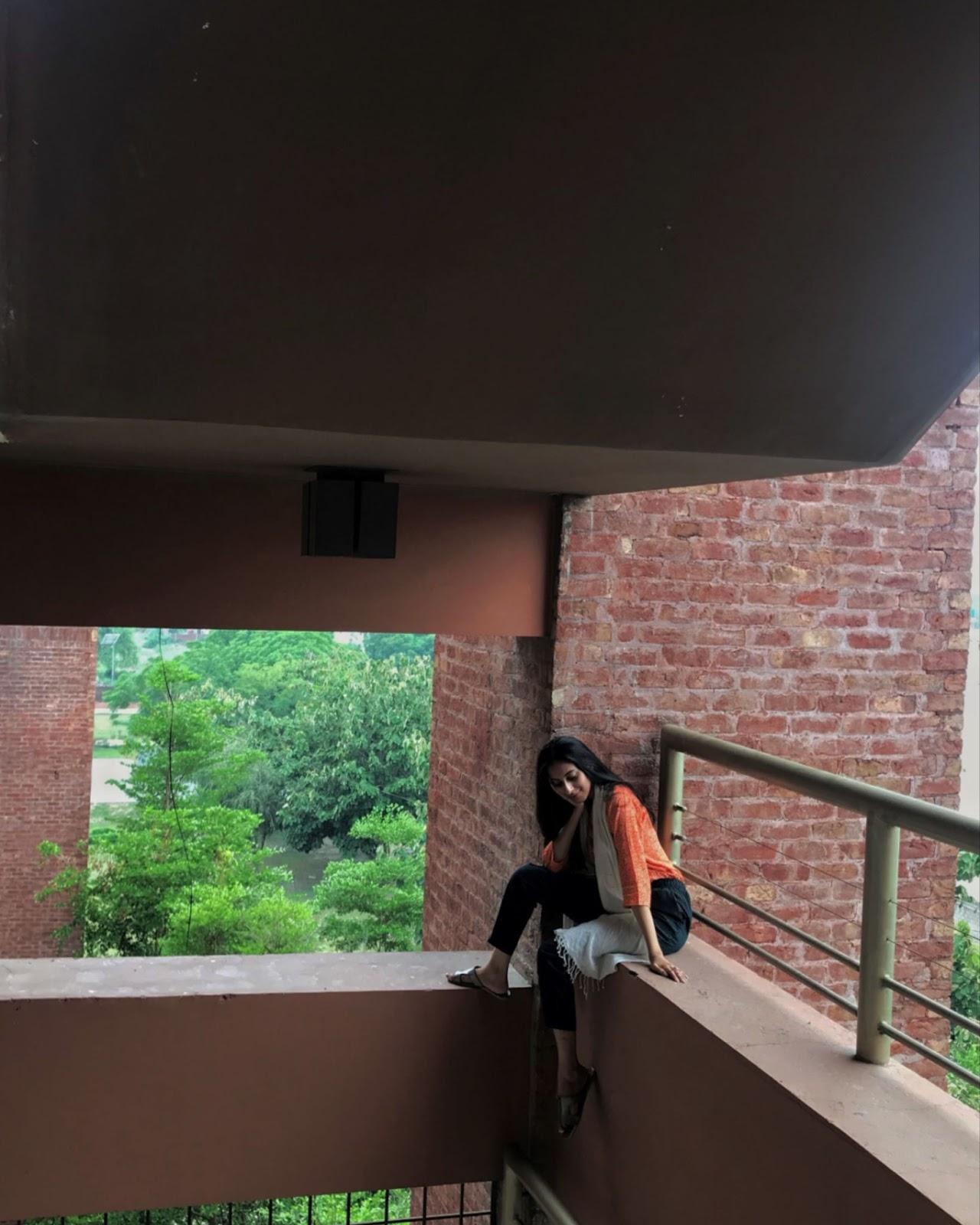
Nostalgia as a critique
I am now away from home. All I have is nostalgia. A few odd video calls. Some occasional naan chollay with my beautiful friend, who suddenly craves it on a Sunday morning, just like a Lahori would. My remembrance took me to many spaces in this journey of migration. What I thought was normal wasn’t. What I thought was okay wasn’t. It took me a while to separate my personal nostalgia from political nostalgia. But it took me longer to realise it never needed to be separated.
My family, cultural nuances, celebrations and rituals are personifications of my home country. These are the ways that keep me connected to the diaspora and the motherland, the womb (the root: Pakistan); this is how the in-group identity remains intact. This nostalgia is also too powerful, too powerful to be used against my ambitions. The political nostalgia evoked by Trump’s ICE raids has announced to the world that it wants no immigrants. Open calls for war are being declared for non-white people across the USA. Deportation and anti-immigrant chants across Europe are now second-nature. Everything is indeed political, the world can see.
But wake up! Our nostalgia, something we hold dear, can be used against us, used to separate us. And hence, after living in many places, in between the forgetting and choosing to remember, I have come to a forceful act of self-love: We must protect our memory. I refuse to overlook the politics of my own being and the violence that often comes after. As a (1) brown (2) Muslim (3) migrant (4) woman in Europe, forging my own independent pathway in the midst of immigration crises and bans, surging islamophobia and xenophobia, everything, to me, is political. I don’t think just for myself. I think for all others who have been othered in the guise of performative inclusion and diversity. I am their token. I am their diversity hire. I am easily replaceable. My nostalgia thus becomes not just sentimentality for Pakistan. My nostalgia allows me to question the world I live in.
I often think about who gets to remember, and how? Who gets to return, or who gets to return to find their home exactly how it was? Certainly not Palestinians. And some of us don’t want to remember our homes, seeing the cries of Afghan women. Some of us are told to forget home, coming from the people of our homes. “Don’t come back here. It’s too dangerous.” Some of us are afraid that if we go too far away from home, we might not want to look back. Some of us fight all our lives to return home. Remembrance can affirm or resist dominant narratives about migration, colonisation, nationhood and history. Hence, remembrance is weaponizable.
Being nostalgic for the warmth and community back home becomes a political critique of racism, exclusion, and alienation in the host society. Hyper-individualisation and fear of ‘bothering others’ in Norway has robbed immigrants like me of creation; of craft; of friendship. As an artist figuring out her medium in the arts, I find myself now in the muted city of Oslo. I find myself scrambling to find the Norwegian words to tell people “I exist.” I want to scream at Norwegians during public transport: tell me how my top reminds you of your grandmother who loves to bake raspberry cheesecakes every summer. Make small talk with me in the T-bane; tell me about how God-awful those jeans look on the man. Tell me what you are knitting, and for whom. Tell me what keeps you up at night. Talk to me, I beg you. Talk to me so I can remember you.

Nostalgia, Agency, Resistance to Cultural Erasure
As part of reculturing and resistance, I have found that resisting assimilation is necessary. Why must we shed our culture and adopt a new one? Why must we be forced to become nobodies if we don’t learn a new language fast and fluently enough to compete? Why must we, as migrants, pay for expensive language courses when we would still not be given jobs? Why must I be forced to make myself small to become important to you?
I resist erasure. I resist cultural homogenization. I resist being perceived as a “third-world woman”. I resist fitting into categories that the whiteness around me injects my way.
My tradition-boundness and family-orientedness do not take agency away from me; they give me agency. My religion gives me agency; having mosques around me gives me agency. Restaurants serving halal food give me agency. Pakistani flags in restaurants give me agency. ‘Assalam-u-alaikum’ (which means ‘peace be upon you’ in Arabic) gives me agency. Bangles and dupattas give me agcny. How full circle life has become! From a daughter who hated the dupatta because she was forced to wear it, to someone who now wishes to wear it all the time to show people where I am from. From a daughter who hated cooking because it meant confining women to kitchens all day, to a daughter who now proudly makes desi recipes that smell of tarkas and ginger and onions that her mother wants to taste. My mother wants to taste something I made. Whatever in the world would compare?
My nostalgia fuels me with memory, and my memory makes me want to replicate my life in a land that is now safer for me as a woman. Why must I pay a price for safety, that too, by forgetting my homeland and religion? Why must I either want to go back or forget about my return now that I have integrated?
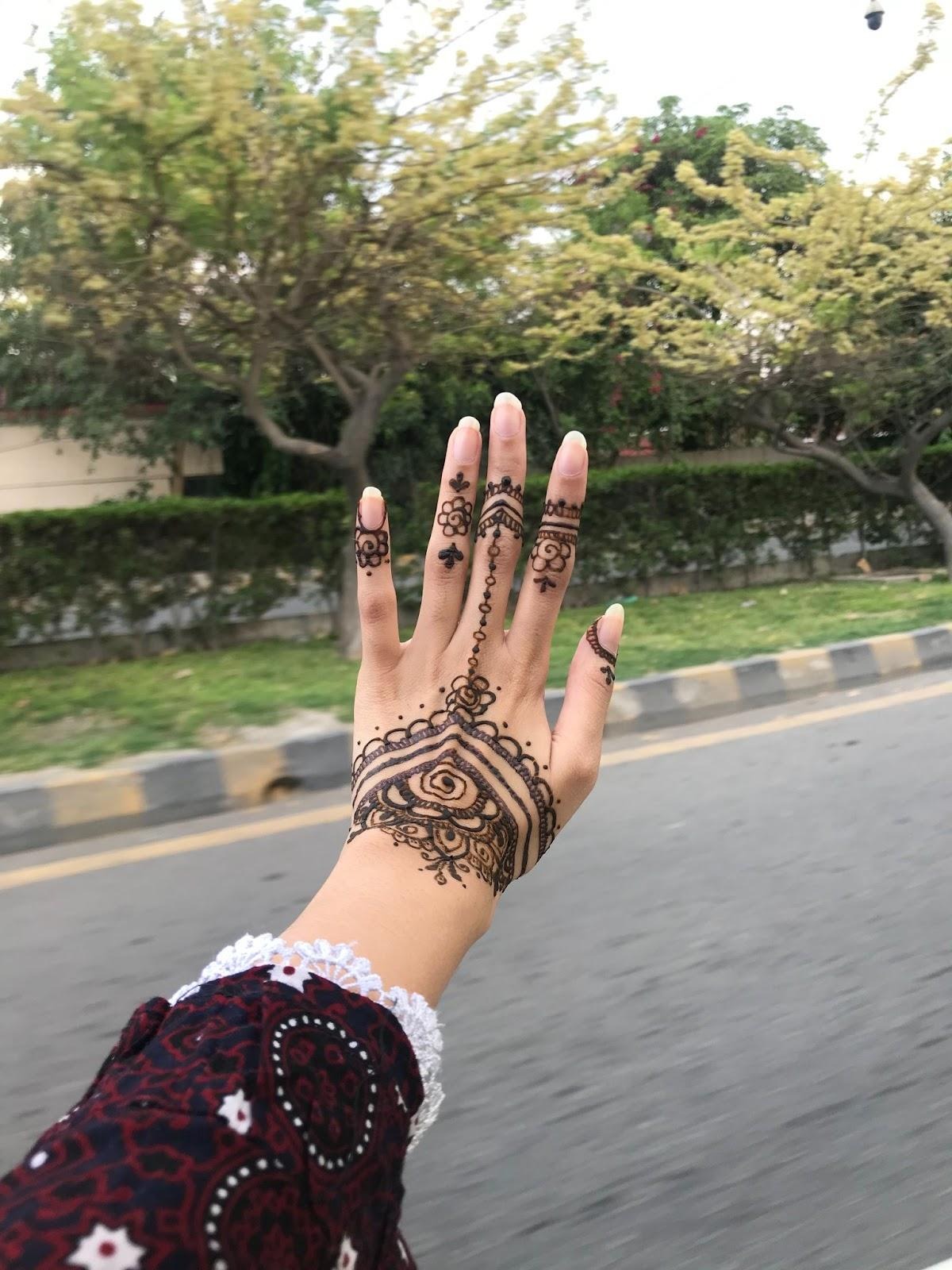
This is the climax; this is how my nostalgia transforms from sentiment to resistance. Nostalgia is action to me. Milan Kundera would say, to remember is to resist forgetting. As his famous line goes, “The struggle of man against power is the struggle of memory against forgetting", from The Book of Laughter and Forgetting.
My motherland may call me back, or it may not. But I will carry my motherland with me wherever I go in the world, as I forget what I forget and remember what I remember. As a woman, as a brown woman, as a brown Muslim woman, as an immigrant brown muslim woman. I will slip off identities I want and take off those that no longer serve me. One thing’s for certain: I will make it worth my nostalgia. It's only mine to keep. Only mine.




.jpg)