

Over the following decades, the style travelled rapidly across the world, adapting to different climates, materials, and cultural contexts. From the skyscrapers of New York to the pastel facades of Miami Beach and the hybrid urban forms of Shanghai, Art Deco became a global language of modernity rather than a fixed aesthetic. Its centenary has prompted cities and institutions to revisit these histories, through exhibitions, archives, and conservation efforts, asking how Deco shaped urban identities and how much of it survives today.
In India, the spread of Art Deco coincided with a period of rapid urbanisation and shifting cultural aspirations in the early to mid-twentieth century. As cities expanded and new publics emerged, Deco became a flexible architectural language—adopted across cinemas, apartment buildings, offices, and institutions to signal modernity while accommodating local materials and climatic conditions. This adaptability is particularly evident in Mumbai, Kolkata, and Bengaluru, where sustained documentation and conservation efforts have, in recent years, brought regional Deco histories into sharper focus through exhibitions, archives, and public programming.

The centenary of the Exposition Internationale des Arts Décoratifs et Industriels Modernes has sparked renewed global interest in Art Deco. Cities such as Paris, New York, Miami Beach, London, and Shanghai have revisited the style through exhibitions and research, highlighting its adaptability across contexts. In India, the spread of Art Deco coincided with a period of rapid urbanisation in the early to mid-twentieth century, where it emerged as a flexible architectural language across building types—from cinemas and residences to institutions and commercial spaces. Cities such as Mumbai, Kolkata, and Bengaluru have, in recent years, brought these regional Deco narratives into focus through exhibitions, archives, and public programming.
Art Deco in Delhi
Building on this momentum, Delhi’s Art Deco legacy has gained traction in its centennial year. While often associated with Sultanate, Mughal, and Colonial architecture, the city also embraced Deco during a period of significant transformation—from the consolidation of New Delhi to its post-independence expansion. In Delhi, Deco did not emerge as a cohesive ensemble but as a dispersed urban layer, visible across cinemas, residences, institutions, and commercial buildings. These structures adopted the style to express modernity and urban aspiration, offering a distinct yet overlooked layer of the city’s heritage.
By positioning Delhi within this centenary discourse, the project argues that India’s Art Deco history is incomplete without the capital. The relative invisibility of Deco in Delhi reflects broader patterns in heritage recognition, in which monumental, pre-modern, or imperial architecture is often prioritised over twentieth-century and everyday built forms. As a result, many Deco structures remain vulnerable to alteration or demolition, particularly under the pressures of rapid urban development.

Beyond preservation, the focus here is on visibility—recognising how everyday structures contribute to the city's cultural and historical fabric. To foreground Art Deco in Delhi is to expand the definition of heritage itself, acknowledging not just iconic landmarks but also the architectural expressions of a changing society. It is also worth questioning how value is assigned within urban histories, and whose narratives are allowed to endure.
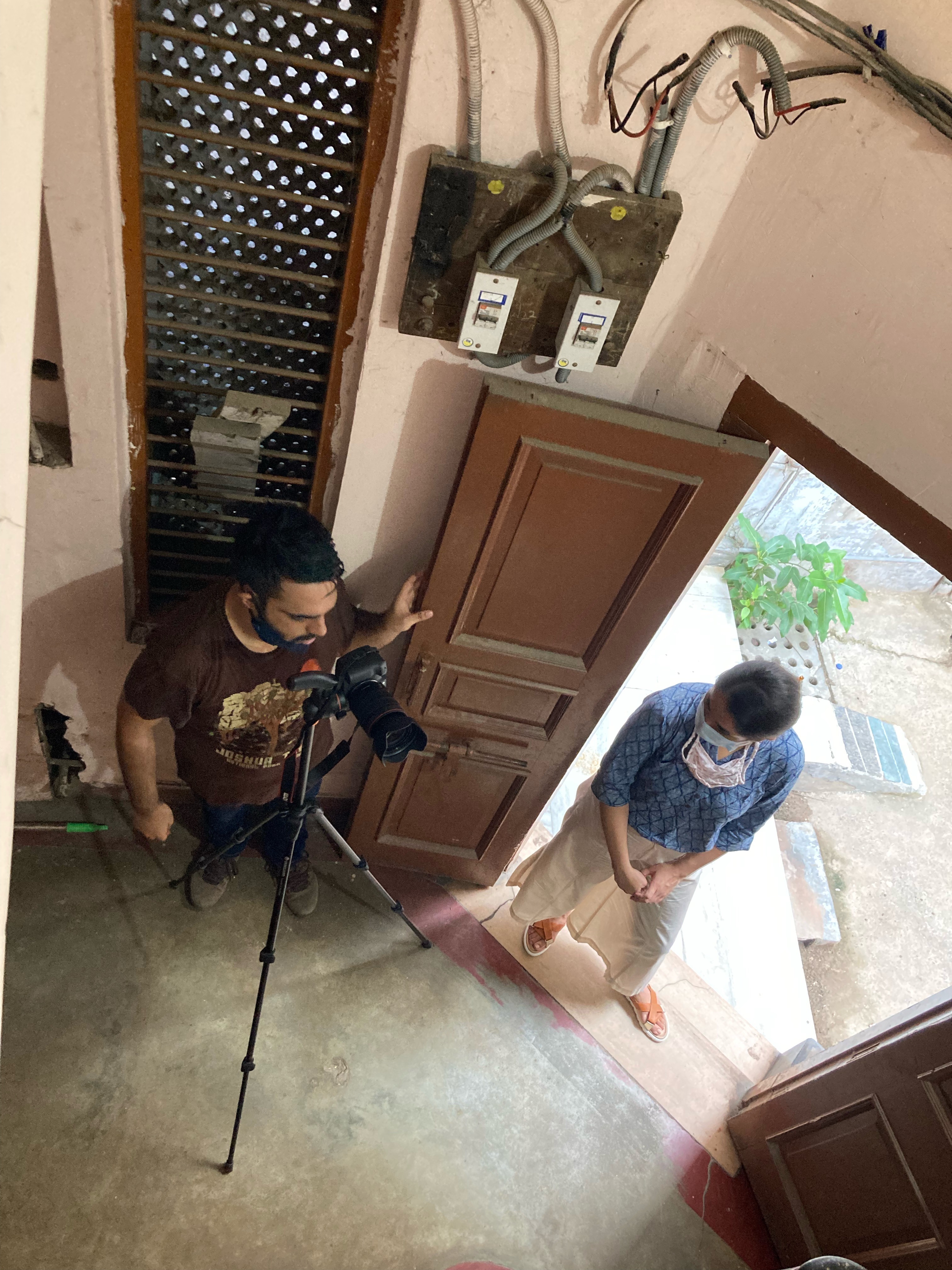
Image Credits: Deco in Delhi
Exhibition Impact
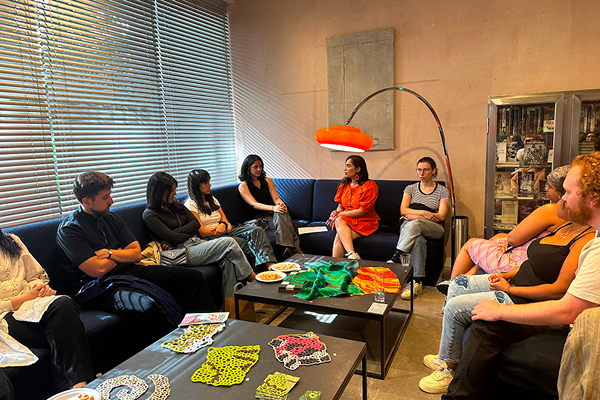
The week-long exhibition, supported by INTACH Delhi Architectural Heritage Division in collaboration with Alliance Française de Delhi, was accompanied by a public programme that extended this inquiry into dialogue and practice: an opening lecture by Miki Desai; a panel discussion featuring Snehanshu Mukherjee, Ashok Lall, K.T. Ravindran, A.G.K. Menon, Swapna Liddle and Aishwarya Tipnis, moderated by Rajat Ray, with online presentations by Sriniwas Murthy and Sujatha Shankar. This was complemented by a jaali-making workshop and a heritage walk led by Swapna Liddle, exploring select Art Deco examples in the city.

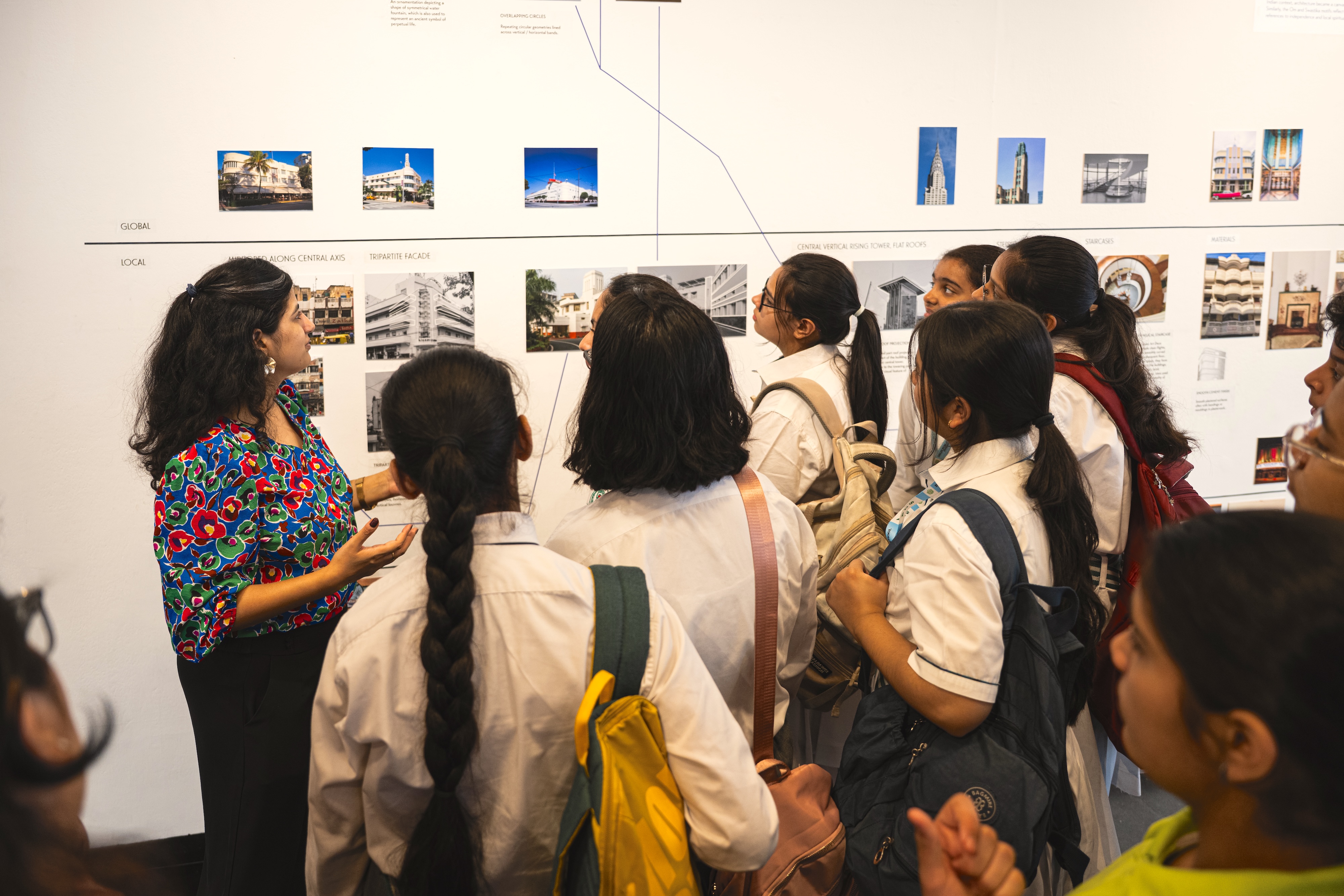
With nearly 300 visitors over the week, the exhibition reflected a growing interest in Delhi’s lesser-known Art Deco legacy. More importantly, it demonstrated how public engagement—through lectures, discussions, workshops, and walks—can build awareness and support for preservation. The project sets the stage for continued collaborations that aim to document, interpret, and sustain this often-overlooked layer of Delhi’s architectural history.
Lead Researchers: Geetanjali Sayal and Prashansa Sachdeva (both started the project together in 2020)
Hi-Res Photographic documentation of select Art Deco buildings: Rishi Kochhar
Website Map and Glossary Graphics: Nitya Gonnakuti
Exhibition Design and Graphics: Tulika Shrivastava
Exhibition Photography: Abhay Sharda and Ankita Singh
Special Thanks: Michael Windover, Arushi Vats, Art Deco Mumbai Trust, Mustansir Dalvi, Mohit Bansal, Manish Kumar Baheti, Kavita Wahi





.jpg)