
His words, “The value of a man was reduced to his immediate identity and nearest possibility. To a vote. To a number. To a thing. Never was a man treated as a mind," reflect the system that broke him and so many others across the world. His letter is a painful reminder of how little has changed when it comes to offering unconditional support to marginalised students in prejudiced, casteist democracies.
That letter is also, in part, why I write. And it is what brought me, one frozen January night in 2026, to a room in Manhattan I did not expect to feel so much in.
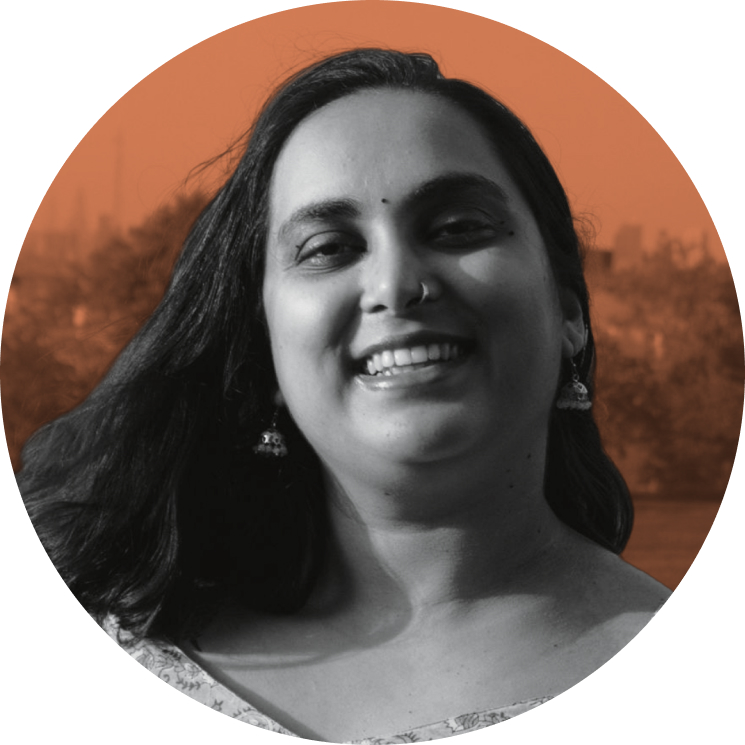
I come from a weaving community from Visakhapatnam, Andhra Pradesh—one of the many communities in India historically impacted by the caste system. I am not Dalit. But I understand, in the way that those of us from communities that exist at the margins of caste's long shadow understand, what it means to carry an identity that the world has already decided is lesser than. I arrived in New York as a student, and I have found it difficult — genuinely, quietly difficult — to connect with other South Asians here. There is a particular loneliness to being South Asian in the diaspora. As writer and activist Yashica Dutt put it to me, "More than 90% of Indian Americans happen to be from a dominant caste, according to some surveys. The identity of being South Asian American has been taken over by a very small imagination, a very narrow understanding of what that community looks like.”
The dominant narrative of South Asian ‘success’ and arrival to a country like America often belongs to those who are upper-caste/elite, and someone like me does not always belong to it. Neither am I invited to it.
So I did not walk into the event, From the Shadows to the Stars expecting to feel like I had come home. I went because Rohith Anna's memory matters to me. I went because the letter had been in my mind again. I went because I am a journalist, and I believe in bearing witness.
What I did not expect was to be held.
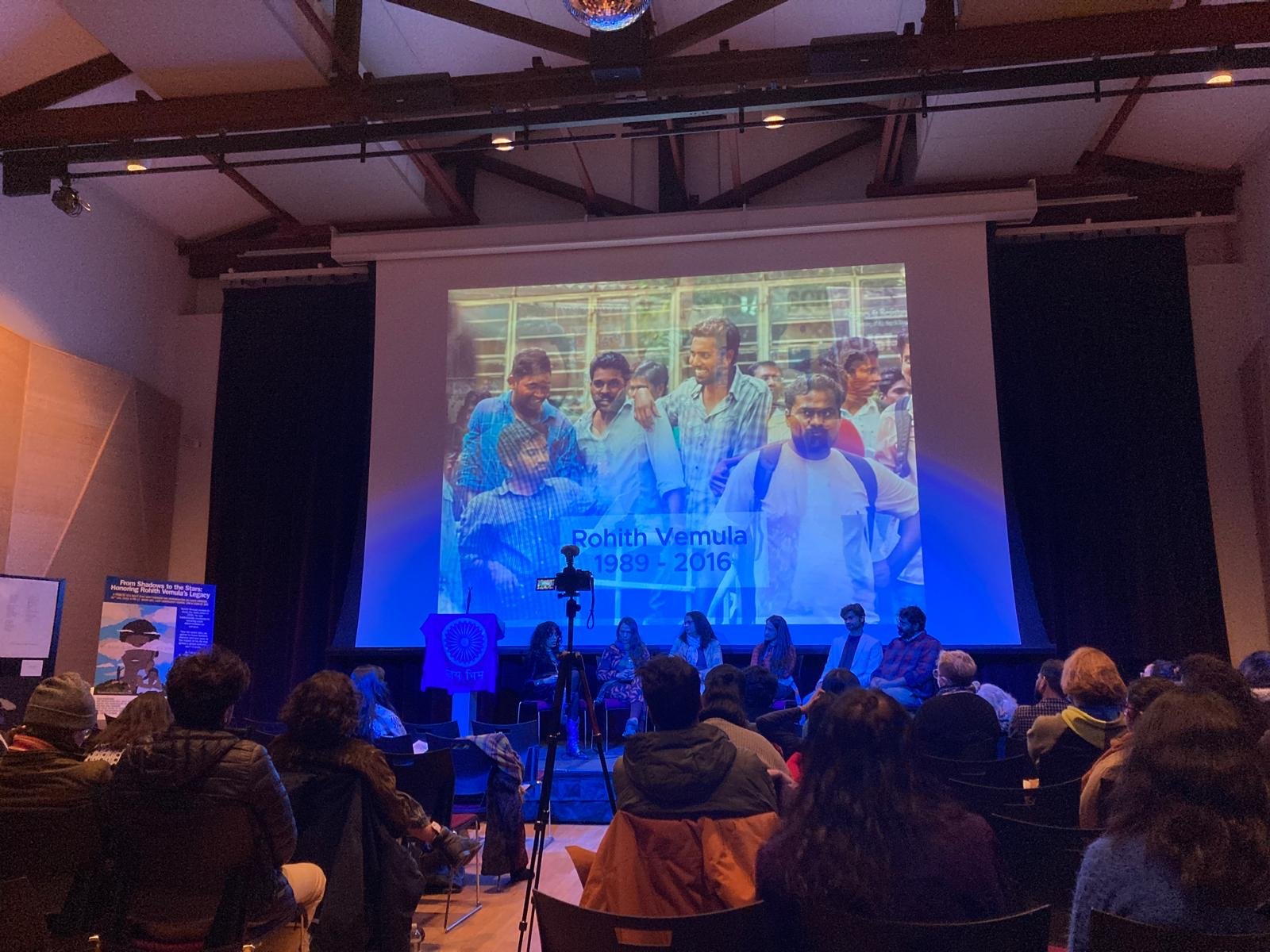
On the night of January 30th — Rohith Vemula's birth anniversary — more than 120 people made their way through below-freezing temperatures to the LGBTQ Community Centre in Manhattan. Organiser Yashica Dutt, a Dalit journalist and author who has spent years building anti-caste spaces in the diaspora, understood that solidarity between marginalised communities is not a gesture — it is a necessity. The overlap between Dalit and queer experiences of erasure, of being told your identity is inconvenient or illegitimate, is not incidental. It is structural.
Rohith Vemula was a twenty-six-year-old Dalit research scholar at the University of Hyderabad whose death by suicide shook India and ignited a movement– students across the country poured into the streets under the banner of what came to be called the Rohith Act movement, demanding institutional accountability, caste-based protections for students, and an end to the bureaucratic violence that had claimed him. He had been suspended from the university along with four other students following a politically motivated complaint filed by members of the Akhil Bharatiya Vidyarthi Parishad, the student wing of the ruling BJP government, stripped of his fellowship stipend, and forced out of his hostel accommodation — a culmination of institutional discrimination that traced directly back to his caste identity.
His death exposed the quiet, systemic violence that Dalit students face inside India's most prestigious academic institutions: not always the violence of open slurs, but of bureaucratic cruelty, of doors closed without explanation, of fellowship stipends withheld for months, of suspension letters that cite "conduct" while never naming caste, of being forced out of hostel rooms and of of complaint after complaint filed and ignored. His death was not an exception. Between 2014 and 2021, 122 students enrolled in centrally funded institutions — IITs, IIMs, central universities — died by suicide. A significant proportion belonged to marginalised communities. Scholar Gopal Guru has written about how upper-caste academic structures deny Dalit students access to intellectual legitimacy — determining who gets to produce knowledge and who gets to be recognised as producing it. Reservation, in this context, is not a solution so much as a door wedged open by law that institutions find endless ways to close again. A decade after Rohith's death, the Rohith Act — a central legislation that would make caste-based discrimination in higher education legally cognisable — remains unpassed at the national level.
The letter Rohith left behind became a document of conscience for a generation. Students across the country took to the streets under the banner of the movement that came to bear his name. His mother, Radhika Vemula, became one of India's most vocal advocates for Dalit rights. A decade later, Rohith's name remains both a wound and a rallying cry — a reminder that the cost of caste is not abstract, and that it is paid, most often, by those who could least afford to lose what they had.
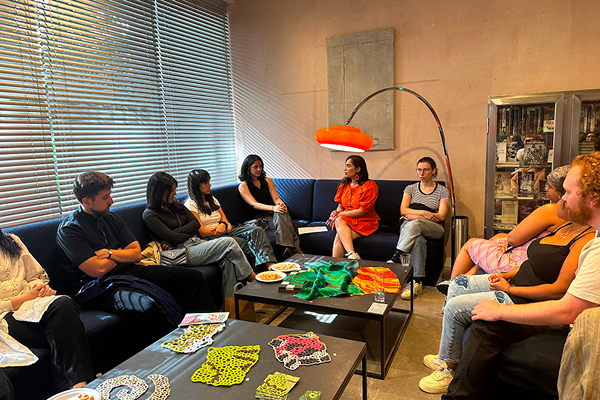
The event room hosted artists, writers, students, activists, and elected officials. It hosted a documentary — Deepa Dhanraj's We Have Not Come Here to Die — that traced the global protest movement that erupted in the wake of Rohith's death. It held a zine, an art exhibition, and Indo-Caribbean food from TrinCiti in Queens — a deliberate, political choice to build solidarities. “Indo-Caribbean folks are often forgotten within the larger South Asian umbrella. Many of them were taken as indentured labour by colonial powers — many of them happened to be lower-caste. We wanted to let them know that this is a space where we all stand together, unified in solidarity," says Dutt.
The menu included beef: a reminder that Dalit and Muslim communities in India are routinely punished for consuming and trading it. Nothing in that room was incidental. It held a reading of Rohith's last letter — the same letter I read every year alone, now read aloud in a room full of strangers who had all, in their own ways, been changed by it. Yashica had been explicit about what she wanted the evening to be: "I wanted to position Dalit culture not as an alternate, but as a different imagination of what South Asian culture can look like." It held a reading of Rohith's last letter — the same letter I read every year alone, now read aloud in a room full of strangers who had all, in their own ways, been changed by it.
My birth is my fatal accident. I can never recover from my childhood loneliness. The unappreciated child from my past.
May be I was wrong, all the while, in understanding world. In understanding love, pain, life, death. There was no urgency. But I always was rushing. Desperate to start a life. All the while, some people, for them, life itself is curse. My birth is my fatal accident. I can never recover from my childhood loneliness. The unappreciated child from my past. (Rohith Vemula)
Dutt said afterwards that the event carried deep personal meaning: "As a Bhangi (a lower-caste) woman from a caste that is often overlooked for leadership, even within anti-caste spaces, organising this event in one of the world's largest cities, where I first learned about Rohith and which I now call home, was a dream realised."
She had begun planning it the previous summer, she told me, while covering Zohran Mamdani's mayoral campaign — watching South Asian political power consolidate in New York while noticing what was absent from it. "Caste was not covered in the campaign, was not a part of the campaign. So in this building of South Asian political power, I was questioning — where were Dalits?" The event was her answer. "I wanted to make sure it was firmly established that Dalits were a political force in the city, a cultural force, a literary force." And crucially, she wanted it to create what she called institutional memory — “To not let these ten years go by idly, to mark how things had changed because of this one person, that scholar who was no longer among us."
And then, there was Maulikraj Shrimalij, a theatre artist at Northwestern University.
I do not have words sufficient to explain what happened when he performed. He read a poem by Avtar Singh Sandhu, called ‘Main Ghaas Hoon’. The room was completely silent, as if waiting to hear our own blood, our own thoughts rush through our veins. Main Ghaas Hoon, which translates to I am Grass and is loosely inspired by Carl Sandberg’s Grass is a subversive piece of work that underlines Dalit resistance and spirit. There is a kind of poetry that bypasses the intellect entirely and goes straight to something older and quieter inside you. His words found that place in me. I sat there thinking about how rarely, in any space I have occupied in America, I have felt like my particular grief — not identical to Rohith Vemula’s grief, but adjacent to it, shaped by the same systems — had a language. He gave it to me.
Former State Representative Raj Goyle spoke about the ongoing effort to pass caste-protection legislation in New York State. He situated the evening within a broader political moment — particularly in the wake of Zohran Mamdani's election as New York's first South Asian mayor — and issued a reminder the room needed to hear. "We cannot celebrate South Asian prominence, experience and success," he said, "without acknowledging that caste discrimination remains a shadow that casts a pall, in our workplaces, in our campuses, in our halls of power." It was not a comfortable thing to say in a city still celebrating its own progress. It was the truth.
Tejas Harad, founder and editor of the literary anti-caste publication The Satyashodhak and a speaker at the event, put it simply: "It felt great to recollect Rohith Vemula's fierce activism and his fight against injustice on his birth anniversary, and also be among the people who have taken the mantle from him and are continuing that fight after him." The word mantle stayed with me. ‘Dismantle’ is a rallying cry in the anti-caste movement, since a mantle is associated with position, norm and hierarchy. In a caste system, thus, it is associated with Brahminism. It is often the case that when a ‘mantle’ is given to a lower-caste individual, they are met with violence.
Dalit feminist organiser Shalini K described the evening as "an antidote to the despair surrounding us," one that honoured "Dalit grief, joy, and dignity — so that we not only continue our struggle against the Brahmanical forces that killed Rohith but build the worlds our comrade dreamed of travelling to." That phrase — the worlds he dreamed of travelling to — broke me open a little. Rohith Anna wanted to be a science writer. He wanted to write about stars. He got to write one letter. The last thing he wrote before he took his own life. A piece of writing that I have grieved with for many years. A writing, so incredibly important, that shines light on not just the life of Rohith Vemula but also on the systemic endurance and violence he and many others continue to live with.
And then the slogans began.
After a long stretch of quiet — of film and poetry and testimony, of all the necessary, interior work of grief — the chants started, following the Jai Bhim! by Manohar Boda, a student at Rutgers University and a member of the Rutgers Anti-Caste Collective. For a soft-spoken person, his slogan voice was magical. It was loud, assertive, and yet deeply gentle. What I remember is the sound. It moved through the room the way only collective sound can: fast and warm, from person to person, from mouth to ear to chest to something deeper. It filled the space like wildfire. It reached me before I had time to think about it, and when it did, something in me that had been clenched for a long time simply opened.
I have been a student in this city for long enough to know what it feels like to be invisible in a crowd of people who look like you. That night, I did not feel invisible. I felt, for the first time in a long time, like I was in the right room.
I try to carry Rohith Anna's memory in the embers of my work — in the small, persistent effort to create a voice or a space for those who may not otherwise have one. It is difficult work. Journalism is difficult. Anti-caste journalism, especially in diaspora contexts where community pressure runs deep, and the stakes of naming things are high, is harder still.
But then I think of that room. I think of 120 people in the cold. I think of the slogans travelling from ears to hearts. I think of Yashica Dutt calling it a dream realised, I think of Rohith Anna, who wanted to be a science writer like Carl Sagan, who got to write only one letter.
Rohith Anna dreamed of the stars. We are still, ten years later, trying to reach them. And now, at least, I know I am not reaching alone.