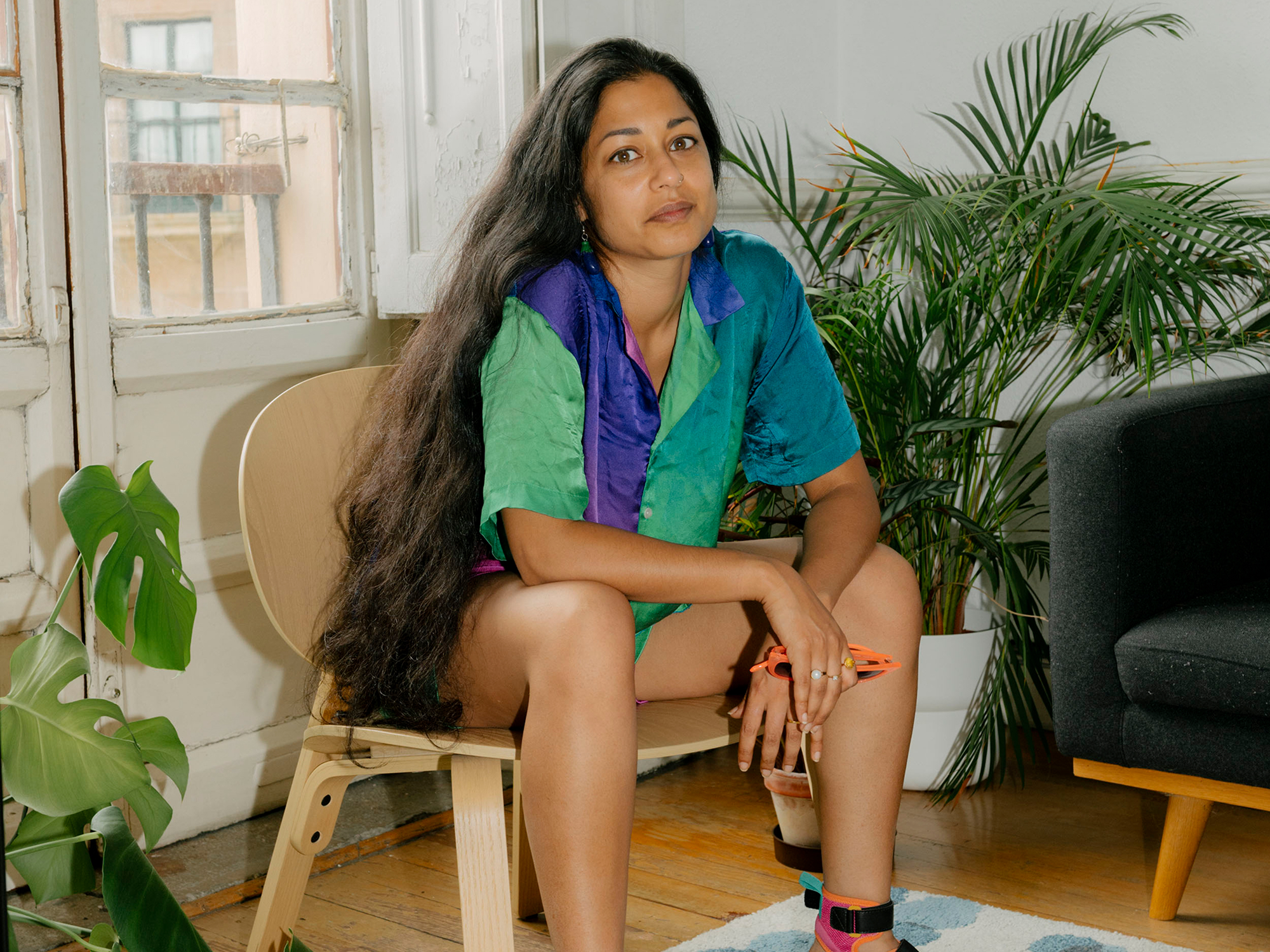
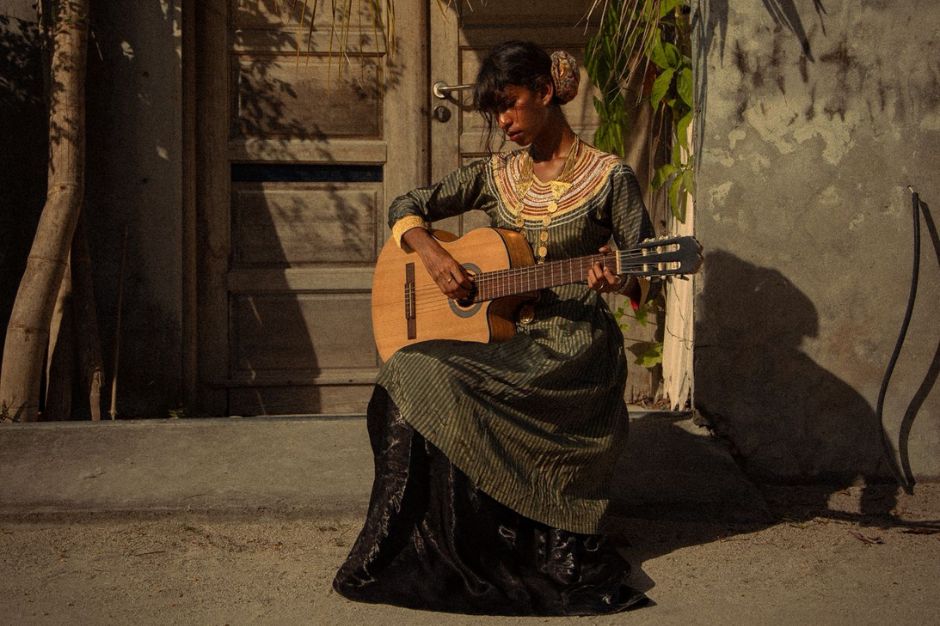
Relocating to London deepened her creative world, connecting her with the city’s DIY, jazz, and soul scenes. These dual landscapes, the island roots and urban reinvention form the emotional and sonic backbone of her music. As a Maldivian artist operating in London, Zami carries a cross-cultural identity, blending island heritage with global influences, giving her music a distinct and fresh sonic signature.
Her debut EP, Release, is an intimate introduction — a collection built around vulnerability, love, and the act of letting go. But it was "Redhan," sung in Dhivehi, that stopped me. Sitting in Delhi, the song transported me to Maldivian shores, to the quiet wonder of bioluminescent plankton glowing beneath dark water. Through Zami's crisp, textured voice and the song's careful ebbs and flows, music became something tactile — something you could almost touch. The harmonies rose and fell like water, layered and alive, each instrument finding its place in the current, and I became curious about its maker - how would she have envisioned this? Her inspirations, her motivation, and her story. Interviewing Zami Yazeed.
1. How does your creative process usually unfold — where does a song begin for you?
It's different every time. Sometimes I sit with my instrument and improvise on how I'm feeling, and a song forms from there. Other times a poem I've written turns into a song. Or I'll have a melody, a rhythm, or an idea in my head that I need to make real, and I just sit with it. I'm having fun with it!
2. What are your earliest memories of music growing up in the Maldives — everyday sounds, and how do you relate to traditional forms like Bodu Beru or Raivaru?
My father was my main window to music. Growing up on the island, I'd hear Bodu Beru and popular Dhivehi music on the radio and during Eid. When we moved to Malé, there was beyn jehun and more exposure to different sounds. Bappa would play from his CD collection — "Bappa ge CD Baggy" we called it — and he'd take us to live shows. He's a massive music lover with a deep passion for writing and literature. That rubbed off on me.
Raivaru and Lhen were taught in school, and I remember trying to write Raivaru because my grandma told me she and her friends used to gossip through it back in the day!
3. As someone who's largely self-taught, what did learning music look like in a place with limited formal infrastructure?
Funny story — I used to secretly copy chord shapes onto 6 safety pins on the edge of my mattress to practice before I had an actual guitar.
When I finally got one, I looked up chords and tabs online, watched lessons, and learned songs I loved. As I got older I'd ask questions and learn through jamming — my friends collectively taught me Bodu Beru just last year! Jamming with other musicians has taught me most of what I know. The rest is just playing around, listening, and finding what feels right.
My main motivation was always to compose what's in my head, support the stories I want to tell, and have fun. Maybe it's not the most structured way to learn, but you can never run out of things to discover in music. We learn from each other.
4. "Redhan" feels deeply tied to place and memory — how did you know this song had to be in Dhivehi?
First of all, Redhan is simply a more beautiful word for bioluminescent plankton — more poetic than anything English offers! But beyond that, there are feelings that can only be expressed in my mother tongue. The experience is native to a specific beauty — sitting on a Joali by the sea on a windy, starry night and leaving your worries there. That's something only a Maldivian could fully understand. But I hope the feeling translates sonically for non-Dhivehi speakers too, and offers a different insight into Maldivian music.
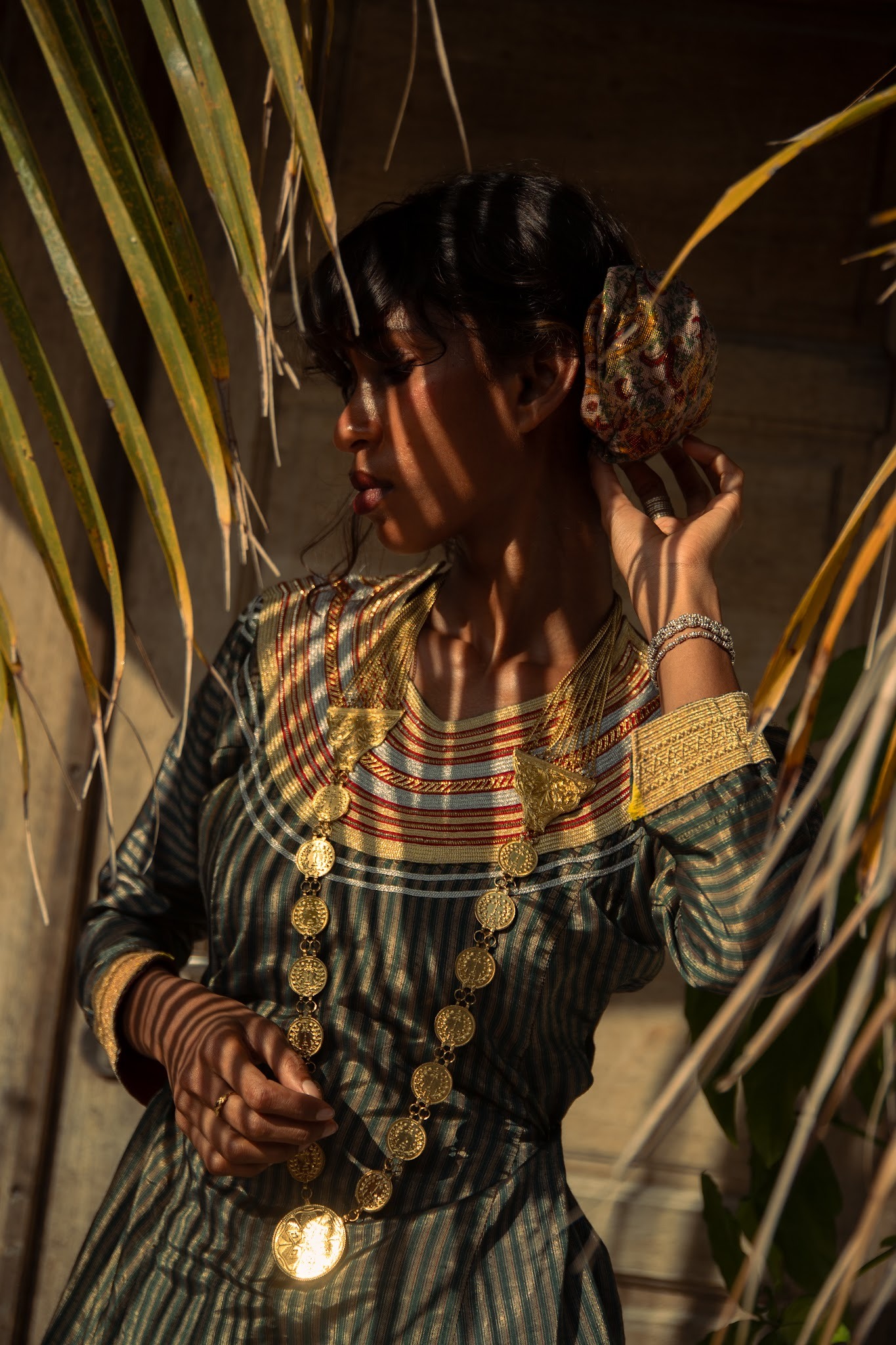
5. Did your Maldivian identity become clearer, more complicated, or something else entirely after leaving home?
Both — clearer and something else entirely at the same time. Since I wasn't speaking Dhivehi every day, it felt important to perform and write in my language as much as I could. London is a colourful hub of creatives from all over the world, and I felt a responsibility to add the colour of where I come from. I actually started writing more in Dhivehi after I moved.
London also made it easier to be myself — creatively and personally. During live sets, audiences often felt a closer connection to the Dhivehi songs. So I tell stories about the Maldives, shed light on our experiences, and weave those influences into my work — especially in newer pieces that fuse Maldivian traditional rhythms with the energy of the London music scene.
6. Maldivian music has historically been very communal — how do you translate that collective feeling into more intimate, singer-songwriter work?
The collaboration is my favourite part. Most of this EP was recorded live with incredibly talented friends in the studio — musicians from different parts of the world. We'd played these songs so many times, in so many different settings. My music feels at home in their hands, and live it always sounds big and euphoric. I write the songs alone, then bring them to the band, and they give everything a whole new meaning. I love my band so much.
7. Do you feel Maldivian artists often have to leave the country to be taken seriously? How do you navigate that tension?
I'm not sure it's about being taken seriously. What I'd say is there are limited opportunities for artists making original music in the Maldives right now. We need more studio spaces, live performance opportunities, funding, and access to a wider range of instruments. And we need more representation on South Asian and global platforms — to be included in these conversations.
8. Your work often returns to time, grief, and watching your mother age. How does music help you hold these experiences? And as a Maldivian woman, do you feel there's space to be emotionally expansive and artistically vulnerable?
Music itself creates the space to process, express, and imagine whatever a human being needs. It's a healer, a unifier, a mediator.
As a Maldivian woman, even when it feels like the space isn't there, we're here to create it. And we'll make it a cosy one.
9. What does "Release" mean to you beyond being the title of the EP?
Release is an introduction to the kind of work I make. I hold it very close to my heart — so many beautiful people are part of it, and so many memories and stories attached. I'm excited to share it with the world, because letting it go means I can open the tap and start showing you everything I've been making since. It's time for it to fall into your hands.
10. And finally, what's your favourite South Asian sweet?
Pirini! Yum!!!