


The craft is widely believed to be around 400 to 500 years old. Historical accounts trace its origins not to toys but to utilitarian wooden objects—particularly vessels used for measuring grains. These calibrated wooden containers were essential in agrarian economies. Over time, artisans began coating these objects with lac, a natural resin secreted by the lac insect (Kerria lacca). The application of lac gave the wood durability and sheen. Gradually, decorative forms emerged alongside functional ones, and toys became a primary output of the craft.
We were invited to the village by Padma Shri awardee C. V. Raju, one of the most recognisable figures associated with the revival and restructuring of the craft. Raju received the Padma Shri in 2023 for his contribution to handicrafts. Over the past few decades, he has been instrumental in formalising production processes, improving design quality, and expanding market access for artisans in the village. While Etikoppaka’s toy-making tradition predates him by centuries, Raju’s role has been central in repositioning it as a nationally recognised heritage craft with stronger income potential.
The toys of Etikoppaka received a Geographical Indication (GI) tag in 2017, formally recognising their unique origin and production technique. The GI status was a significant milestone, protecting the craft from imitation and strengthening its identity in both national and export markets.
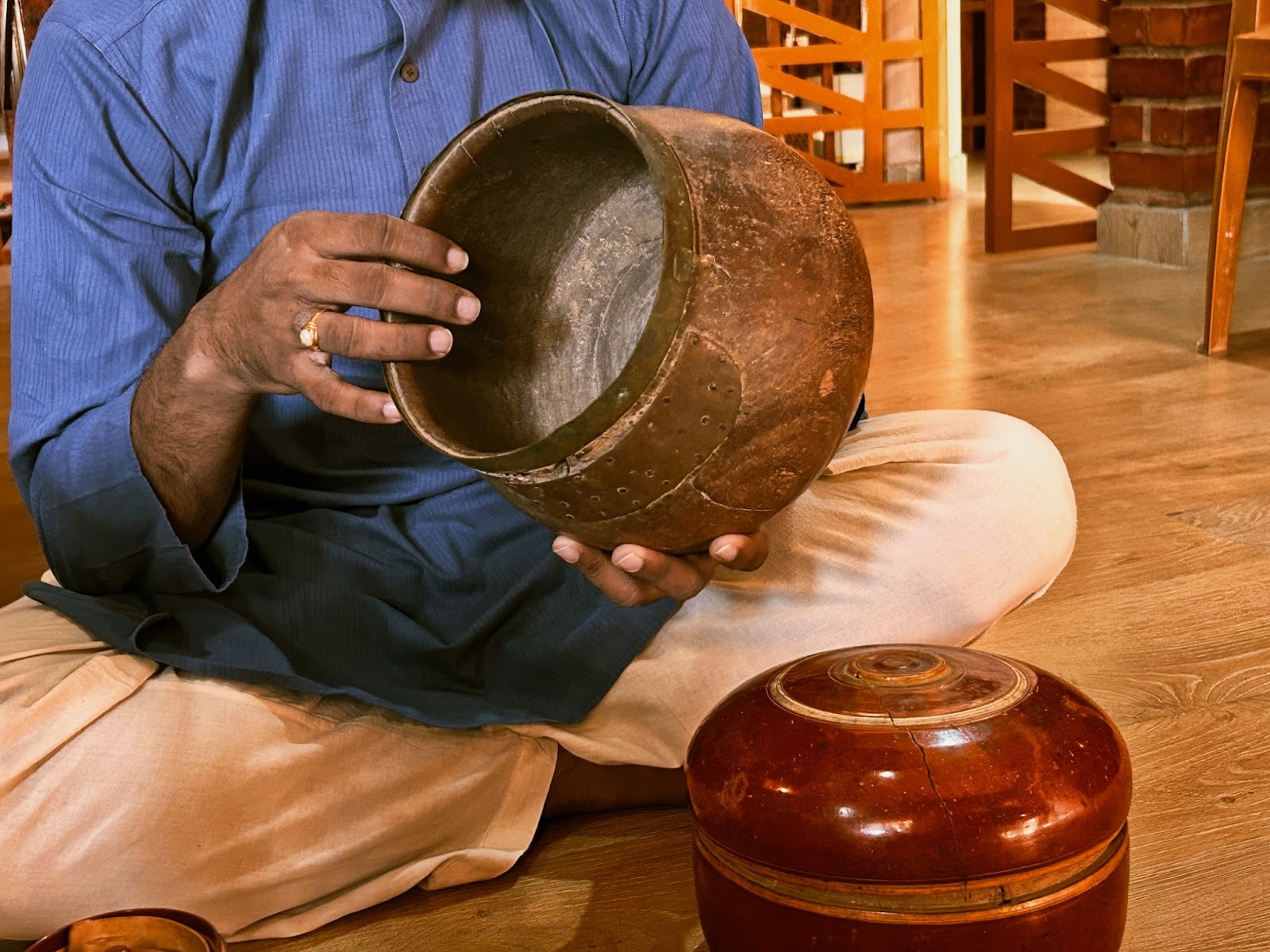
At Raju’s residence, there is a collection of archival designs—objects that are no longer in production but reflect earlier phases of the craft. These include traditional rattles, figurines, spinning tops, and other domestic items. Many of these older designs reveal a strong functional logic. They are not ornamental excesses; their forms are proportionate and carefully calibrated. The continuity of design knowledge is evident in the consistency of curvature, balance, and finishing across generations.
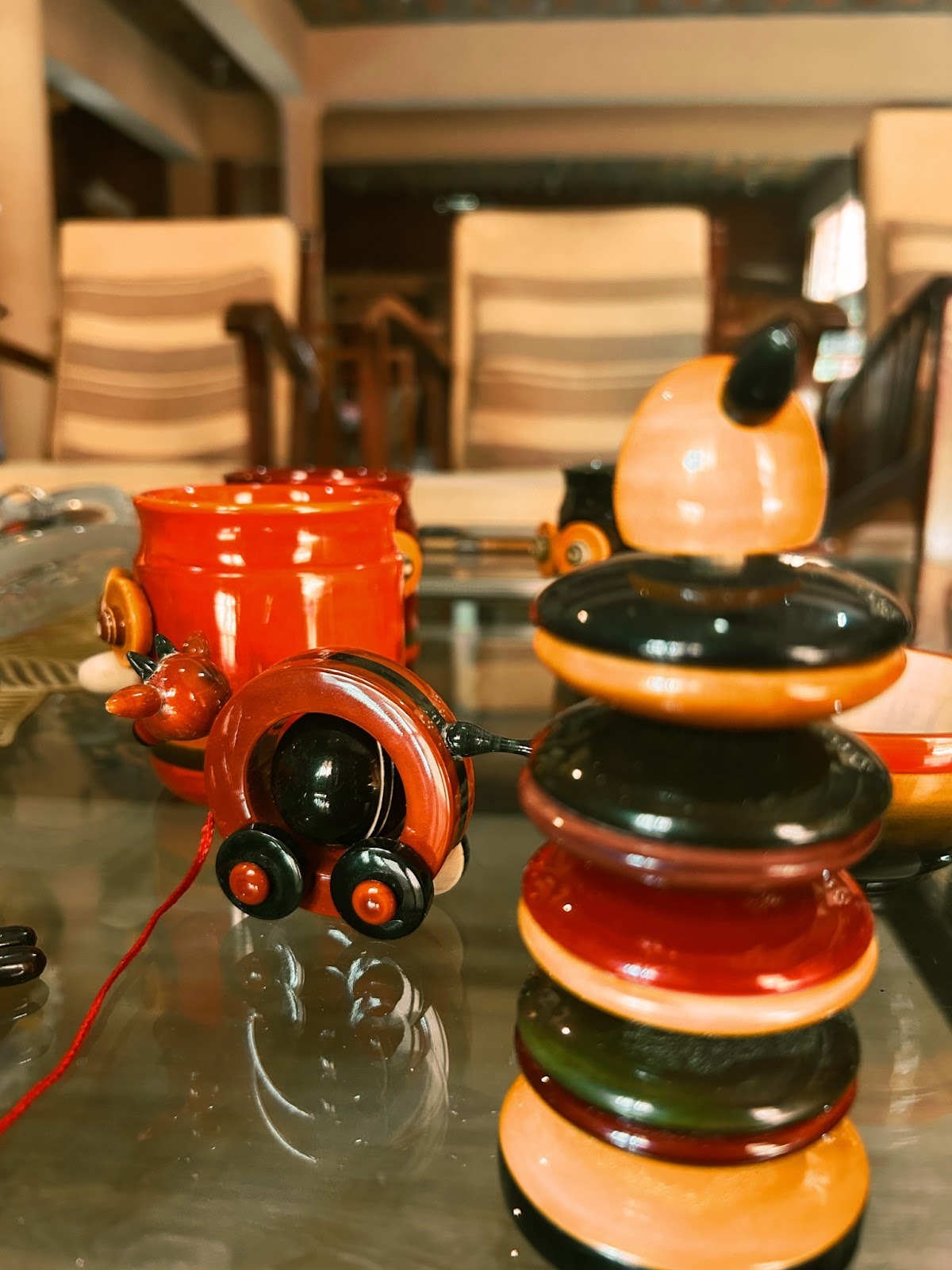
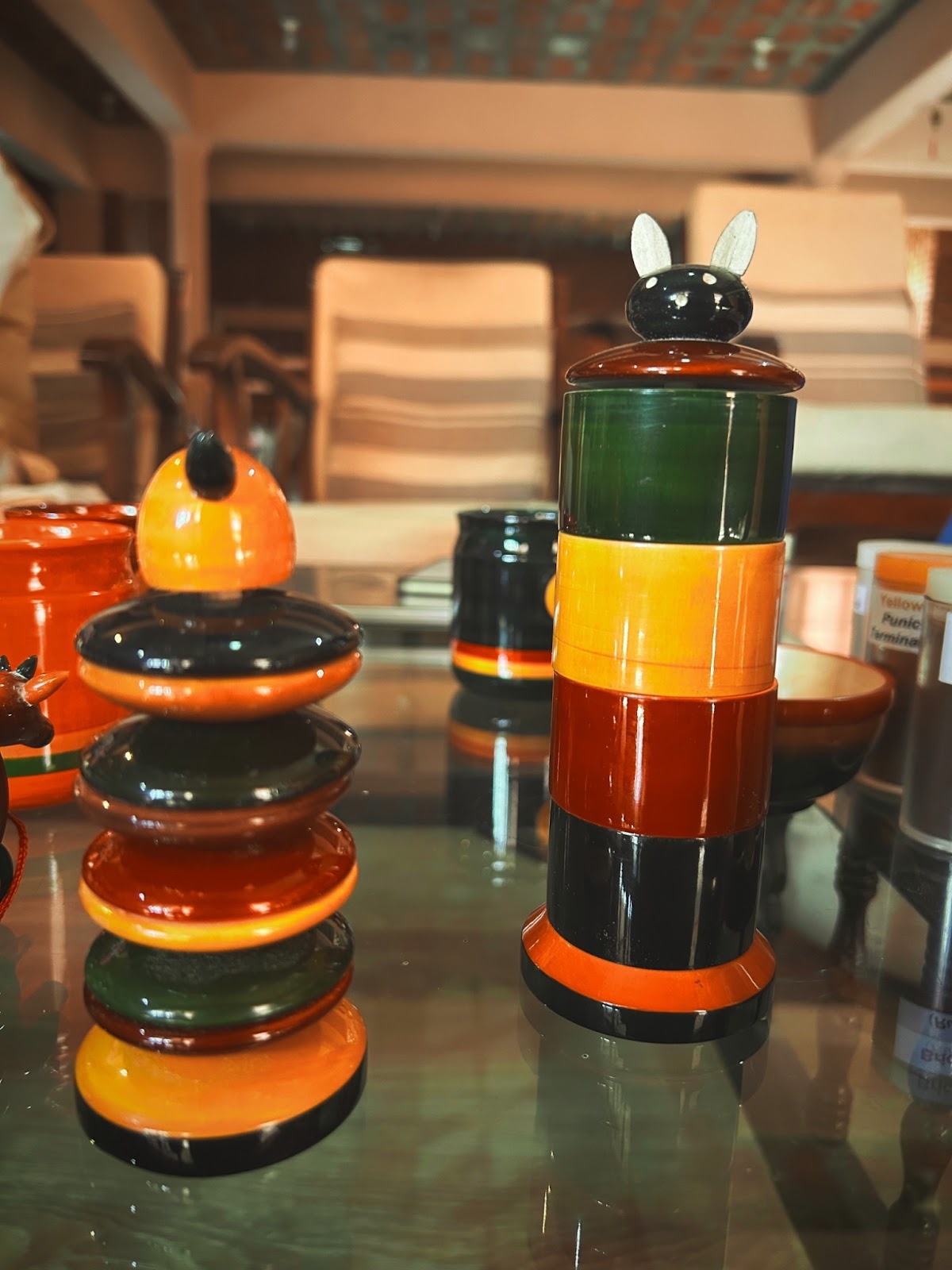
Raju continues to design new toys himself. One of his contributions has been to modernise the design vocabulary without abandoning the core material logic of the craft. Historically, toys were produced largely for local markets—village fairs and nearby towns. Today, production is linked to national handicraft exhibitions, urban retailers, and export networks. This shift has required adaptation in scale, finish, and packaging.
The wood traditionally used in Etikoppaka toys is locally sourced Ankudu wood (Wrightia tinctoria), a softwood species found in the Eastern Ghats. Ankudu is light, fine-grained, and easy to turn on a lathe, making it suitable for detailed shaping. It is also relatively safe for children, as it does not splinter easily when worked properly. The choice of wood is not incidental; the material determines the weight, balance, and durability of the finished toy.
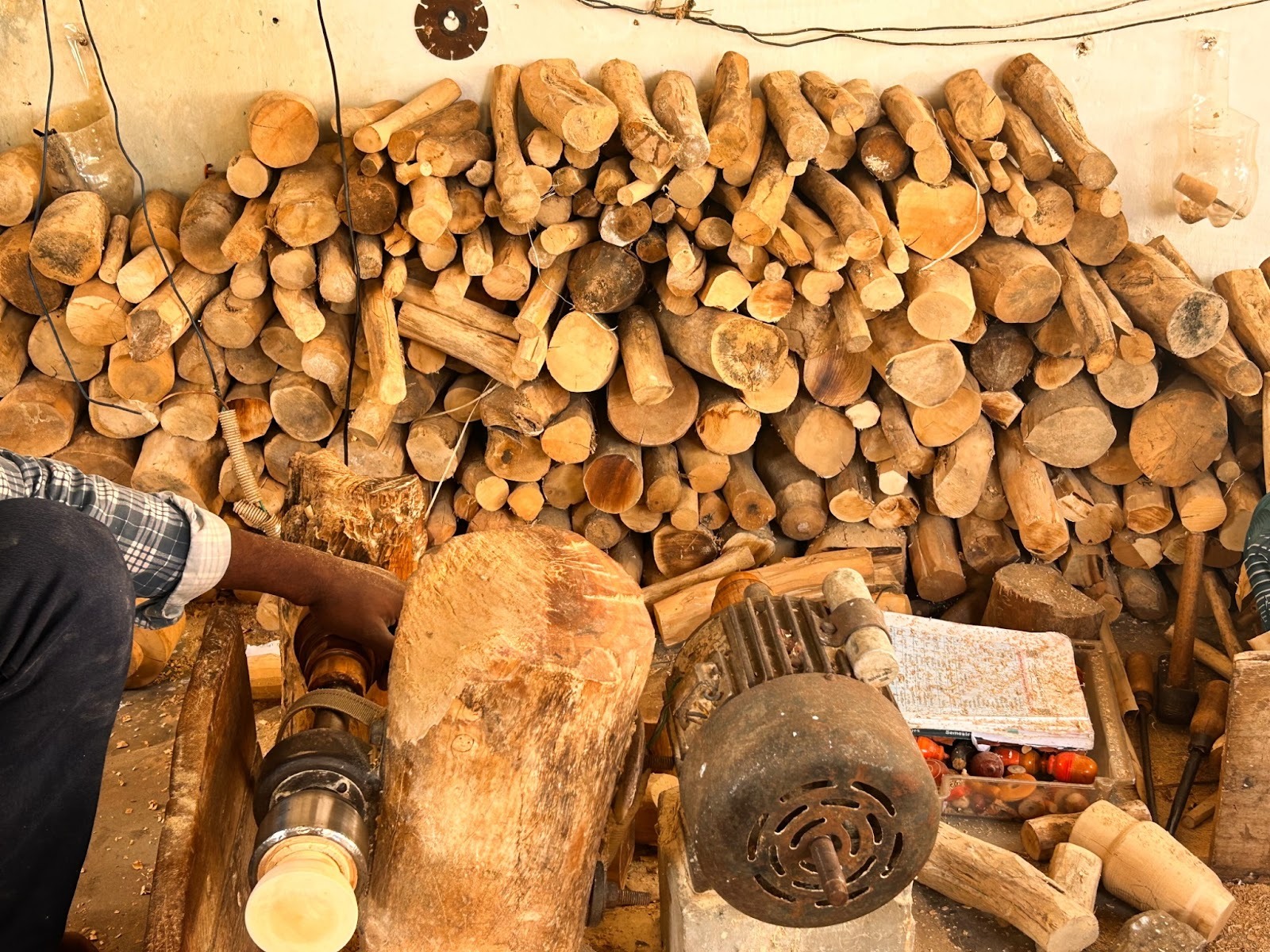
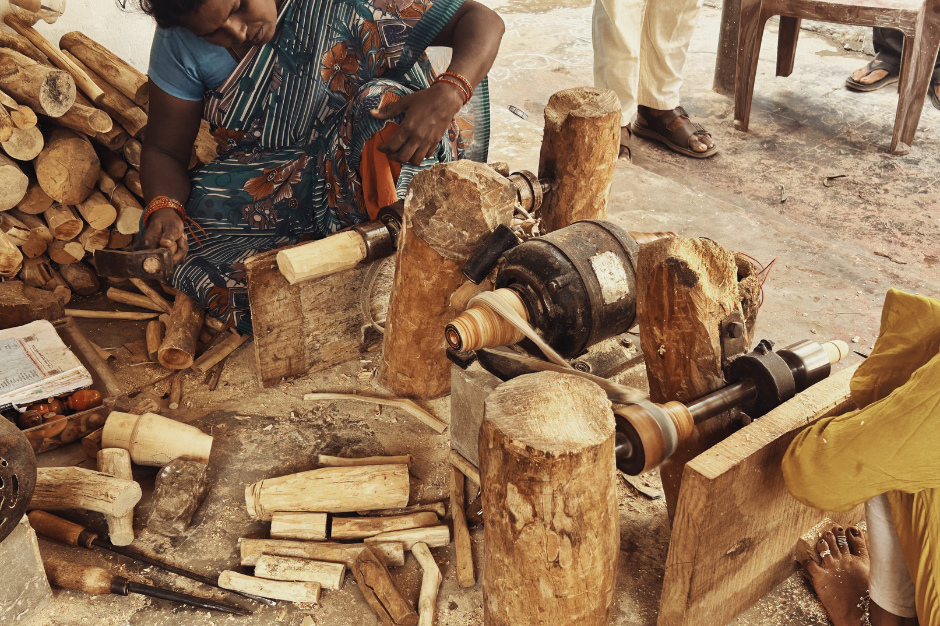
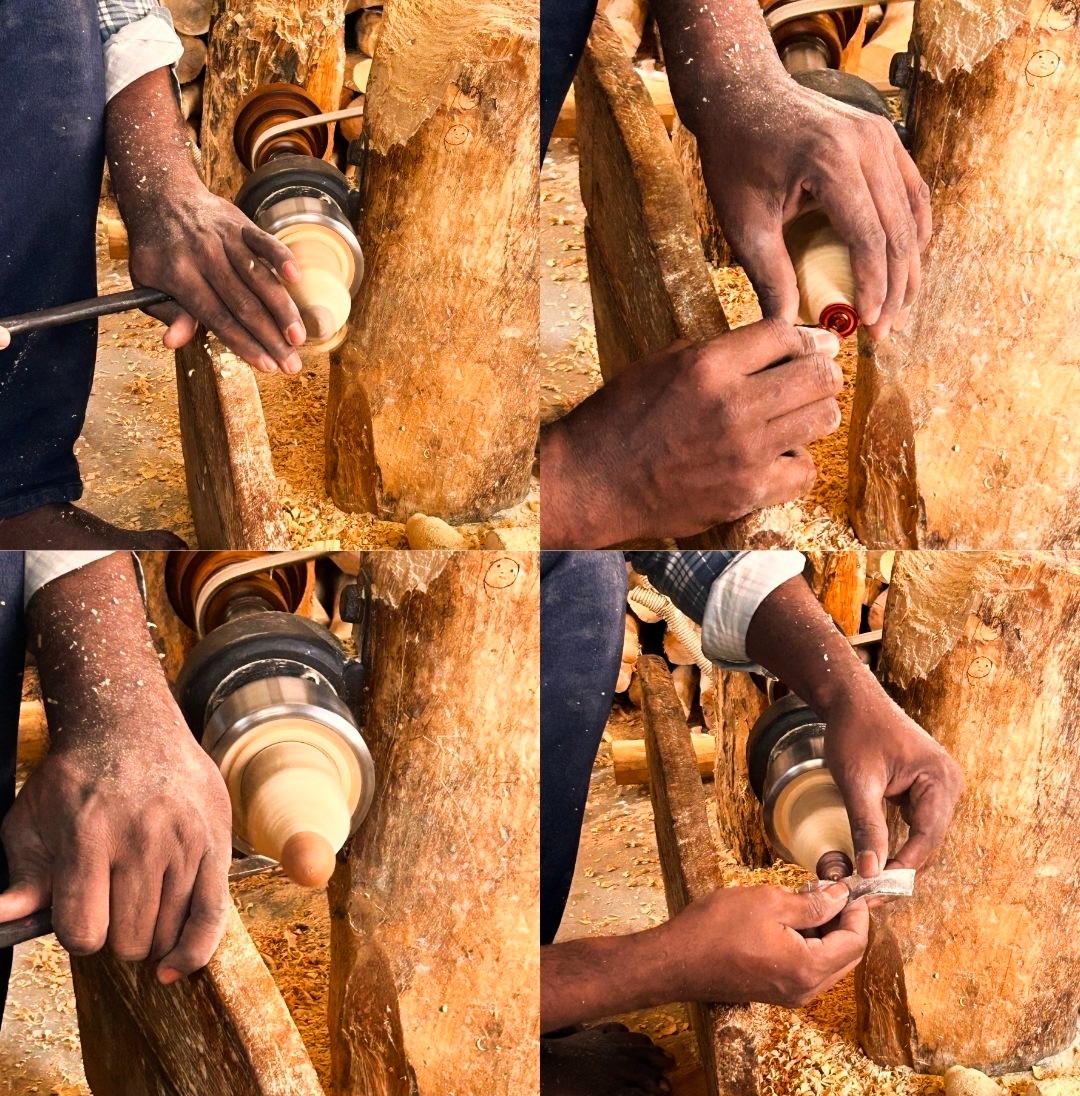
The lac application process is central to the craft. The toys are shaped on a lathe—either hand-operated or electrically powered—using chisels to shave the rotating wood into form. Colour is not painted on with brushes. Instead, coloured lac sticks are pressed against the spinning surface. The friction generates heat, melting the lac and allowing it to fuse smoothly onto the wood. This technique produces a uniform glossy finish without the need for synthetic varnishes.
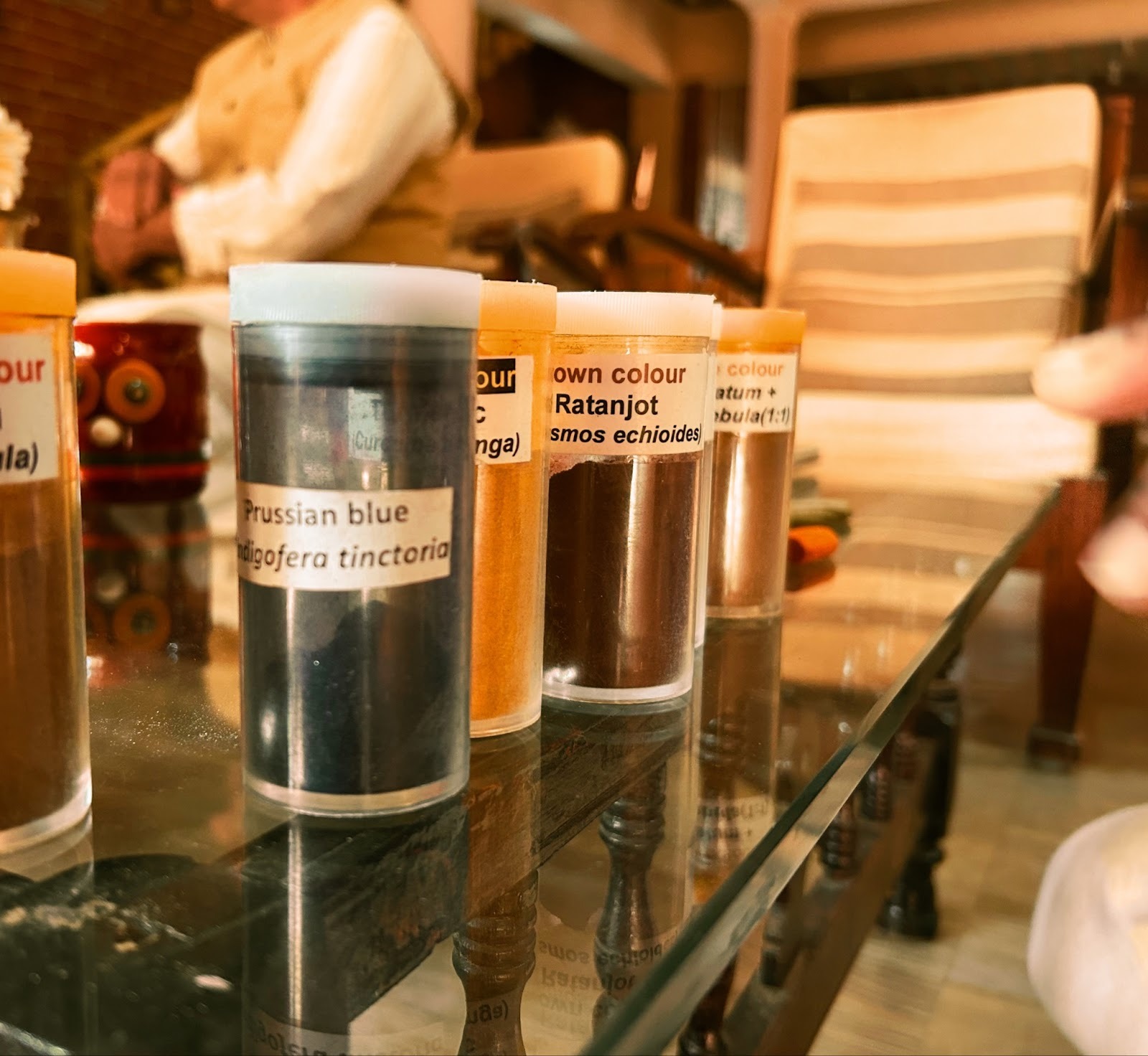
Traditionally, dyes used to colour the lac were derived from natural sources: turmeric for yellow, indigo for blue, annatto seeds and other plant extracts for red and orange tones, and various bark or seed-based pigments for brown and black. However, the use of natural dyes has declined significantly due to cost, availability, and consistency challenges. Synthetic dyes are now widely used across the village because they are cheaper, more stable, and easier to standardise.
During our visit, we were told that approximately 160 families in Etikoppaka are engaged in toy-making in some capacity. Of these, around 35% of the artisans are now women. This gender distribution reflects a shift over the past five to six years. Traditionally, men handled the turning and lac application, while women assisted with assembly and finishing. In recent years, women have increasingly taken on production roles, including lathe work. This transition is gradual but visible, and it has implications for household income and labour distribution.
We visited one family to observe the production process in detail. A husband, wife, and elderly mother were working together in a courtyard setup. The lathe was powered electrically. As the wood rotated, one artisan used a chisel to shape the form while another prepared the coloured lac sticks. Wood shavings accumulated around their feet. The process required steady pressure and precise timing.
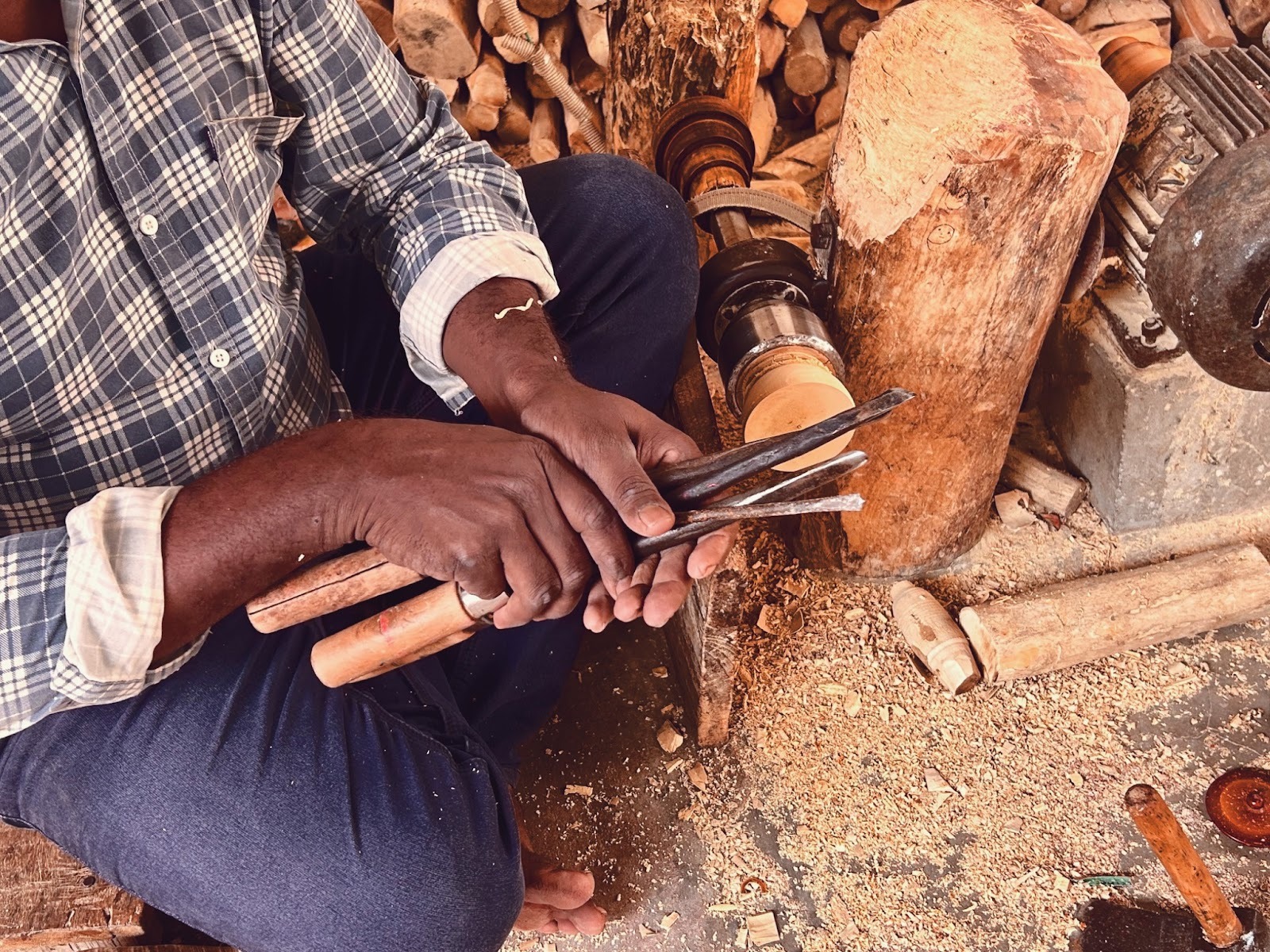
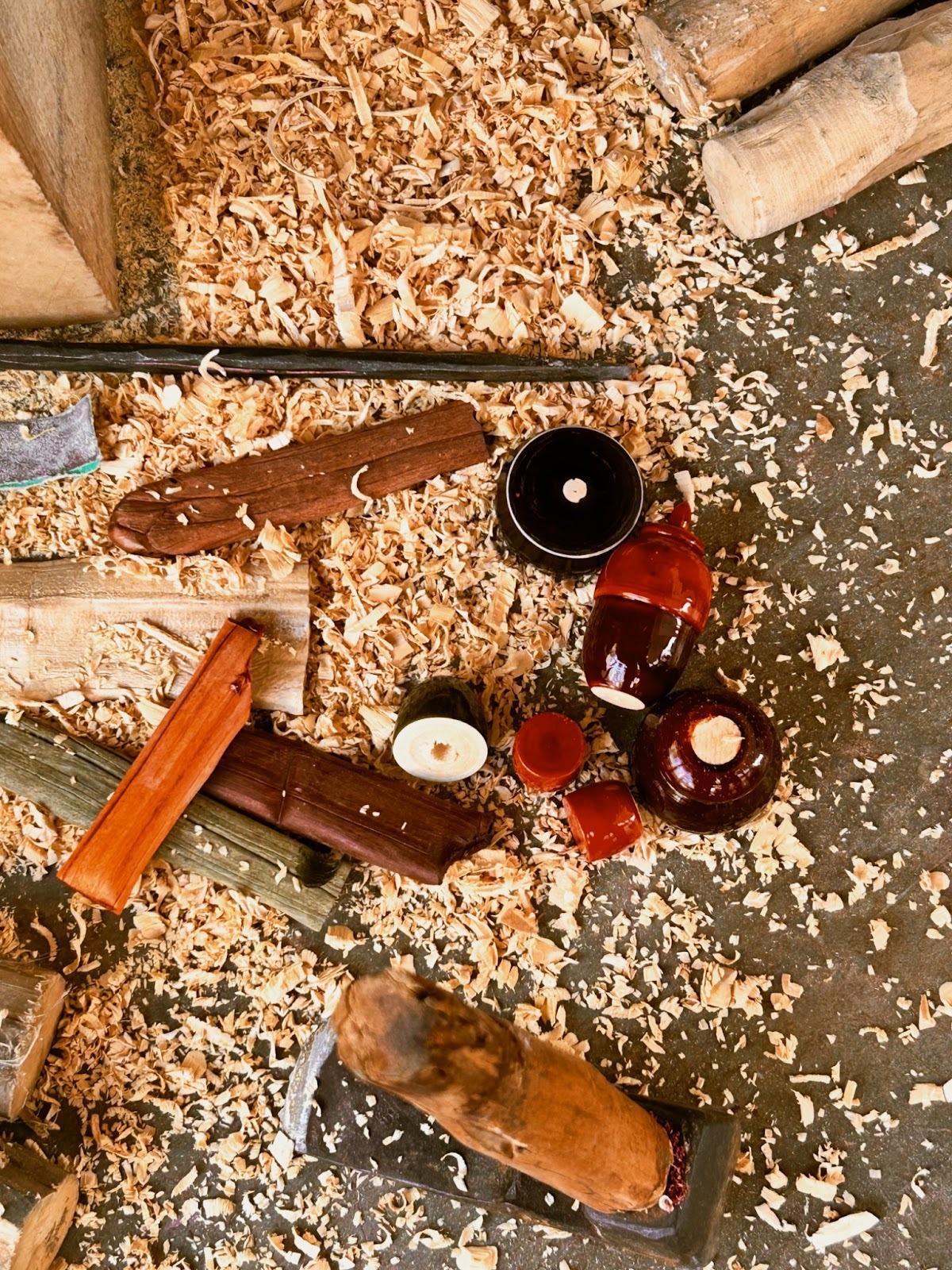
Electricity interruptions affected production. Each time the power cut out, the lathe stopped abruptly. Work paused until electricity resumed. Such infrastructural constraints have a direct impact on output and income. Once power returned, the artisans resumed immediately, continuing the shaping or colouring from where they had left off.
This family is among the few in the village still committed to using natural dyes for colouring. According to them, most toys currently available in broader markets use synthetic colouring compounds. While these compounds are not necessarily unsafe if properly regulated, the original vegetable-dyed lac toys are considered more environmentally sustainable and child-friendly. The decline of natural dyes is linked not only to cost but also to supply-chain fragility. Many traditional dye sources are no longer easily accessible, and preparing natural pigments requires time and skill.
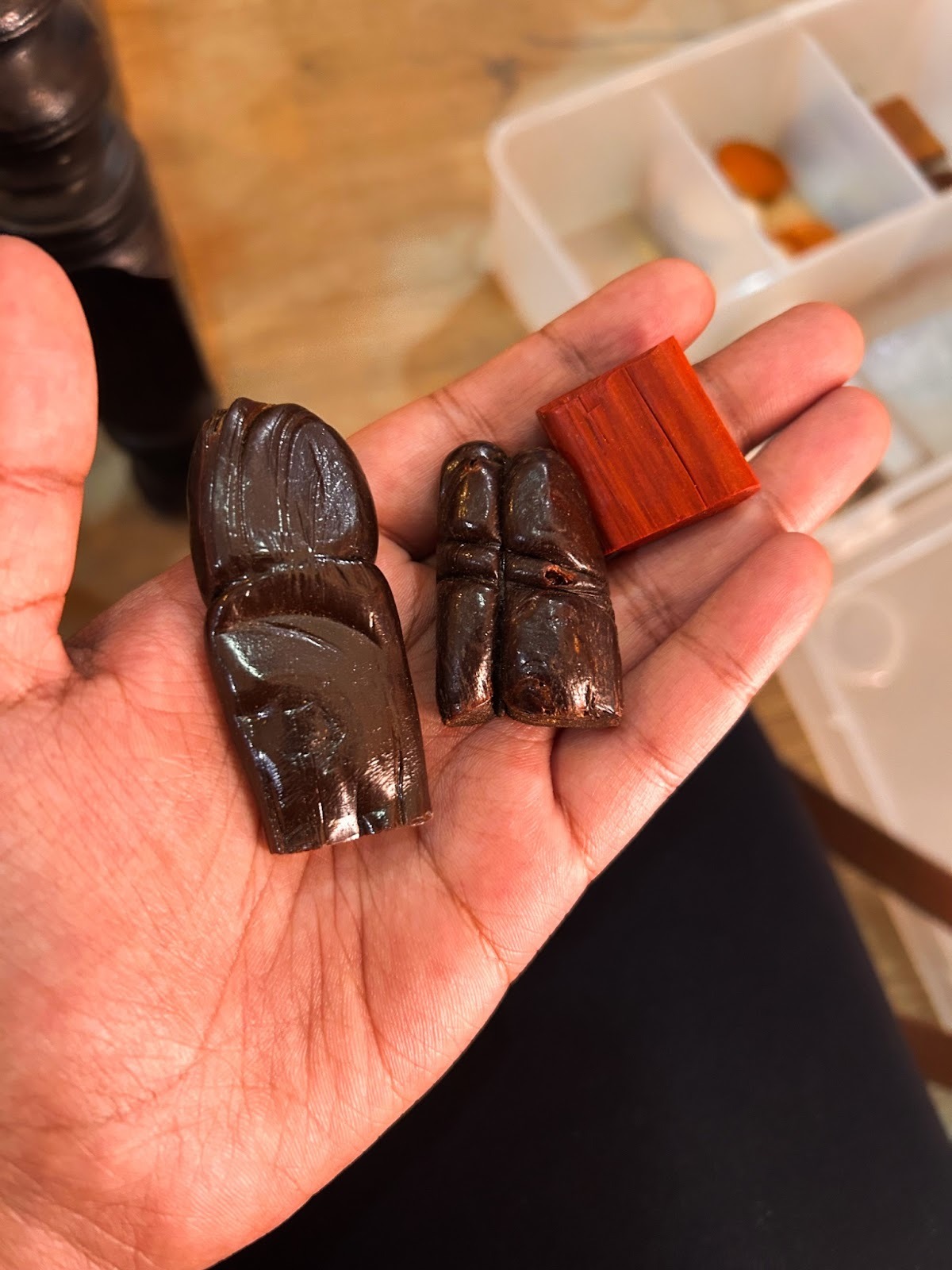
One of the most striking aspects of the visit was the depth of design knowledge preserved in the village. Raju showed us an object that is no longer in common use: a wooden shirt collar holder. This object dates back to a period when men wore starched collars that required support inserts to maintain shape. The holder preserved the collar’s structure and included a small central compartment for storing cufflinks, spare buttons, or small jewellery items. The design demonstrates the versatility of the craft beyond toys and reflects an earlier domestic lifestyle.
Another object in his collection—a lacquered vessel nearly 100 years old—retained its colour and sheen. The lacquer had not peeled or cracked significantly. This durability challenges assumptions that natural materials are inherently less resilient than synthetic ones. Properly applied lac creates a protective coating that can last decades.
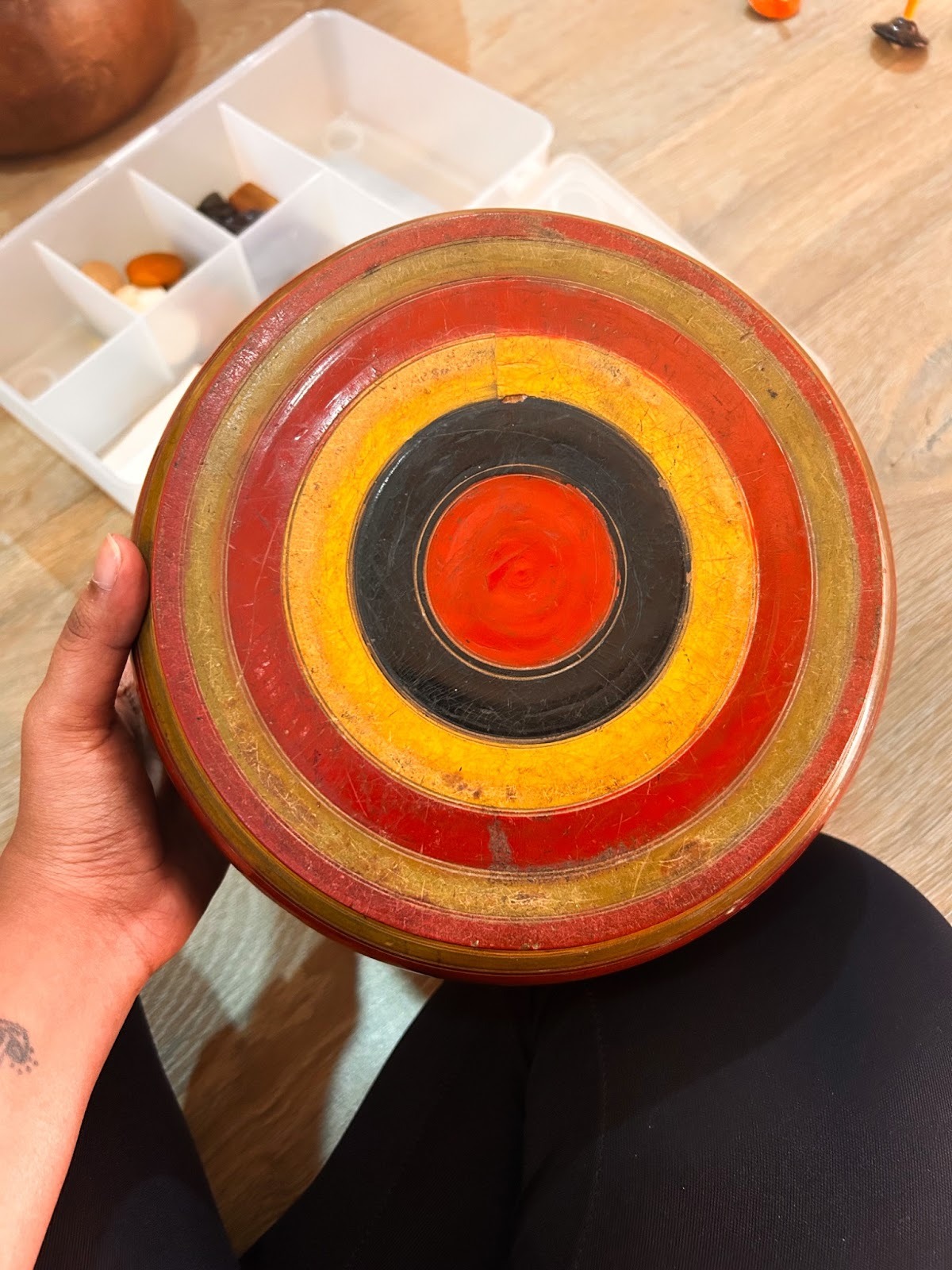
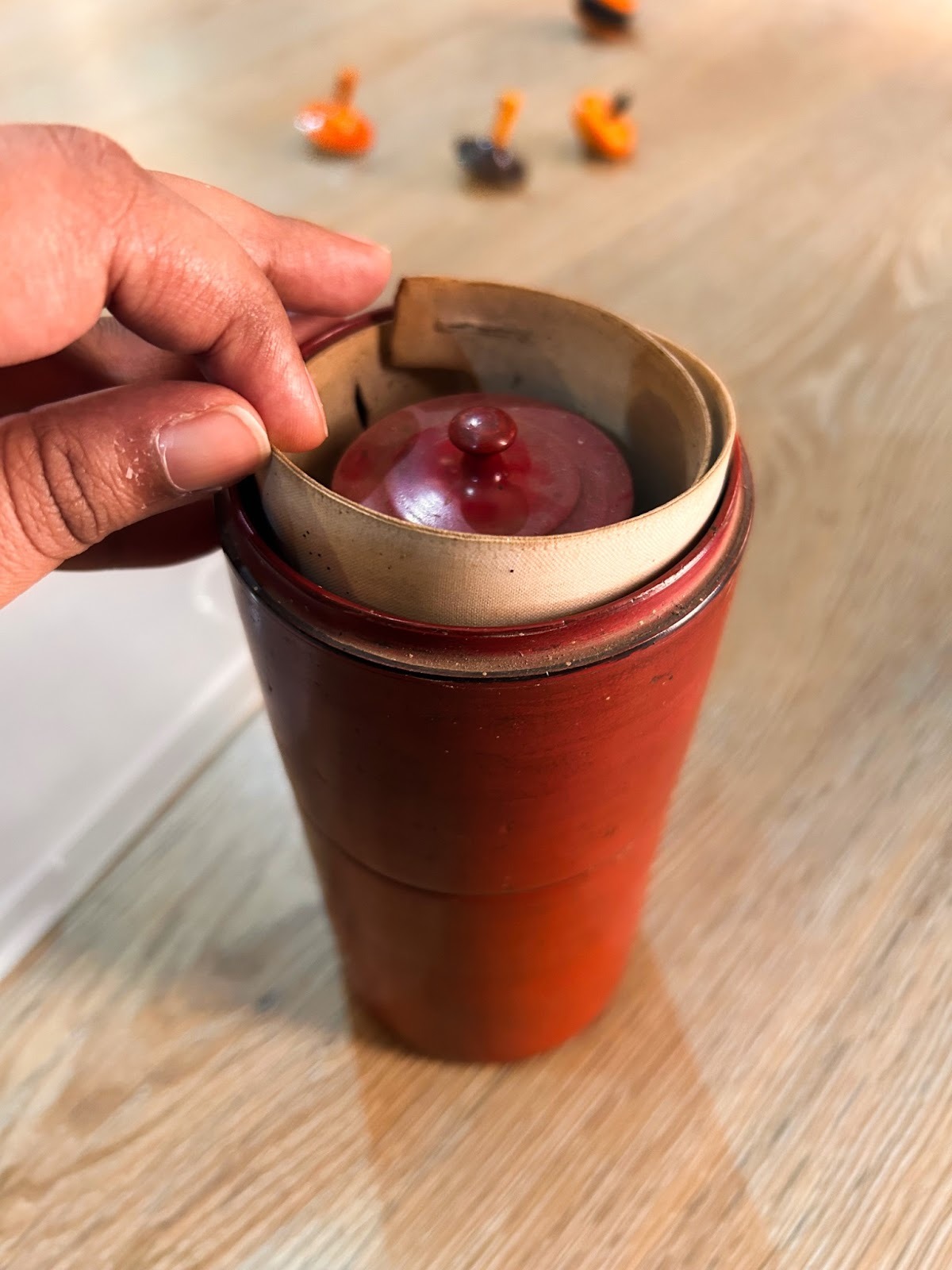
Raju’s role in the village extends beyond design. He has worked on improving quality standards, expanding market access, and organising artisan groups. By connecting the village to exhibitions, government schemes, and design networks, he helped increase income opportunities. Before these interventions, toy-making was largely confined to local demand, limiting earnings. Market expansion has allowed for higher volumes and better price realisation, although income variability remains a concern.
The term “heritage craft” is frequently applied to Etikoppaka toys, but it can obscure the economic reality of production. This is a working industry. Artisans depend on steady orders. Price competition from mass-produced plastic toys and cheaper wooden imitations from other regions remains a challenge. The GI tag provides some legal protection, but enforcement and consumer awareness vary.
There is also a generational question. While some younger members of artisan families are continuing the craft, others are seeking employment outside the village. Income stability, educational aspirations, and exposure to urban employment opportunities all influence these decisions. Whether the craft can sustain itself across future generations depends on both market demand and structural support.
Etikoppaka’s toy-making tradition illustrates how rural crafts adapt to modern pressures. Standardisation has increased in response to larger markets. Packaging and branding have improved. Yet the core production technique—lathe turning and friction-based lac application—remains intact.
The craft’s emphasis on safety is rooted in material choices. Ankudu wood, natural lac, and vegetable dyes were historically used precisely because they were locally available and non-toxic. In an era of heightened awareness around child safety and sustainability, these features are marketable advantages. However, maintaining authenticity while ensuring affordability is a constant balancing act.
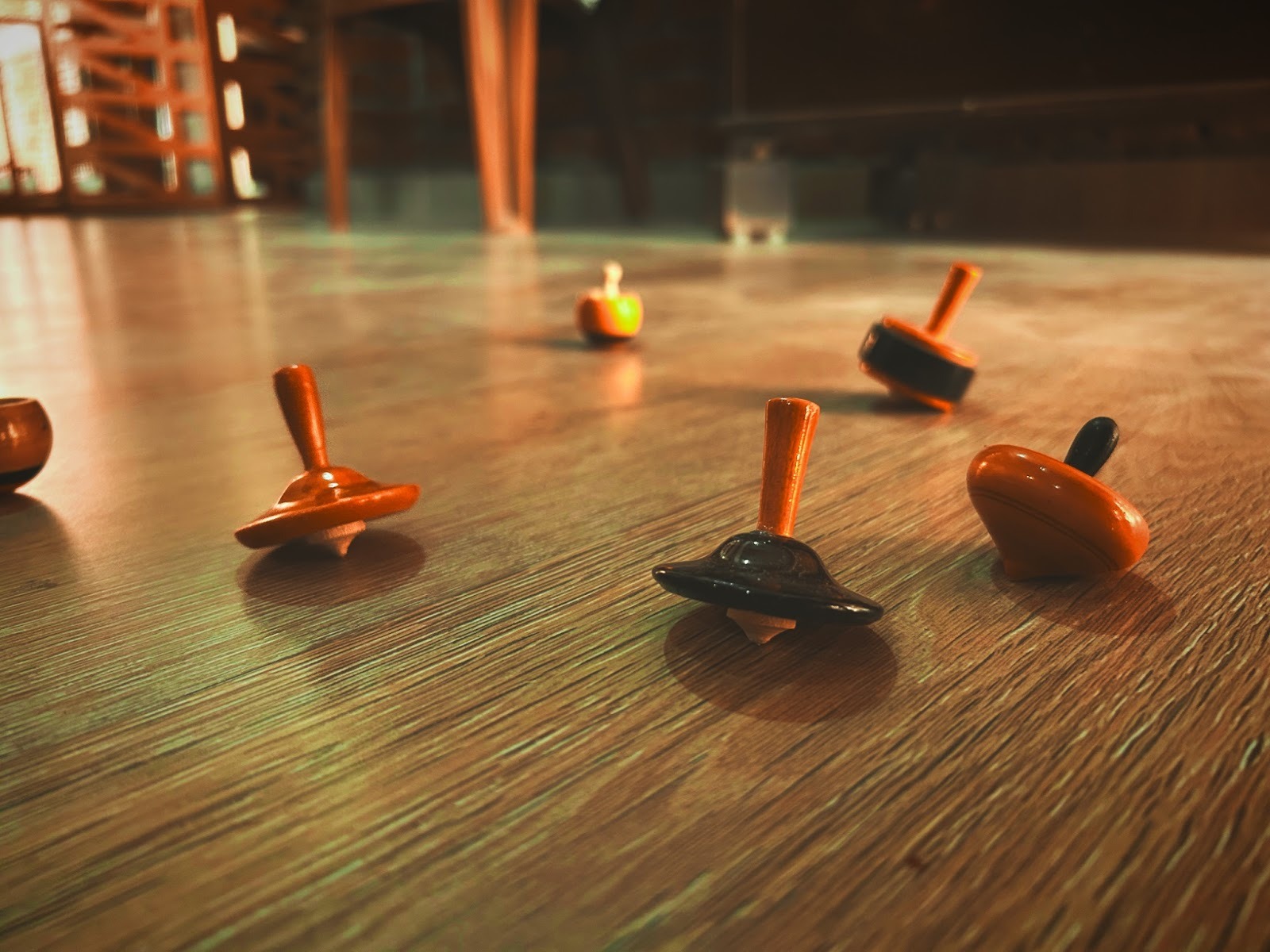
On the return drive, the agricultural landscape felt less like a backdrop and more like context. The same agrarian economy that required wooden grain-measuring vessels centuries ago enabled the evolution of toy-making. The forest supplied wood. The lac insect supplied resin. The village supplied labour and design intelligence.
Etikoppaka’s toys are often described as simple, but the simplicity is the result of accumulated refinement. Over centuries, artisans have adjusted proportions, balanced weights, and refined finishes. These adjustments are rarely documented formally. They exist as embodied knowledge—transmitted through apprenticeship and observation.
The visit made clear that while awards and GI tags bring visibility, the sustainability of the craft depends on daily labour under variable conditions. Electricity cuts interrupt production. Natural dye sourcing remains limited. Market competition is ongoing.
What remains consistent is the technical precision of the process. The friction-based lac application requires control over pressure and timing. Too much heat can burn the surface. Too little can prevent adhesion. The final gloss depends on the artisan’s judgement. These are skills developed through repetition and correction, not written manuals.
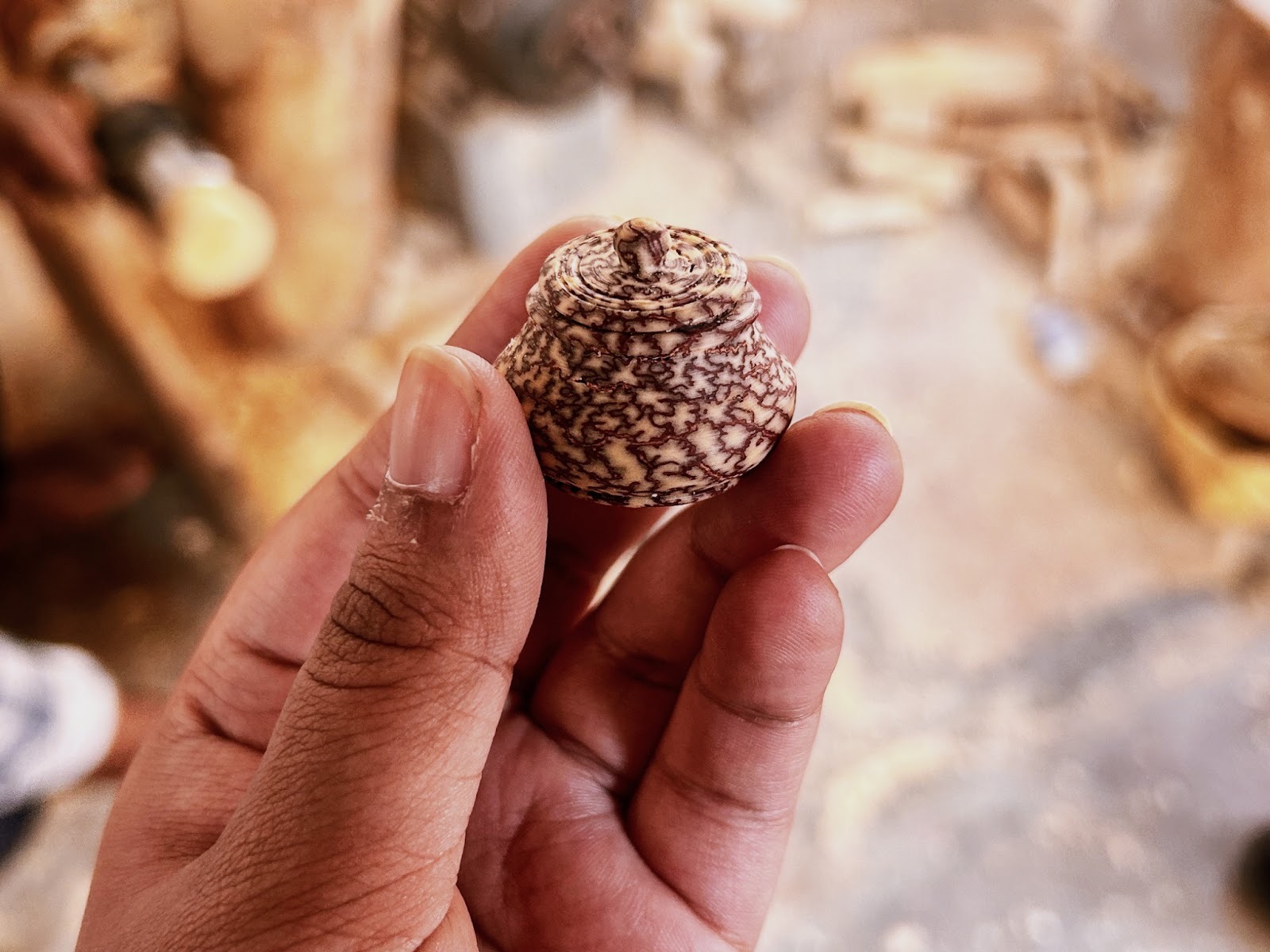
Etikoppaka is neither a museum village nor an untouched relic. It is an active production centre negotiating heritage and livelihood simultaneously. Its toys circulate far beyond the Varaha River, but their origin remains rooted in this specific geography and material ecology. The craft has survived for centuries not because it remained unchanged, but because it adjusted—first from vessels to toys, then from local to national markets, and now from purely natural dyes to hybrid systems.
Etikoppaka’s significance lies not only in the objects it produces but in the systems it sustains: intergenerational skill transfer, material knowledge of wood and resin, and a design sensibility shaped by both function and play. The future of the craft will depend on whether these systems can remain economically viable in a rapidly shifting toy market.





.jpg)