
It was in the wake of this rupture—a movement that would eventually lead to significant changes in India’s rape laws—that visual artist Shilo Shiv Suleman founded The Fearless Collective (TFC). Conceived as a response to collective trauma, the Collective uses public art as a feminist tool: to build resistance, reclaim public space, and centre communities that are often hyper-visible yet persistently unheard. At its core, TFC positions art not as commentary, but as a living, communal process shaped by those most affected by violence, exclusion, and instability.
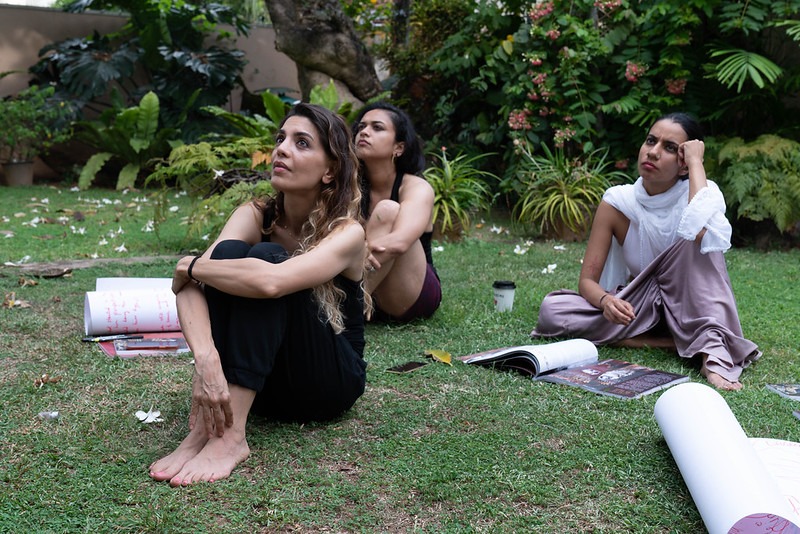
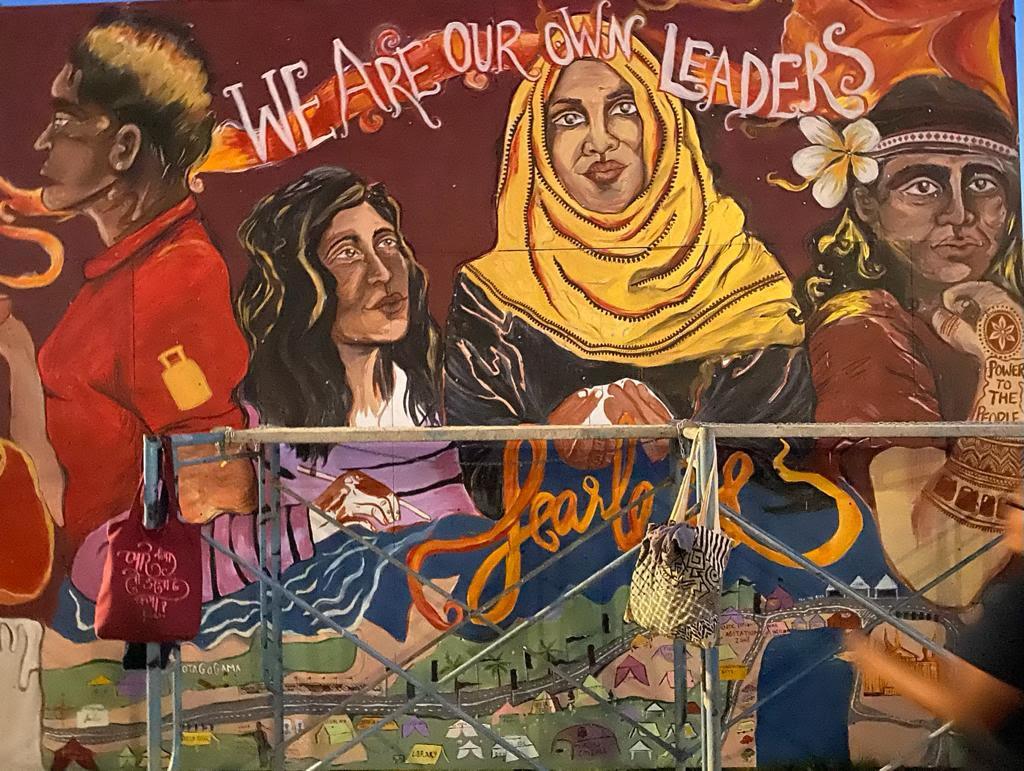
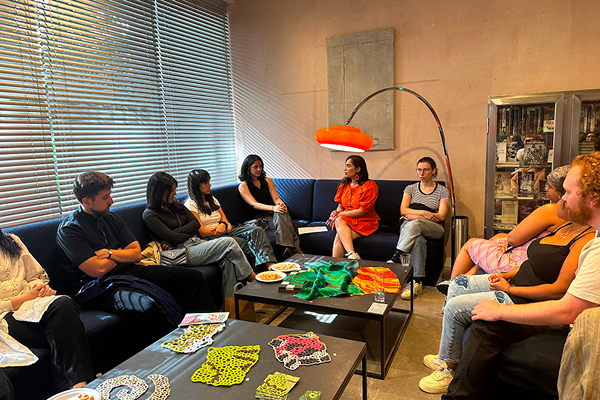
TFC works through a deeply participatory methodology. Its six-step process begins with community workshops and conversations around fear, trauma, memory, and hope, and moves through rituals, storytelling, and photography before culminating in visuals chosen by the community and painted onto public walls. These processes unfold through immersive, multi-stakeholder workshops that draw from local histories, oral traditions, and archetypal forms of storytelling. While each mural responds to specific local contexts across the Global South, recurring themes include gender and environmental justice, the gender spectrum, migration, and conflict. Through initiatives such as the Ambassador Programme, TFC also trains and supports young women artists and activists, passing on methodologies that link art-making with social and environmental justice.
The Collective’s visual interventions tend to operate on two intertwined levels: visibility and activism. In Sri Lanka, for instance, TFC collaborated with a local trans woman ambassador to co-create a mural in Colombo’s Slave Island/Union Place area, foregrounding trans lives while opening up conversations around belonging, displacement, and gentrification. Elsewhere, the Collective has worked directly at sites of protest and political upheaval—such as Gotagogama in Sri Lanka or Shaheen Bagh in India—demonstrating how public art can accompany social movements rather than stand apart from them. In these contexts, murals function not as static symbols but as part of the ongoing life of resistance. Scholars writing about TFC have described this practice as “creating space to move from fear to love using participative public art.”
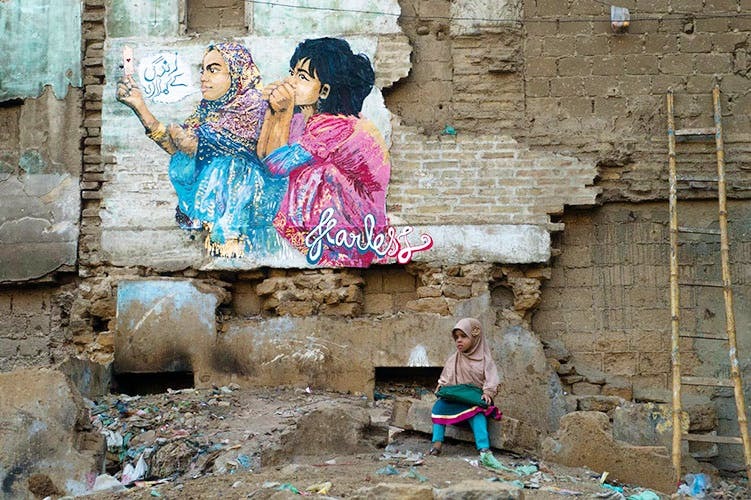
Over the past decade, The Fearless Collective has expanded significantly in both scale and geography. It has produced more than 40 public murals and installations across over 16 countries, collaborating with Muslim and Dalit women in India, Indigenous communities in Brazil and North America, communities affected by gang violence in Pakistan, Syrian and Palestinian refugees in Lebanon, and queer communities in Tunisia and Indonesia. What links these diverse sites is not a single aesthetic, but a shared insistence on local authorship and collective imagination.
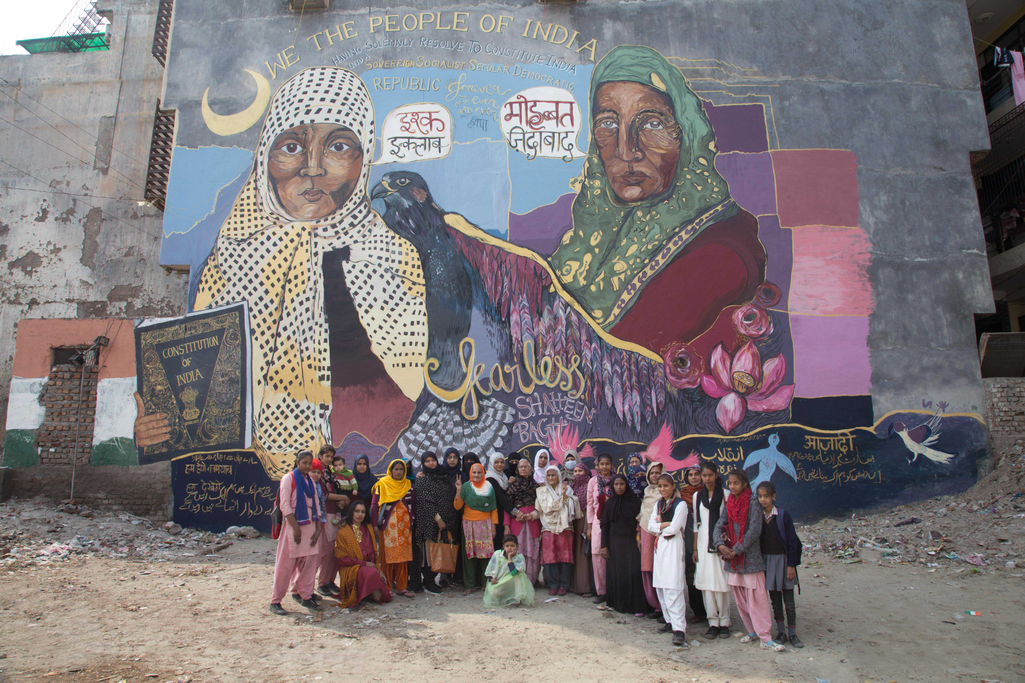
The Fearless Collective remains an evolving movement rather than a fixed institution. What began in 2012 as an urgent response to a singular act of violence has grown into a global network connecting art, community, and activism. As the Collective looks ahead, its ambition to scale is clear: more women artists, more communities, more open and shareable methodologies, and faster forms of art-as-justice in moments of crisis. In a world shaped by climate breakdown, displacement, widening inequality, and identity-based violence, TFC’s insistence on reclaiming public space—and on the political power of care, beauty, and collective creation—feels both necessary and deliberately uncompromising.




.jpg)